MSI EdgeMesa N AI+: RTX-Spark-based Mini PC with 128 GB listed for $7,499
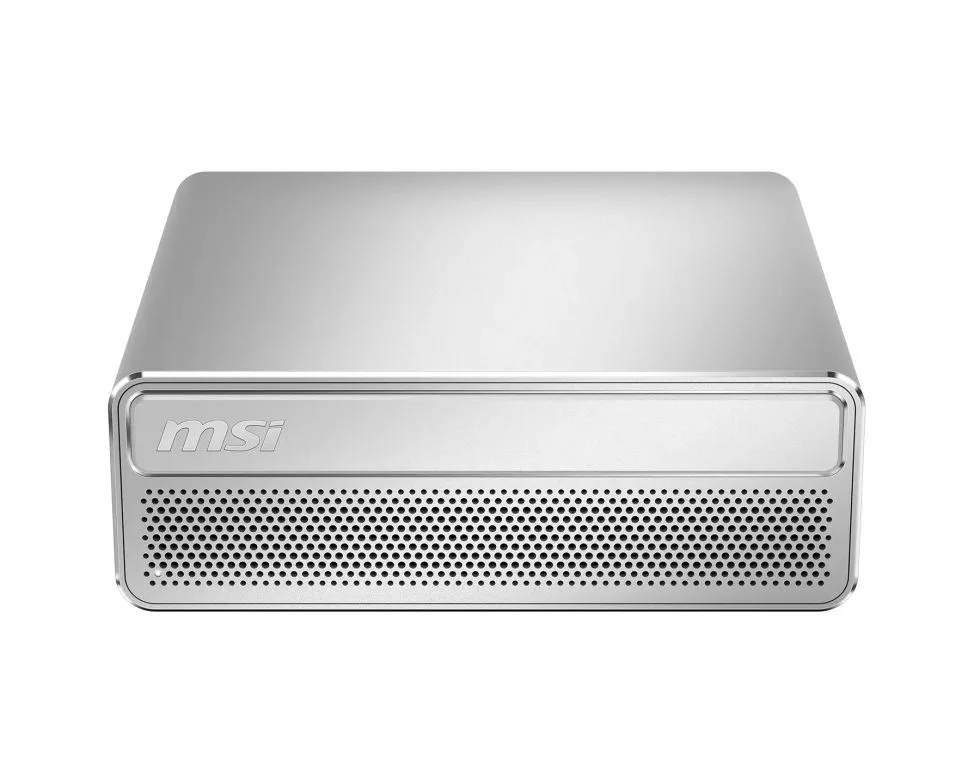
MSI has officially listed its first compact desktop based on NVIDIA's RTX Spark platform in its US store. Named the EdgeMesa N AI+, this Mini PC integrates a 20-core Grace CPU with a Blackwell GPU featuring 6,144 CUDA cores and up to 128 GB of unified LPDDR5X memory. However, the most striking aspect of the announcement is the price: the 128 GB configuration is currently listed at $7,499, a slight reduction from previous store entries that suggested $7,999, but still significantly higher than NVIDIA's own DGX-Spark reference system with similar memory capacity.
The EdgeMesa N AI+ utilizes NVIDIA's RTX Spark N1X architecture. According to MSI, the system pairs a 20-core Arm-based Grace processor with a Blackwell GPU containing 6,144 CUDA cores. The platform is designed to deliver up to 1 PetaFLOP of FP4 computing performance, targeting workloads such as local AI inference, development, content creation, and other GPU-accelerated tasks.
Unified Memory and Hardware Configuration
The high-end X-005US configuration features 128 GB of LPDDR5X as unified memory and a 4-TB NVMe SSD, with a reported memory bandwidth of 273 GB/s. Because the CPU and GPU share the same memory pool, the system eliminates the need to copy large models between separate system RAM and dedicated VRAM. This architecture is particularly relevant for running large language models (LLMs) locally, as having over 100 GB of contiguous memory can accommodate larger quantized models or expanded context windows. It is important to note that the memory is soldered and cannot be upgraded; users opting for the 64 GB variant (listed with a 1 TB SSD for $4,699) will not be able to expand it to 128 GB later.
The pricing discrepancy between MSI's system and NVIDIA's DGX-Spark is notable. While the DGX-Spark reference machine also offers 128 GB of unified memory and 4 TB of storage, its recent US pricing has been significantly lower. This premium for the MSI system cannot be explained solely by memory or storage capacity; differences likely stem from the operating system, chassis design, cooling solutions, and overall manufacturer integration.
Form Factor and Connectivity
Unlike the Linux-centric environment typically associated with NVIDIA's DGX-Spark, MSI has positioned the EdgeMesa as a standard desktop or workstation by shipping it with Windows 11 Pro. This makes it more accessible for users relying on native Windows software, traditional creative applications, or Windows-based local AI tools. The chassis is remarkably compact, measuring approximately 152 × 147 × 55 mm, resulting in a volume of roughly 1.2 to 1.3 liters. To manage the heat, MSI employs a vapor chamber cooling system and two fans, supporting a continuous load of up to 140W. The manufacturer claims noise levels of 28 dB(A) at idle and 32 dB(A) under full load, though these are internal measurements and should be viewed with healthy skepticism without independent testing.
Connectivity options include 10-GbE, Wi-Fi 7, HDMI 2.1, and four USB-C ports supporting up to 20 Gbps. Three of these USB-C ports also support DisplayPort Alt Mode, allowing for up to four simultaneous displays. The system is powered by a 240W power supply.
The Value Proposition
The primary point of contention remains the price. While the RTX Spark platform promises massive unified memory in a small footprint, that memory comes at a high premium. At $7,499, the EdgeMesa is no longer competing with consumer Mini PCs, but rather with professional workstations and small-scale GPU systems. The ultimate value of this device will depend on how its unified memory performance holds up against traditional desktop GPUs during sustained inference and development workloads.