
Intel Arc GPUs gain Resizable BAR support on older motherboards via Linux
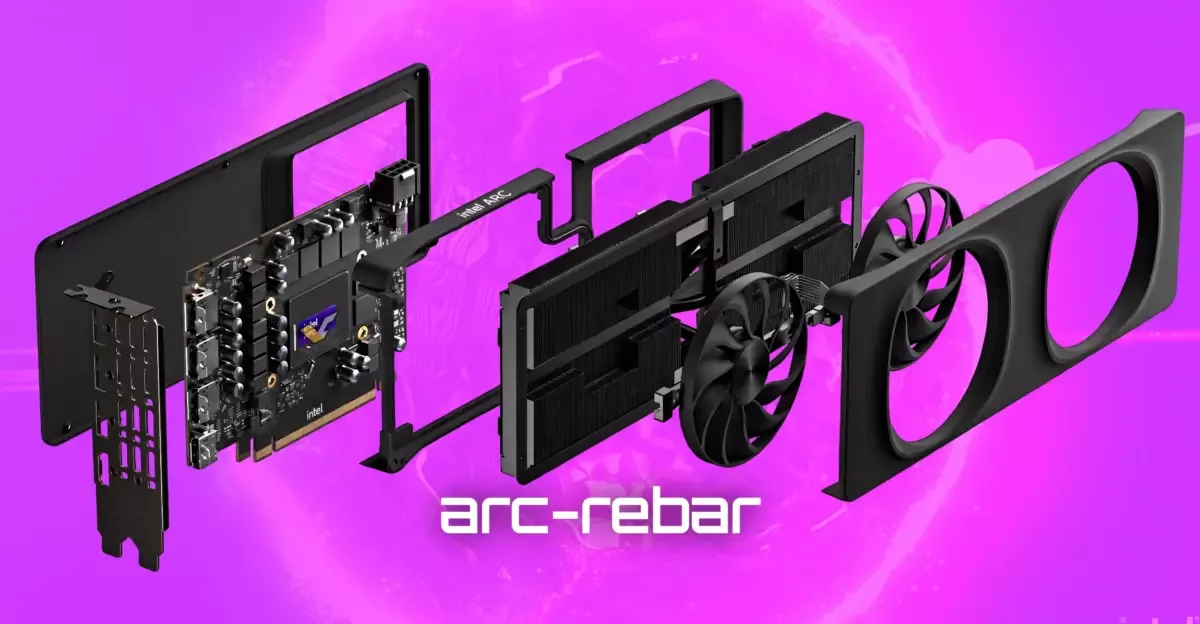
Users of Intel Arc graphics cards on older motherboards lacking native Resizable BAR support can now bypass this limitation. A developer has introduced arc-rebar, a Linux utility that enables the feature without requiring BIOS modifications, custom drivers, or kernel patches.
How it works
The issue stems from the integrated PCIe switch found on Intel Arc cards. Its upstream port features an 8MB BAR, which prevents Linux from expanding the GPU's memory window. The arc-rebar utility addresses this by changing the BAR size and forcing the PCIe root port to re-enumerate during boot, allowing Linux to allocate a much larger memory window.
Testing conducted on a Supermicro X9DRH-7TF motherboard (using an Intel C602 chipset and Xeon E5-2670 v2 processors) with an Intel Arc B580 12GB showed significant results. Before the workaround, the CPU could only access 256 MiB of VRAM. After applying the utility, the system allocated a 16 GiB BAR window, granting full access to the card's 12GB capacity. This led to a massive increase in measured GPU memory bandwidth—from 15 GB/s to 392 GB/s in sample workloads—and allowed a 4K Vulkan blur filter to run at 39–50 FPS instead of stalling.
Requirements and Limitations
While effective, the workaround has specific hardware prerequisites:
- The motherboard must support Above 4G Decoding and provide sufficient memory-mapped I/O (MMIO) space above 4GB.
- The GPU must occupy a dedicated PCIe root port without sharing resources with other devices.
The utility is currently compatible with Debian and Ubuntu, with Linux kernel 6.12 or newer recommended. While the developer confirmed successful operation with the Battlemage architecture (specifically the Intel Arc B580), testing for the Alchemist series has not been performed. This software-based approach arrives ahead of a proposed kernel-level fix from Intel engineers, which is expected in 2025.
Гика
