
Google Brings Gemini Personal Intelligence to Android Auto
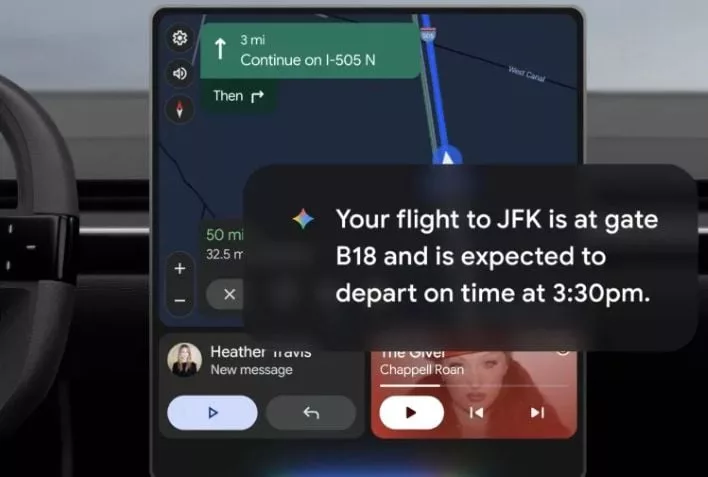
Google is expanding the utility of its Gemini AI by bringing Personal Intelligence features to Android Auto and vehicles equipped with Android Automotive OS. This update aims to transform the in-car assistant from a basic voice tool into a context-aware co-pilot capable of interacting with a user's personal data ecosystem.
Contextual Assistance via Google Ecosystem
The primary goal of this integration is to minimize driver distraction by reducing the need to interact with a smartphone. By drawing information from Google Workspace, Google Calendar, Gmail, Google Photos, and Google Maps, Gemini can handle complex, multi-part prompts. For instance, a driver can ask to be taken to a medical appointment, and the AI will retrieve the address from a calendar invite, calculate the route, and initiate navigation. Similarly, users can inquire about flight gate numbers and real-time status in a single request, pulling data directly from confirmation emails.
The assistant also features multimodal capabilities and personalized recommendations. Gemini can identify a location from a previously taken photo in Google Photos and immediately generate driving directions to that spot. For dining, the AI can cross-reference a user's dietary preferences stored in their profile or maps to suggest restaurants along the active route.
Privacy and Availability
Google has emphasized that Personal Intelligence is entirely optional. Gemini will only access personal app data or emails if the user explicitly grants permission through settings. For vehicles running Android Automotive OS (AAOS), personalized responses will only be displayed or read aloud when the driver's smartphone is actively connected to the vehicle. If the feature is disabled, standard Gemini voice controls remain available for basic tasks, though without access to personalized contextual data.
The rollout has begun immediately for Android Auto users globally, with expansion to AAOS vehicles planned over the coming months. Currently, the feature is available to eligible Google account holders, excluding those in the European Economic Area, Switzerland, the UK, and Nigeria. There has been no official word on when enterprise or education accounts will be included.
Гика
