

Fujifilm Bets $63M on 100TB Magnetic Tape Storage as AI Data Swells
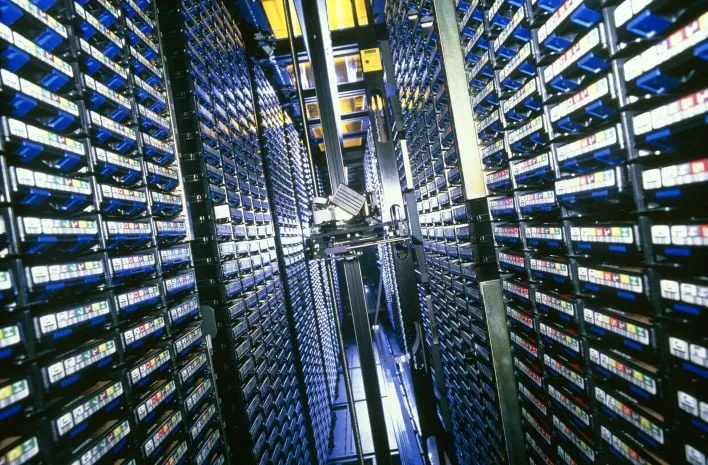
As the era of generative artificial intelligence accelerates, the massive scale of data required to train and run foundational models is forcing data center operators to rethink long-term storage. Fujifilm has announced a ¥10 billion (approximately $63.3 million) investment to scale up its magnetic tape production fivefold by fiscal 2028.
Archival Storage: The Backbone of AI
While consumer technology continues to shift toward solid-state drives (SSDs) and high-density enterprise flash arrays, the sheer volume of data generated by AI is creating a unique challenge. Training massive models and retaining petabytes of inference data requires highly secure, long-term archiving solutions. Keeping traditional hard drives or flash memory running 24/7 to maintain this data is both energy-intensive and prohibitively expensive. This has led hyperscalers to look toward magnetic tape—a technology that is far from being a relic of the past.
The funding will be directed into Fujifilm's manufacturing facility in Odawara, marking the company's largest capital injection into magnetic tape production in two decades. This strategic move comes as enterprise giants realize that discarding historical datasets is no longer an option; every scrap of training text and synthetic output must be preserved indefinitely to fuel ongoing AI development.
Capacity and Economic Advantages
Modern advancements in media, such as barium ferrite, are pushing the boundaries of storage density. While current LTO technology is widely used, new developments are targeting 100TB capacities per cartridge, with industry roadmaps aiming for up to 365TB per unit.
- Cost-Efficiency: Tape offers a tier of storage that is significantly more economical than enterprise SSDs, which can cost 2–3 times more per terabyte.
- Security: Tape provides an ideal solution for "cold storage," as cartridges can be physically disconnected from the network, providing an air gap against cyber threats.
- Sustainability: Studies suggest that magnetic storage media may have a lower environmental impact compared to other mainstream storage mediums.
What was once considered an archaic computing component is rapidly transforming into a cornerstone of the generative AI revolution.
Гика
