
DLSS Unlocked: RTX 40 Mods Enable Up to 6X Frame Generation
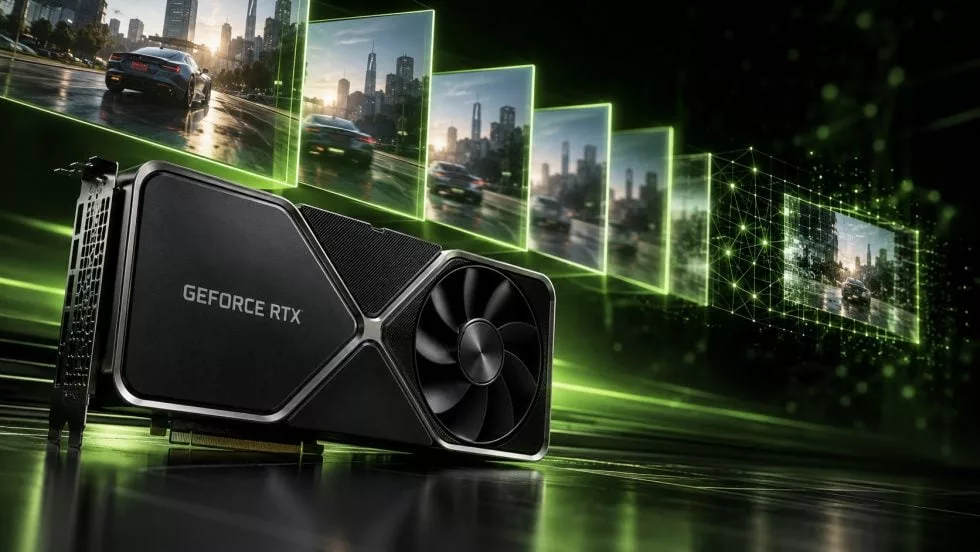
DLSS Multi Frame Generation (MFG), a feature intended to be a cornerstone of the Blackwell architecture, is being expanded to older hardware by the modding community. Experimental solutions now allow RTX 40 series GPUs (Ada Lovelace) to activate frame generation with multipliers of 3X, 4X, 5X, and even 6X, effectively bypassing NVIDIA's software-imposed limits.
Technical Implementation
Unlike previous mods that replaced NVIDIA's technology with AMD FSR 3, new projects like Universal RTXMFG (version 1.3.2 by developer Dashdogy) take a different approach. Instead of replacing the system, they manipulate NVIDIA's own DLSS-G pipeline. The mod alters architectural queries within the DLSS-G components and adjusts the interpolation path to ensure that multiple generated frames are placed correctly within the timing sequence.
It is important to note that this is not a universal injector for any DirectX game. For the mod to function, the game must already have native NVIDIA DLSS Frame Generation integration. The mod essentially expands the existing system, allowing more intermediate frames to be generated between actual rendered frames.
Performance vs. Reality
Tests conducted on a GeForce RTX 4090 in titles like Cyberpunk 2077 demonstrate the feasibility of these high multipliers. However, there is a significant caveat: the massive jump in FPS shown on counters does not equate to a proportional increase in native rendering performance. If a game runs at a base of 60 FPS, a 6X multiplier might show hundreds of FPS, but input latency and simulation complexity remain tied to the original 60 FPS. This makes the technology more of a tool for increasing perceived smoothness on high-refresh-rate monitors rather than a true performance booster.
Users should also be aware of the risks: because these mods modify game code, they can trigger anti-cheat systems in multiplayer titles. Developers suggest limiting such experiments to single-player games to avoid potential bans.
Future Outlook and Compatibility
Projects like OptiScaler are working to combine DLSS 5 Neural Rendering with unlocked MFG, potentially bringing features intended for newer hardware to Ada Lovelace users. Furthermore, the NVIDIA MFG Bridge project is exploring ways to run this pipeline on Turing and Ampere architectures (RTX 20 and RTX 30) by using alternative computational paths to compensate for missing hardware-level features.
Гика
