
AMD officially announces FSR 4.1 for Radeon RX 6000 GPUs
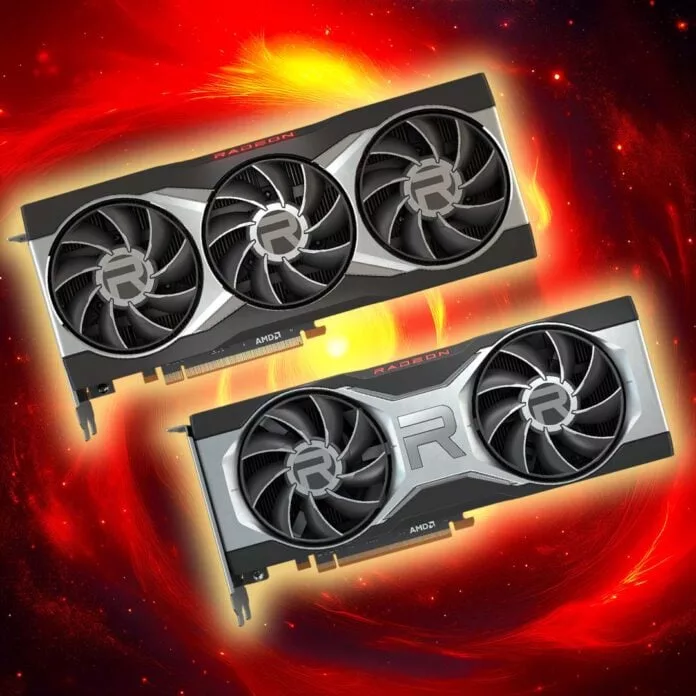
AMD has officially brought its FSR 4.1 upscaling technology to the Radeon RX 6000 series. This update ensures that all desktop graphics cards based on the RDNA 2 architecture can now leverage machine learning-based upscaling, a feature previously limited to the latest hardware generations.
Optimization for RDNA 2 Architecture
The rollout for the Radeon RX 6000 series is not a straightforward port. Unlike RDNA 4 GPUs (such as the Radeon RX 9070 XT), which feature dedicated AI cores capable of processing FP8 instructions, RDNA 2 hardware lacks specialized AI processing units. Consequently, the machine learning workloads will be handled by the standard shader cores.
Jack Huynh, Senior Vice President and General Manager of AMD’s computing and graphics group, stated that the company went beyond a simple port. According to Huynh, the team tuned the model and optimized the code path to deliver high-fidelity visuals and improved performance across the entire lineup, ranging from the Radeon RX 6900 series down to the RX 6400 class.
Performance Benchmarks and Platform Expansion
AMD demonstrated the technology in action using Crimson Desert on a Radeon RX 6800 XT. In the test, FSR 3.1 in Quality mode with Frame Generation produced approximately 95 FPS. Switching to FSR 4.1 in Performance mode with Frame Generation enabled resulted in roughly 101 FPS. While comparing different modes is typically difficult, early observations suggest that FSR 4.1 in Performance mode offers significantly better visual quality than FSR 3.1 in any mode, though independent verification is required.
The rollout of FSR 4.1 also extends to several other platforms:
- Strix Halo and Gorgon Halo APUs;
- Ryzen Z2 Extreme and Z2A handheld chips (featuring a specialized model that is half the size of the desktop version);
- Xbox consoles.
While AMD has not confirmed support for the Steam Deck, the company indicated it is working on bringing the technology to more APUs in the future.
Гика
