
Xiaomi Pad 9 Review: A Price-Performance Champion
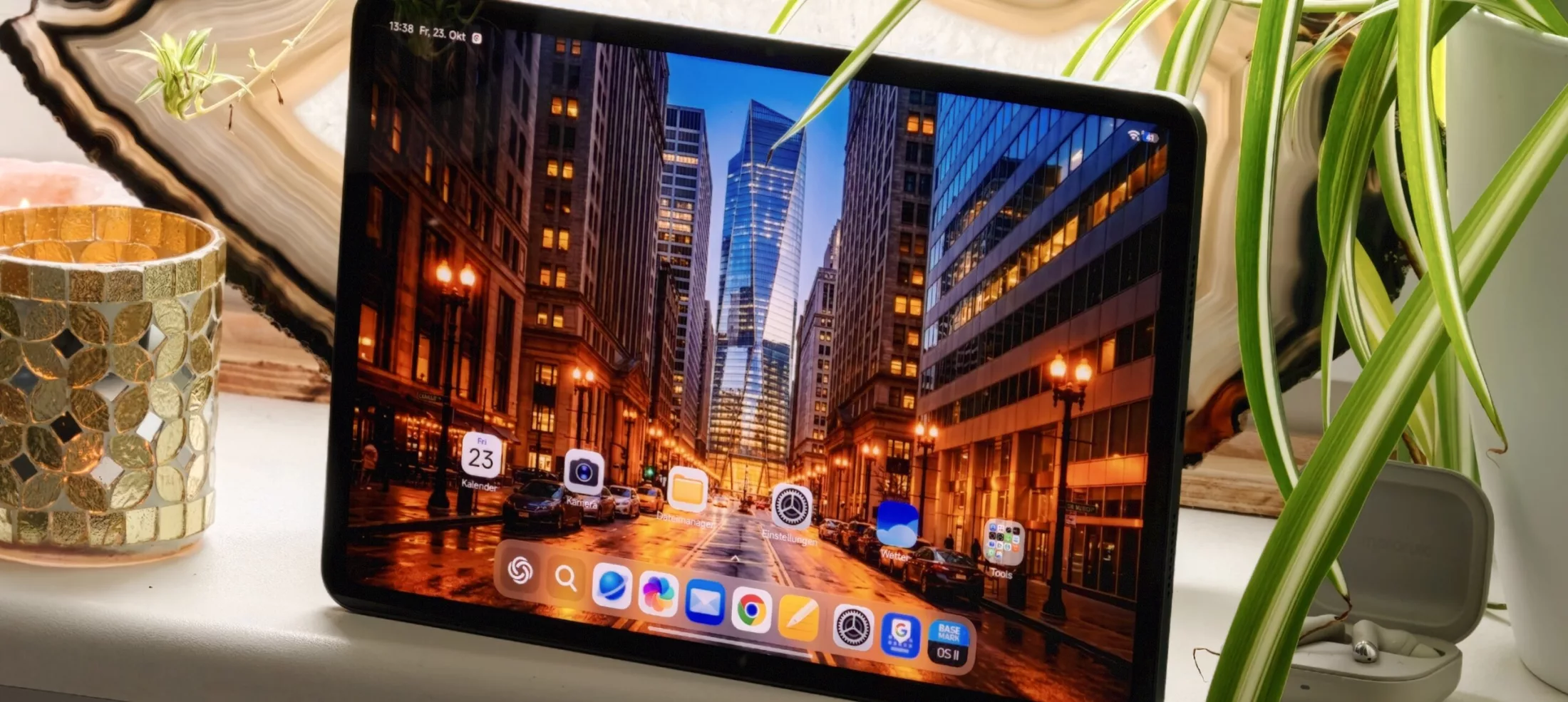
Xiaomi is back with a mid-range contender that aims to disrupt the market. The Xiaomi Pad 9 arrives as an affordable alternative to the 11-inch iPad Air, delivering high-end specs like a 144 Hz display and a powerful Snapdragon chipset for a fraction of the cost. While it shares much of its DNA with the previous generation, the Pad 9 brings subtle refinements that make it a compelling choice for students and power users alike.
The Xiaomi Pad 9 positions itself as a price-performance king, offering significant advantages over the 2026 iPad Air in several key metrics. Equipped with a 144 Hz display, a high-performance Snapdragon chip, and a substantial battery, Xiaomi is clearly targeting the mid-range tablet crown. However, the device is not without its compromises, particularly regarding its internal efficiency and some hardware cost-cutting measures.
Verdict: An Excellent Mid-Range Alternative
The Xiaomi Pad 9 is an excellent mid-range tablet and a highly competitive alternative to the 11-inch iPad Air. While the incremental changes from the Pad 8 might suggest a 'Pad 8S' moniker would have been more accurate, the device remains a powerhouse for its price bracket. Interestingly, our testing revealed that while the battery capacity is slightly larger than its predecessor, the Pad 9 shows concerning levels of power-consumption inefficiency, meaning real-world battery life doesn't scale linearly with the increased capacity.
Beyond the spec sheet, there are two notable physical differences: the LCD screen is slightly brighter than the Pad 8, but Xiaomi has opted for lower-quality speakers in this 2026 model. Despite this, the Pad 9 maintains a top-tier display that lacks PWM (pulse-width modulation) flickering, making it a safer choice for those sensitive to screen flicker. However, it faces stiff competition from the Honor MagicPad 4, which offers an OLED panel and higher performance at a similar price point.
Design and Build: Premium Feel with a Matte Option
The design remains largely unchanged from the Pad 8, but the increased battery capacity adds a slight weight increase. The device maintains a premium feel with an aluminum unibody that is less than 6 mm thick. The screen-to-body ratio is an impressive nearly 86%, surpassing even the more expensive Apple iPad Air 11. For those who use their tablets in bright environments, Xiaomi offers a matte 'Soft-Light' version that significantly reduces reflections compared to the standard glossy model.
Durability is addressed with an IP52 rating, providing protection against dust and light splashes, making it suitable for outdoor use on campus or in a garden. However, potential buyers should note that Xiaomi has continued to omit a fingerprint sensor, a decision that remains a point of contention for a device in this class.
Hardware and Performance: Snapdragon 8s Gen 4
Under the hood, the Xiaomi Pad 9 is powered by the Qualcomm Snapdragon 8s Gen 4. While base models may feature older standards like LPDDR5X and UFS 3.1, our review unit features high-bandwidth 12 GB of LPDDR5T RAM and UFS 4.1 storage. This configuration ensures smooth multitasking and fast data access. The device also supports USB 3.2 Gen 1 via USB-C, providing high-speed data transfer and DisplayPort functionality.
Software-wise, the tablet ships with Android 17 and Xiaomi's HyperOS 4. A notable improvement for international users is the native support for various languages (including German) even in Chinese-market models, making imported units much more versatile. While official update lifecycles for the Chinese version aren't explicitly stated, reports suggest up to 4 major OS upgrades and 5 to 6 years of security updates. In Europe, the global version is expected to receive 6 years of security updates due to EU regulations.
The Xiaomi Pad 9 maintains a consistent approach to its mid-range positioning, inheriting much of the hardware DNA from its predecessor, the Pad 8. While Xiaomi remains less transparent than competitors like Apple or Samsung regarding material composition and recycled content, the device's packaging is notable for being entirely plastic-free. However, the tablet's repairability remains an unknown, though it is expected to follow the Pad 8's design patterns.
Connectivity and Networking
The Pad 9 supports the WiFi 7 standard, though testing on the Chinese version revealed that the high-speed 6 GHz band cannot be utilized. In terms of mobile connectivity, Xiaomi does not offer a 5G version with satellite-based positioning; while the device can determine location via WiFi and a digital compass, it lacks the precision required for dedicated navigation. In our iperf3 throughput tests, the Pad 9 demonstrated strong performance on WiFi 6/7, achieving approximately 709 MBit/s transmit and 1656 MBit/s receive speeds on a RT-BE96U router.
Display: High Brightness Without PWM
The tablet features a 144 Hz LCD panel with Dolby Vision and 12-bit color depth. While it is not an OLED like the Honor MagicPad 4—which offers superior contrast and brightness—the Pad 9's LCD is slightly brighter than the Pad 8, with measured peak brightness reaching 785 cd/m² and an average of 740.1 cd/m². Crucially for users sensitive to screen flicker, the panel carries TÜV certifications for flicker-free viewing and does not use Pulse-Width Modulation (PWM).
Cameras and Biometrics
The camera setup remains unchanged from the previous generation. The 13-megapixel rear camera supports 4K video at 30 fps and HDR, but it lacks autofocus. For productivity, it includes a document mode and a teleprompter feature. The 8-megapixel front camera is optimized for video calls, supported by a four-microphone array. Additionally, the 'HyperConnect' feature allows the tablet to serve as a webcam for Xiaomi smartphones.
A notable omission in the Pad 9 is the absence of a fingerprint sensor. Users must rely on 2D facial recognition via the front camera, a method that is less secure and more prone to errors than dedicated biometric hardware.
Accessories and Input
The device supports the Focus Pen Pro stylus (approximately $100) and a QWERTY keyboard case, which is physically compatible with the Pad 8. The touchscreen is highly responsive at 144 Hz, and the magnetic interface allows for easy connection and charging of the stylus. While the stylus supports 16,384 levels of pressure sensitivity, Xiaomi has not disclosed the exact input latency.
Display: Solid Color Accuracy, but Slow for Gamers
The Xiaomi Pad 9 features an 11.2-inch LCD panel with a resolution of 3200x2136. In terms of color accuracy, the device performs well; using the Calcam analysis software, the measured DeltaE values in the sRGB color space fall within the target range (<3), and the grayscale shows no noticeable color cast. However, when compared to competitors like the Honor MagicPad 4 (OLED), the Xiaomi Pad 9 falls behind in peak brightness, delivering 802 cd/m² (APL18) and 799 cd/m² (HDR peak), whereas the Honor reaches 2337 cd/m² and 3084 cd/m² respectively.
For users sensitive to screen flickering, the Xiaomi Pad 9 is a safe choice as no PWM (Pulse-Width Modulation) was detected during testing. On the downside, the display's response times may hinder competitive gaming. The measured Black-to-White response time is 22 ms (10.8 ms rise / 11.2 ms fall), and the 50% Grey to 80% Grey time is 28.8 ms (14.6 ms rise / 14.2 ms fall). While these rates are decent for general use, they are slower than 49% of all tested devices and fall below the average of 19.6 ms for Black-to-White transitions.
Performance: The Snapdragon 8s Gen 4 Experience
Under the hood, the Xiaomi Pad 9 utilizes the Snapdragon 8s Gen 4 SoC, the same chipset found in its predecessor. In Geekbench 7.0, the device achieved 1594 in Single-Core and 6421 in Multi-Core, performing slightly below the average for the Snapdragon 8s Gen 4 class (1611 and 6352 respectively). While it handles everyday tasks effortlessly, it is noticeably outperformed by higher-tier silicon, such as the Snapdragon 8 Gen 5 in the Honor MagicPad 4, which leads in Geekbench 6.7 with 2863 Single-Core and 9492 Multi-Core scores.
In productivity and synthetic benchmarks, the Xiaomi Pad 9 remains competitive within its class. In PCMark for Android (Work 3.x), it scored 16423, which is very close to the average for the Snapdragon 8s Gen 4 (16067). However, in the CrossMark benchmark, it recorded 1522, which is 22% lower than the average for its class (1181) and 28% lower than the average for other Snapdragon 8s Gen 4 devices (1089), suggesting that real-world application performance may vary depending on the specific workload.
BaseMark and System Performance
In the BaseMark OS II synthetic benchmark, the Xiaomi Pad 9, powered by the Qualcomm Snapdragon 8s Gen 4 SM8735 and Adreno 825 GPU, achieved a score of 9,311 points. This represents a 5% increase over the class average for tablets (7,164 points) but falls slightly behind the Xiaomi Pad 8, which scored 9,942 points. The system-level performance shows the Pad 9 at 10,981 points, trailing the Pad 8's 12,968 points, though it remains significantly more capable than the Oppo Pad 5 (9,674 points) in this specific metric.
Memory and storage throughput also show a slight dip for the Pad 9. It recorded 10,348 points in the memory test, compared to 11,076 points on the Pad 8. This places it below the average for Snapdragon 8s Gen 4 devices (11,611 points) and the broader tablet class (8,280 points), though it still maintains a substantial lead over the Oppo Pad 5 (6,351 points).
Graphics and Gaming Capabilities
The Adreno 825 GPU delivers impressive results for the mid-range segment. In the 3DMark Wild Life Extreme Unlimited test, the Xiaomi Pad 9 scored 4,989 points, slightly outperforming its predecessor, the Xiaomi Pad 8 (4,499 points). However, it faces stiff competition from higher-tier devices; the Honor MagicPad 4 (5,623 points) and the Apple iPad Air 11 M4 (7,189 points) both significantly outperform the Pad 9 in this high-end workload.
In the Solar Bay Unlimited test, which targets modern rendering techniques, the Pad 9 achieved 8,671 points. While this is a marginal improvement over the Pad 8 (8,557 points), it remains well behind the Honor MagicPad 4 (9,644 points) and the iPad Air M4 (14,357 points). For more standard workloads like Wild Life Unlimited, the Pad 9's 18,656 points show it remains a strong contender in its price bracket, though it cannot match the performance of the Honor MagicPad 4 (21,183 points).
AI Inference and NPU Performance
AI performance metrics reveal a more complex picture. In the UL Procyon AI Inference for Android (NNAPI), the Pad 9 scored 17,362 points, which is very close to the average for Snapdragon 8s Gen 4 devices (17,004 points). However, it lags behind the Oppo Pad 5 (29,436 points) in this specific AI inference test. In Geekbench AI tests, the Pad 9's NPU performance shows varying results: it scored 459 points in Single Precision and 463 points in Half Precision, both of which are slightly below the average for the Snapdragon 8s Gen 4 platform. In the Quantized NPU test, it achieved 1,028 points, which is roughly 11% lower than the average for its chipset (914 points is the average, but the Pad 9's 1,028 is actually higher than the chipset average, though the source notes a -11% trend in the comparison logic).
Thermal Efficiency: Staying Cool Under Pressure
One of the most critical aspects of a high-performance tablet is how it manages heat during sustained workloads. The Xiaomi Pad 9, powered by the Snapdragon 8s Gen 4, demonstrates impressive thermal stability. In our testing, the device remains cool even when pushed through demanding benchmarks, avoiding the aggressive thermal throttling that often plagues high-performance mobile hardware.
Graphics Performance: GFXBench Analysis
When looking at the GFXBench results, the Xiaomi Pad 9 shows a nuanced performance profile. In Onscreen tests (DX / GLBenchmark 2.7), the device delivers 60 fps, which is a significant baseline compared to the iPad 10's 0% baseline, though it sits behind the Honor MagicPad 4's Adreno 829-based performance in certain offscreen scenarios. In the more demanding Aztec Ruins High Tier (Offscreen), the Pad 9 achieves 81 fps, outperforming the Xiaomi Pad 8 (68 fps) and significantly leading the iPad 11 (2025) which struggles at 40.1 fps in the same category.
The offscreen performance is particularly telling for power users. In the 4K Aztec Ruins High Tier (Offscreen) test, the Xiaomi Pad 9 reaches 37 fps via Vulkan, maintaining a lead over the iPad 11 (2025) at 16.7 fps and the iPad 10 at 16 fps. However, it is worth noting that the Honor MagicPad 4 remains the benchmark leader in this specific category with 44 fps.
Storage and System Responsiveness
The implementation of UFS 4.1 flash memory in the Xiaomi Pad 9 provides a clear advantage in data throughput. In AndroBench 3-5 tests, the device achieved sequential read speeds of 4122.2 MB/s and write speeds of 3871.93 MB/s. This is a substantial leap over the Oppo Pad 5 (1922.71 MB/s read) and the Honor MagicPad 4 (1978.75 MB/s read), positioning the Pad 9 at the top of its class for storage-intensive tasks.
Web and Synthetic Benchmarks
In synthetic web performance, the Xiaomi Pad 9 shows strong results. It scored 65 points in WebXPRT 5, matching the average for the Snapdragon 8s Gen 4. In the Jetstream 2 test, it reached 271.326 points, which is roughly 25% higher than the average of the tablet class (223 points) and significantly outperforms the iPad 10 (178.932 points). However, it trails the Honor MagicPad 4, which achieved 322.347 points in the same metric.
Thermal Management and Stability
The Xiaomi Pad 9 demonstrates consistent thermal performance during intensive workloads. The device's casing does not reach high temperatures during idle or heavy usage, which prevents significant thermal throttling. In 3DMark stress tests, we observed no frame rate drops exceeding 20 percent, maintaining stable performance throughout the testing cycles.
Temperature measurements show that the upper side of the tablet reaches a maximum of 40.9 °C under load, with an average of 33 °C. This is slightly higher than the tablet class average of 30 °C. The bottom of the device reaches up to 40.6 °C. In idle mode, the device remains quite cool, with an average upper-side temperature of 26.2 °C, which is actually lower than the class average of 30 °C.
3DMark Stress Test Stability
In terms of stability, the Xiaomi Pad 9 shows competitive results across various 3DMark benchmarks. In the Wild Life Stress Test, it achieved 86% stability, slightly outperforming its predecessor, the Xiaomi Pad 8, which recorded 84.9%. In the more demanding Wild Life Extreme Stress Test, the Pad 9 maintained 85% stability, compared to 82% for the Pad 8. For the Solar Bay Stress Test, the Pad 9 reached 89.1%, while the Pad 8 recorded 97.2%. In the Steel Nomad Light Stress Test, the Pad 9 showed 93.8% stability, slightly ahead of the Pad 8's 90%.
Audio Performance
The sound profile of the Xiaomi Pad 9 is characterized by prominent mid- and high-frequency tones. Compared to the Xiaomi Pad 8, the 2026 model's response to pink noise is less linear, showing a slight performance drop particularly in the low-frequency and ultra-high-frequency spectrums.
- Bass: Reduced bass, averaging 14% lower than the median, with average linearity.
- Mids: Higher mids (averaging 6% higher than the median) and linear response.
- Highs: Balanced and linear highs.
- Overall: The sound linearity is average, with a 16.8% difference to the median.
While the internal speakers are capable of reaching a relatively loud 85.1 dB, users seeking deeper bass may prefer using external audio. The device supports wireless connection via Bluetooth 5.4 or wired connection through the USB port, with support for a wide range of wireless audio codecs.
Battery and Power Consumption
The Xiaomi Pad 9 is equipped with a large 9720 mAh dual-cell battery, supporting 45W fast charging (PD3.0, QC3+) and 22.5W reverse charging. A full charge from empty takes approximately 1.5 hours. However, power consumption data reveals that the device's idle draw is notably higher than that of the Xiaomi Pad 8. Additionally, significant power spikes are observed when the device is under heavy load.
- Idle Power Draw: Average of 4.1 W (compared to 2 W for the Pad 8).
- Load Power Draw: Average of 7.4 W (compared to 6.6 W for the Pad 8).
- Maximum Load Draw: Reaches up to 16.4 W.
Battery Life and Real-World Endurance
In our real-life Wi-Fi web-browsing test, the Xiaomi Pad 9 demonstrated impressive endurance, lasting 19 hours and 38 minutes of continuous use with the display brightness set to 150 cd/m². While this is an excellent result when compared to the Apple iPad 10, which managed only 10.8 hours in the same test, it represents a slight step backward compared to its predecessor. The Xiaomi Pad 8 achieved 20.7 hours under identical conditions, meaning the Pad 9 offers about 6% less runtime despite its 9720 mAh battery compared to the Pad 8's 9200 mAh.
- Xiaomi Pad 9 (9720 mAh): 19.6h (Wi-Fi web surfing)
- Xiaomi Pad 8 (9200 mAh): 20.7h (Wi-Fi web surfing)
- Oppo Pad 5 (10420 mAh): 19.1h (Wi-Fi web surfing)
- Honor MagicPad 4 (10100 mAh): 13.1h (Wi-Fi web surfing)
- Apple iPad 10 (7606 mAh): 10.8h (Wi-Fi web surfing)
Verdict: A Refined Mid-Range Package
The Xiaomi Pad 9 leaves us with mixed impressions. On one hand, it remains an excellent overall package for under $500, offering high-quality materials and impressive thermal management. On the other hand, the improvements over the previous generation are minimal. The device excels in areas like noise levels (100%), temperature management (92%), and power efficiency (92.3%), but it struggles in AI performance (31%) and repairability (30%).
Given that the differences between the Pad 9 and the Pad 8 are so marginal, our recommendation is straightforward: if you can find a good deal on the older Xiaomi Pad 8, it remains a highly viable option that you can buy without hesitation.
Comparison with Alternatives
- Xiaomi Pad 9: 400€ | 485g | 11.20" LCD | Snapdragon 8s Gen 4
- Oppo Pad 5: 459€ | 577g | 12.10" LCD | Dimensity 7300
- Honor MagicPad 4: 600€ | 450g | 12.30" OLED | Snapdragon 8 Gen 5
- Xiaomi Pad 8: 437€ | 485g | 11.20" IPS | Snapdragon 8s Gen 4
- Apple iPad 11 (2025): 399€ | 477g | 10.86" IPS | Apple A16 Bionic
Гика
