

Ubiquiti launches UniFi Cloud Storage for Protect and Drive
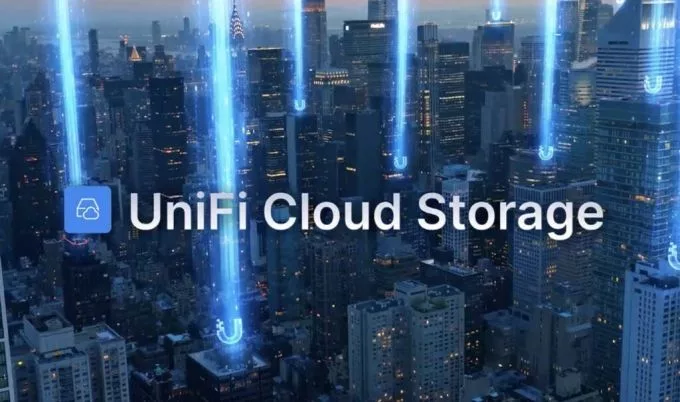
Ubiquiti is bringing data redundancy closer to its ecosystem with the announcement of UniFi Cloud Storage. Instead of relying on third-party providers for off-site backups, UniFi users will soon be able to use Ubiquiti's own integrated cloud service for UniFi Protect and UniFi Drive.
Previously, UniFi users had to manage third-party integrations to achieve off-site redundancy. For UniFi Protect, this meant archiving footage to Google Drive, OneDrive, or a NAS. For UniFi Drive (used in UNAS systems), users typically relied on Amazon S3, Backblaze B2, or Wasabi. With the introduction of UniFi Cloud Storage, Ubiquiti aims to simplify this by offering native integration directly within its existing software suite.
Functionality and Pricing
The service is designed as a supplement to local storage rather than a replacement. In UniFi Protect, the cloud service focuses on archiving specific Smart Detection events, such as recognized persons or vehicles. Standard continuous recording remains stored locally on the recorder without a subscription. For UniFi Drive, the cloud acts as an additional backup target, supporting the 3-2-1 backup rule (three copies of data, on two different media, with one off-site) to protect against local hardware theft or disasters.
Users can browse, search, and download archived files and footage through the UniFi Site Manager. Pricing is set at $5 per TB per month, billed based on actual storage used. Notably, Ubiquiti claims there are no egress fees, meaning users won't be charged extra for downloading their own data—a significant advantage over many cloud providers that charge heavily for data retrieval.
Unanswered Questions
Despite the announcement, several key details remain unconfirmed. There is no information regarding the physical locations of the data centers, which is a vital concern for GDPR compliance in Europe. Additionally, details concerning end-to-end encryption, specific hardware requirements, software version compatibility, and the potential for a free trial or minimum billing increments have yet to be disclosed.
Гика
