The Witcher 4: A New Protagonist, but the Essential 'Witcher' Identity Remains
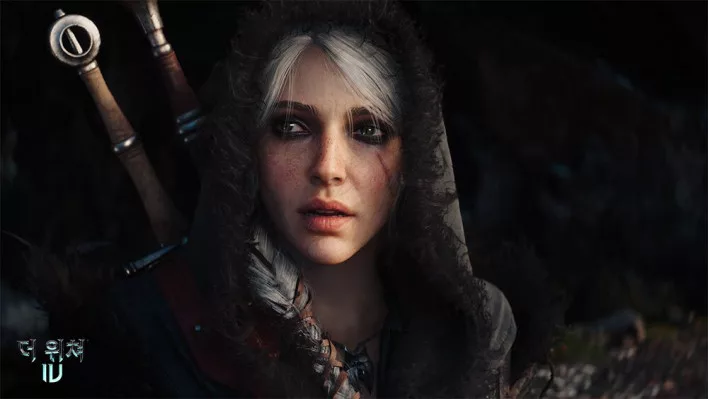
More than a decade has passed since the release of The Witcher 3: Wild Hunt, a title that left an indelible mark on the gaming landscape. As the franchise prepares for its next chapter—following The Witcher 3 Remastered, the upcoming Songs of the Past expansion, and the highly anticipated The Witcher 4—questions about the series' evolution are surfacing. At G-STAR 2026, Marcin Blacha, Vice President of Story, and Philipp Weber, Narrative Director at CD Projekt Red, shared insights into how the shift to a new protagonist and the lessons learned from Cyberpunk 2077 are shaping the future of the Witcher saga.
The transition from Geralt to Ciri represents a fundamental shift in the narrative approach. While Geralt often functioned as a somewhat detached arbiter of morality, Ciri brings a different energy to the role. According to Philipp Weber, Ciri is a more emotional and hot-headed character, which will fundamentally change how players experience the world and make decisions. Her choices may lean toward being harsher or more actively altruistic than Geralt's, offering a fresh perspective on the franchise's core themes.
A Revolutionary Leap for the Series
Marcin Blacha emphasized that every major entry in The Witcher series has been a revolution in its own right. The Witcher 2 was vastly different from the first, and The Witcher 3 was another massive leap. CD Projekt Red intends to repeat this pattern with The Witcher 4, aiming to set a new benchmark for the RPG genre rather than simply releasing a standard sequel.
The challenge for the developers is to balance the expectations of long-time fans with the needs of a much larger, modern audience. Since the release of Wild Hunt, the franchise has expanded through Netflix series, board games, and comics. This means The Witcher 4 must serve as a new entry point for newcomers while remaining faithful to the deep lore that veteran players expect. Philipp Weber noted that stripping away the series' distinct edge to appeal to a broader audience would ultimately result in a product that appeals to no one.
Evolution of Quests: Lessons from Cyberpunk 2077
The development of Cyberpunk 2077 has provided CD Projekt Red with valuable lessons in non-linear storytelling. Philipp Weber explained that in the new Witcher game, they plan to apply the complexity learned from Cyberpunk, where player actions—not just dialogue choices—can open up different solutions and paths. The goal is to move beyond simple decision-making to a system where how a player approaches a situation fundamentally impacts the outcome.
Despite these technical advancements, the core philosophy of quest design remains unchanged: every mission, whether a grand epic or a small side task, must offer a meaningful experience. The developers aim to avoid 'filler' quests that merely waste the player's time, striving instead to ensure that every encounter feels fresh and purposeful.
The Emotional Weight of Ciri
Changing the protagonist fundamentally alters the player's emotional connection to the story. Marcin Blacha noted that while Geralt often acted as a judge or an observer, playing as Ciri means the player is much more deeply involved in the narrative through her personal perspective. Because Ciri is more emotional and less composed than Geralt, the quests in The Witcher 4 will take on a different shape, driven by her temperament and personal stakes.
In a deep dive into the narrative philosophy of the upcoming saga, Marcin Blacha (Vice President of Story) and Philipp Weber (Narrative Director) at CD Projekt Red shared insights into how the studio approaches storytelling, character development, and the preservation of the franchise's unique identity. The discussion touched upon the complexities of moving from literary writing to game design, the necessity of iteration, and the core elements that define a 'Witcher-like' experience.
The Art of Visual Storytelling
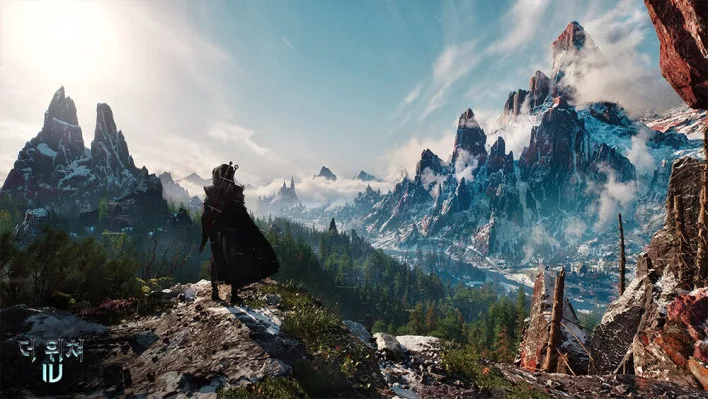
Marcin Blacha noted that writing for video games requires a significant shift in mindset for those coming from a literary background. While novels rely on prose, game narratives depend heavily on cinematic expression. This includes using gestures, facial expressions, and even the physical posture of characters to convey emotions and relationships without the need for dialogue. Once mastered, this non-verbal storytelling becomes an extraordinarily powerful tool for immersion.
To achieve this, Philipp Weber explained that CD Projekt Red utilizes a 'trifecta' approach to narrative design. This involves a close collaboration between three distinct disciplines: writers, quest designers (or open-world designers), and cinematic designers. While quest designers handle the structure, cinematic designers are essential for moments where a single facial expression can communicate more than spoken lines—a capability that has evolved significantly from The Witcher 1 and 2 to the high-fidelity performances seen in The Witcher 3 and Cyberpunk 2077.
The Iterative Process and Quest Design
The development process is described by Blacha as a continuous cycle of brainstorming, designing on paper, and implementation. However, implementation does not guarantee success. The team accepts that some ideas simply fail to work once they are actually in the game. Rather than forcing a subpar experience, the studio relies on heavy iteration, which includes the willingness to scrap or replace a quest entirely if it doesn't meet their quality standards.
When it comes to side quests, Philipp Weber emphasized that even a 15-minute mission must offer something unique that no other quest provides. Whether it is through gameplay, loot, or a memorable character, a quest must have a 'signature' quality. A character might only appear for ten minutes, but if they are tied to a difficult choice or possess a distinct personality—even if they are simply funny or foolish—they can become unforgettable. Ultimately, every quest must achieve harmony between story, character, and gameplay while strictly adhering to the established Witcher tone.
Defining the 'Witcher-like' Identity
Defining the essence of the franchise is a challenge, but Blacha identified several pillars. First, the stories are grounded in reality; they focus on human beings with real-world problems rather than purely artificial, fantastical archetypes. For example, the Bloody Baron is compelling not because he is a warlord, but because of his complex family issues. The fantasy and folklore elements serve as metaphors to explore these real-life struggles.
Second, the narratives are character-driven. The focus is on the relationships between characters and how player choices affect those connections. Third, the studio aims to challenge the player intellectually and emotionally. Weber stated that they avoid 'talking down' to players or providing easy answers. Instead, they want to provoke thought and stir emotions, even if that means leaving the player feeling distressed or heavy-hearted by the weight of their decisions.
Lore, Pacing, and the 'Rollercoaster' Method
Regarding the tension between established lore and new stories, Blacha uses the 'Romeo and Juliet' method. Just as Shakespeare's classic tale has been adapted into various forms like West Side Story, the studio believes that universal narrative arcs can be retold in original ways. The key is to maintain enthusiasm for the core story while finding new ways to deliver it.
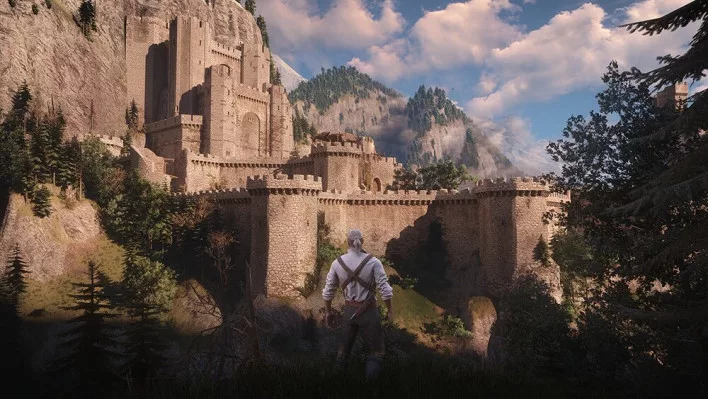
To manage the pacing of an open world, Weber utilizes a 'rollercoaster' design. This involves alternating between high-intensity emotional climaxes and periods of calm. These lulls are intentional; they provide the player with breathing room to process major events and engage with side content or exploration before the tension builds again. This structure prevents the main story from feeling overwhelming while maintaining long-term engagement.
In a deep dive into the future of the franchise, CD Projekt Red's leadership shared insights into the narrative philosophy that will guide the next chapter of The Witcher. Following the massive success of The Witcher 3 and the complex development of Cyberpunk 2077, the studio is navigating a delicate balance: introducing a new protagonist while preserving the core essence that fans have come to expect from the series.
Managing Narrative Tension and Pacing
One of the primary challenges in open-world storytelling is maintaining player engagement without causing fatigue. Marcin Blacha explained that the studio uses specific techniques to manage the emotional flow of the story. If a game constantly bombards players with massive, dramatic events, it can create a sense of pressure, making them feel like they cannot step away. This can ultimately lead to a loss of connection with the narrative.
To counter this, the team employs a technique of gradual escalation. They aim to gently remind players of previous events and then slowly dial up the tension. This allows the story to breathe, ensuring that the high-stakes moments carry more weight because they are preceded by periods of relative calm.
The 'Day Job' Advantage
Philipp Weber highlighted a structural advantage found in both The Witcher and Cyberpunk 2077: the protagonists have professional identities that drive the gameplay. Geralt and Ciri are witchers whose primary occupation is traveling and hunting monsters. Similarly, V in Cyberpunk 2077 is a mercenary operating in Night City.
This design choice is crucial for seamless world integration. When players engage in side content, it doesn't feel like they are putting important matters on hold; instead, they are simply performing their professional duties. Whether it is an emotional character arc or a standard contract, the activities feel intrinsically tied to who the character is, making the transition between main and side quests feel natural.
The Fanbase and the Art of Interpretation
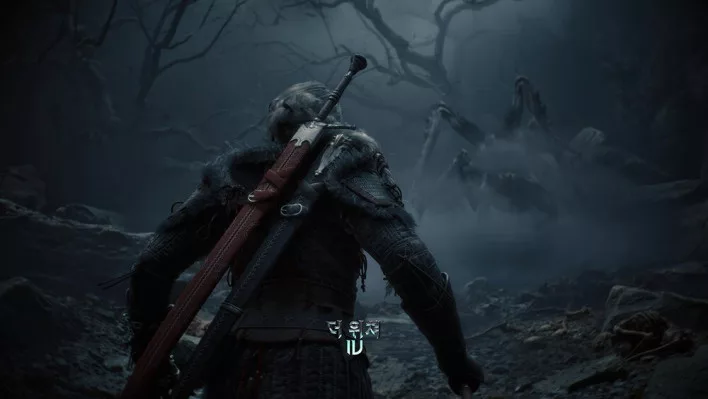
CD Projekt Red's community is known for its intense scrutiny of even the smallest narrative details. Marcin Blacha noted that this phenomenon often happens before a game is even released. Fans are remarkably adept at assembling small snippets of information to deduce the studio's creative direction with high accuracy.
Philipp Weber added that this engagement can be both fascinating and humorous. While some fans perform deep literary analyses on YouTube that perfectly capture the developers' intentions, others attribute grander meanings to certain elements than were actually planned. He noted that seeing fans find profound meaning in moments he didn't overthink is a recurring experience for the team.
Defining the CDPR Storytelling Style
When asked what defines a 'CD Projekt Red story,' Philipp Weber pointed to ambition and a refusal to settle for 'good enough.' The studio aims for maximum emotional impact and complexity in every project. Furthermore, they approach storytelling with the intent of treating players as adults. The goal is to create works that transcend simple pop culture entertainment to become genuine pieces of art.
Marcin Blacha added a more subjective dimension to this philosophy: the studio is not a data-driven company. They rely on subjective taste rather than objective metrics. Even if a story is objectively well-constructed, it will not be included in a game unless the developers personally love it. This commitment to passion over data is a defining, if sometimes difficult, trait of their development process.
Respecting the Global Audience
During their visit to Korea, the developers expressed deep gratitude for the passion of the local gaming community. Philipp Weber emphasized that CD Projekt Red views localization as a matter of respect rather than a mere technical requirement. They strive to deliver the best possible version of their games for every region, including Korea, rather than just providing a translated text.
Weber also acknowledged the rising quality of Korean game development, mentioning titles like Stellar Blade and Crimson Desert as examples of games that give Korean developers significant reason to be proud of their work.