The Digital Fairness Act is a decade-long bill coming due | Opinion

When a draft of the European Commission's Digital Fairness Act was leaked earlier this week, industry reactions had a distinctly end-of-days flavour. The official responses now winding their way out of trade bodies after the official draft of the act was released are only ratcheting down the tone a little; less apocalyptic, but nonetheless grim warnings of a terrible fate for European games companies, muttering darkly about the stripping of supposed freedoms from players, parents, and everyone else within a very wide radius.
We've all known that the European Union has been gearing up to regulate in-game monetisation for around a decade at this point, so I don't know that "shock" is the right term for the reaction – but I do understand that there's a hare-and-tortoise element to national and supranational regulation that often catches high-tech industries, like gaming, off-guard.
While high-tech companies move fast and break things, they often lose sight of the regulators many, many steps behind, slowly and methodically totting up an account of all those broken things. Once regulations finally arrive, the business practices they limit seem baked-in and well-established to the fast-moving companies, who spit feathers at the notion that they can't do them anymore. Smartphones, app stores, and in-app purchases seem like old news to the games industry, making it easy to miss how very new and novel they are when viewed on a legislative and regulatory timescale.
The proposed Digital Fairness Act is an aggressive opening salvo from regulators, essentially presenting a maximal set of regulatory demands. This draft implies a significant rift between the European Commission and the industry it regulates, raising questions about how the industry reached such a point of disagreement with the world's most powerful regulatory body and what the next steps will be.
A tragedy of the commons
This conflict is a 'tragedy of the commons' that has been playing out in slow motion for over a decade. Regulators across Europe have been increasingly uncomfortable with monetization mechanisms creeping into games since at least the early 2010s, particularly those accessible to children. After national regulators began tackling egregious practices piecemeal—such as Belgium's gaming commission declaring paid loot boxes to be illegal gambling in 2018—it became inevitable that the issue would be addressed at the European level. By 2023, the European Parliament was already calling for a harmonized approach to loot boxes to resolve the patchwork of national rules within the single market.
As the process moved forward, developers and publishers warned that rules coming from Brussels would be stricter than the industry desired. EU regulation is a powerful and often blunt instrument. A framework designed to function across 27 member states—covering subscription traps, influencer marketing, customer service, and interface designs for nearly every consumer-facing app and website—will likely sacrifice nuance in many areas.
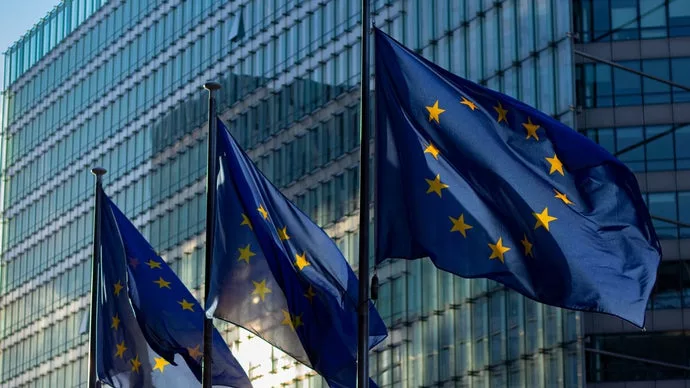
The failure of self-regulation
The industry's lobbying efforts face a significant challenge: games are just one stakeholder in a crowded field, and they may not hold much goodwill with regulators. This is partly because regulators often view the gaming business as an extension of the tech industry, and the EU has shown little patience for tech giants in recent years. Furthermore, genuine industry self-regulation could have potentially averted harsher intervention, but instead, the industry offered what appeared to be mere lip-service. Examples include drop-rate disclosures being hidden in hard-to-reach menus and 'in-game purchases' being added as mere notices to age ratings. Describing loot boxes as 'surprise mechanics' before parliamentary committees failed to persuade skeptical regulators that the industry was taking the issue seriously.
This lack of sincere engagement, combined with the fact that even strict regulation of major publishers might not solve the problem, creates a difficult landscape. The most predatory 'dark patterns' are often found in mobile titles from creators who operate outside the reach of industry bodies. Restricting major publishers might simply create a market gap for less scrupulous companies to fill, eventually bringing FOMO-driven mechanics back into the mainstream.
What comes next?
The draft now enters the EU's legislative machinery, where the Parliament and Council will deliberate amidst intense lobbying. While the text may change—with some definitions currently remaining vague—the fundamental shape of the Act is unlikely to shift. Even under the narrowest interpretation, it would eliminate a wide range of monetization strategies, especially on mobile and in games targeting minors. Given that the European Parliament has historically been a consumer-protective institution, the core of the Act is expected to remain intact.
The impact will extend beyond Europe. Companies will face a choice: develop entirely separate versions of games for the EU with different economies, or exit the market entirely. While some will attempt the former, maintaining separate builds is expensive. Over time, these strategies may become less appealing globally; once a developer has designed a version of a game that functions without these mechanics, the incentive to keep them in other regions weakens, similar to the global shift toward USB-C.
Once you've done the work of designing a version of your game that functions without these mechanics, the case for keeping them everywhere else gets weaker.

Partly, though, it'll be about perception. Once players outside Europe become aware that EU players are getting a "better" version of the game – one with honest real-money pricing, no loot boxes for kids, and the ability to switch off the nagging notifications and streak mechanics – that awareness will filter out and turn consumer opinion against these systems elsewhere too. "The version that's legally too exploitative to sell in Europe" is not a great marketing position for anyone to try and defend.
The other argument being widely aired, which will doubtless get even louder as the bill progresses, is that this will put European developers at a disadvantage on the global market, hobbled by rules their American and Asian competitors don't have to follow. This is the main thrust of statements from industry bodies thus far, but I'm not especially convinced by it. Anyone selling into the EU will be bound by exactly the same rules, while European developers selling outside it will be under no obligation to strip these mechanics from their non-EU versions.
Even if I were more convinced by the argument, though, I find it hard to believe that the Commission will care much for it. I'd be willing to bet they have figures to hand on how much of the revenue generated by these dark pattern monetisation practices in Europe actually stays in Europe – and I strongly suspect the answer is "very little", with the overwhelming majority flowing straight out to overseas multinationals. Protecting European consumers from practices that mostly enrich companies outside Europe is not a hard sell in Brussels right now.
A bill is finally coming due – one the industry ran up over more than a decade
None of this is to say that the Digital Fairness Act is a good piece of legislation – it's far too vague and broad in many ways, and could end up putting a lot of entirely innocent practices into legal grey areas in its current form. It's not even to say that it will help consumers in all the ways it intends to; that remains to be seen. But the sky isn't falling. What's actually happening is that a bill is finally coming due – one the industry ran up over more than a decade while being told, repeatedly and by people on its own side, exactly what would happen if it didn't take responsibility for itself. It didn't; perhaps it simply couldn't. Now someone else is going to do it instead, with far less care for nuance – and sympathy for the companies impacted will, I suspect, be in precious short supply, most of all from their own customers.