

Tears of Metal: How Clans and Hundreds of Fighters Reshape Roguelike Action
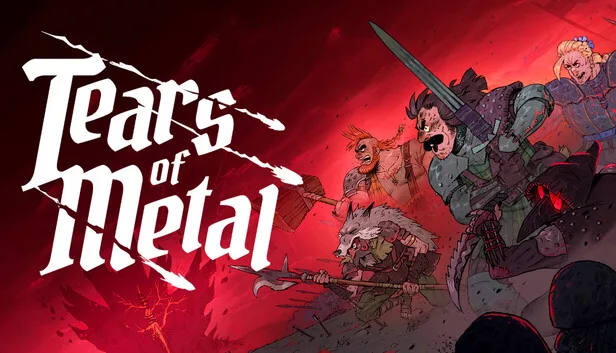
Tears of Metal builds battle scale around a growing company of Scottish warriors rather than a lone hero.
The Island After the Meteor
A fiery meteor devastated Dragon’s Tooth and unleashed hostile forces. Scottish clans attempt to reclaim it through a sequence of mass melee battles.
The PC Early Access launch is July 22. Balance, content scope, and individual systems may change during development.
A Company, Not One Hero
Dozens of allies fight on screen while the player directs attacks and maintains momentum. Scale creates spectacle, but success depends on upgrades that strengthen the full company.
Up to four players combine armies in co-op. More units and effects make formation readability and role distribution as important as individual reactions.
Four Emblem Clans
Early Access includes four Emblem clans. Their powers form the core of a build, rewarding upgrades that reinforce an existing interaction rather than unrelated bonuses.
The roguelike structure carries some progression between expeditions, while every run still demands adaptation to available choices.
What Early Access Must Prove
Long-term variety depends on distinct enemies, meaningful routes, and decisions that change army behavior rather than only numerical strength.
Paper Cult Games plans to develop through feedback, so final campaign scope and clan balance cannot be judged conclusively on launch day.
How Scale Becomes a Mechanic
Hundreds of figures are more than spectacle. They continually change priorities: a dense allied group can force one direction, while a stretched company reacts more slowly to pressure elsewhere. Movement should therefore be read as shifting the center of an army, not merely dodging with one character.
The crowd also makes combat harder to parse. Useful signals are larger than individual hits: where enemies are gathering, where the greatest pressure originates, and whether the company has room to move. As more fighters join, maintaining a clear attack priority becomes increasingly important.
A Build Should Reinforce Company Behavior
Clan powers and upgrades are best judged by the action they make more reliable. Some choices support a compact formation; others reward movement or frequent target changes. A larger number of effects is not automatically stronger when those effects demand incompatible rhythms.
A practical test is to describe an upgrade’s purpose in one sentence before the next encounter. A choice that fixes an observed weakness or develops an existing interaction has a clear role. A merely situational effect can add attention cost without dependable value.
Co-op Needs Direction, Not Instructions for Every Hit
With up to four players, detailed coordination of every ally is neither possible nor useful. Simple responsibilities work better: who enters a dense enemy group first, who watches a flank, and who preserves resources for a dangerous phase. Those agreements reduce noise without preventing improvisation.
Combined companies make the screen especially busy, so voice communication is most effective when it stays short. A warning about a target change or retreat is more valuable than discussing a full build during combat. Clan combinations can be considered between encounters, when the available choices are visible.
How to Judge the Early Access Version
At launch, the durable questions concern the core loop: whether growing a company feels rewarding, decisions change between runs, and mass combat remains readable. Future update count, final balance, and the finished campaign’s length are not established characteristics yet.
Early Access makes feedback part of development, but a plan is not shipped content. A buyer should judge the version currently available and follow Paper Cult Games’ official notes. The long-term test is whether clans, routes, and enemy variety can sustain repeat expeditions after the initial impact of scale.
Planning One Expedition
Before the next segment, define one primary build task: improve company survival, remove dense groups faster, or make constant movement safer. This does not require memorizing every possible upgrade. Compare each new option with that task and avoid breaking a proven interaction for a rare effect.
After a loss, separate execution from build structure. If a late retreat destroyed the company, replacing every upgrade will not fix the cause. If careful play repeatedly fails against the same pressure, use the next expedition to test a different clan emphasis. Repetition then becomes a controlled experiment rather than a random search.
Who Tears of Metal Is For
The game is for players who enjoy the spectacle of mass melee but want more than passive observation. Scale must be directed through targets, company growth, and clan combinations. Co-op strengthens that idea when the group makes short shared decisions instead of following four unrelated routes.
Players seeking a finalized, fully balanced campaign with a known scope should follow Early Access development. At launch, Tears of Metal is most interesting for its clear premise: joining roguelike choices with the feeling of an advancing host. Its lasting value depends on how long that premise produces meaningful differences between expeditions.
Sources: Paper Cult Games official Tears of Metal Steam page, Paper Cult Games official Early Access announcement, Xbox official release materials.
Аналитика MBG
