
Tachyum files for bankruptcy: The future of Prodigy IP remains uncertain
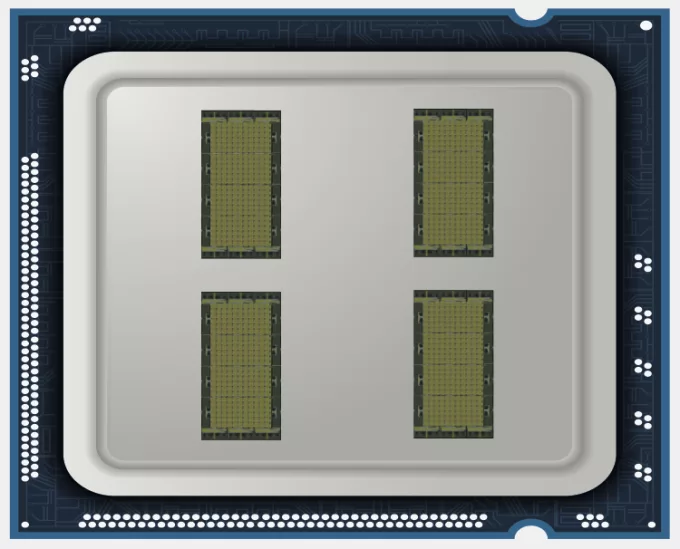
Tachyum, the company behind the long-delayed and highly anticipated Prodigy universal processor, has officially entered bankruptcy proceedings in Bratislava, Slovakia. The filing follows a series of missed development milestones and production delays. While the bankruptcy of the Slovakian subsidiary complicates the company's future, the ultimate fate of the Prodigy intellectual property depends on a complex web of international corporate ownership.
The development of Prodigy has been characterized by continuous delays and shifting specifications. Since its introduction in 2018, the processor has missed several target launch windows, originally slated for 2019–2020. Over the years, the design has undergone massive transformations: evolving from a 64-core model to a 128-core 5nm-class chip, and then to a 192-core design with 16 DDR5 memory channels. Most recently, in late 2025, Tachyum announced a radical shift to a chiplet-based architecture featuring 1,024 cores, 24 DDR5 channels, and a 1,600W TDP using TSMC's 2nm-class node. This redesign effectively pushed the potential commercial availability to 2030 or beyond.
Corporate Structure and IP Risks
The legal situation is complicated by Tachyum's multi-layered corporate structure. While most development occurs at Tachyum s.r.o. in Slovakia, which filed for bankruptcy on October 22, 2026, the ultimate parent company is Tachyum Ltd., based in the Cayman Islands. Under Slovak law, a voluntary bankruptcy filing presumes insolvency. If the court formally declares the Slovak entity bankrupt, a court-appointed trustee will manage its assets, which could include the patents and technologies essential to the Prodigy project.
There is a theoretical possibility that the company could use bankruptcy to shed liabilities while retaining its most valuable assets. If the intellectual property (IP) is owned by the U.S.-based Tachyum Inc. or the Cayman Islands-based Tachyum Ltd., the bankruptcy of the Slovak subsidiary might not automatically result in the loss of the Prodigy patents. However, the American parent company is reportedly facing its own pressure from creditors seeking liquidation. If the entire corporate group is liquidated, the Prodigy IP could be sold to satisfy creditors, potentially ending the project's development entirely.
Гика
