Stranger Than Heaven: 'A Game That Gets Richer the More You Chew on It'

Sega recently hosted a media preview for Stranger Than Heaven, offering a glimpse into the ambitious new title from RGG Studio. During a hands-on session and an interview with producer Hiroyuki Sakamoto, the team revealed how they intend to balance a complex combat system with accessibility, and how they plan to use music and historical settings to tell a story spanning five decades.
Stranger Than Heaven, the upcoming title from the creators of the Like a Dragon series, is set to launch on January 15, 2027. Rather than a standard modern-day drama, the game follows the protagonist, Makoto Daito, through a 50-year journey across five distinct eras and cities. This ambitious scope brings unique challenges, particularly in how the game handles combat, historical immersion, and the evolution of its world.
Mastering the Art of Combat
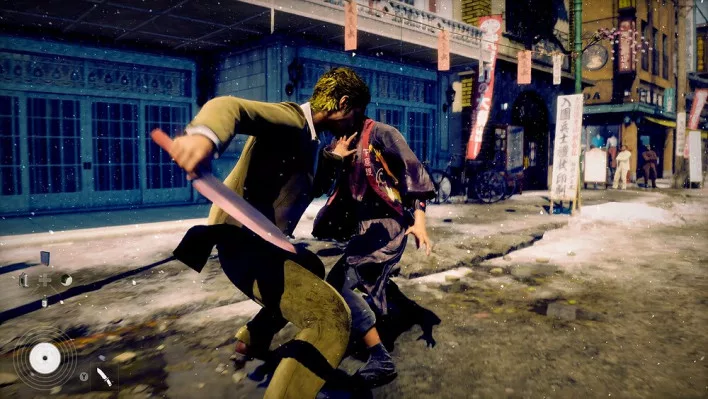
One of the primary concerns for players of action-heavy titles is the learning curve. Producer Hiroyuki Sakamoto addressed the potential barrier to entry regarding the game's unique combat system. He noted that while the demo might feel challenging, the game is designed to teach its controls naturally as players progress through the protagonist's life. Since the story covers 50 years, players will have ample time to master the mechanics through long-term engagement.
To ensure the experience is accessible to everyone, RGG Studio has implemented several features. For those who find action games difficult, a Casual Mode is available, offering simpler controls and options like automatic health recovery. However, for the most immersive experience on PC, Sakamoto recommends using a controller, as the combat is specifically designed to utilize the L and R triggers.
The combat itself relies on a custom-built, independent left-right control system. Sakamoto emphasized that the team built everything from scratch, including all animations, rather than repurposing assets from previous series. This allowed for extreme precision in combo timing and motion transitions, ensuring that attacks feel seamless when players input commands freely. Additionally, the weight and characteristics of different weapons play a significant role; each tool has distinct attack speeds and combo types.
The Rhythm of the Eras
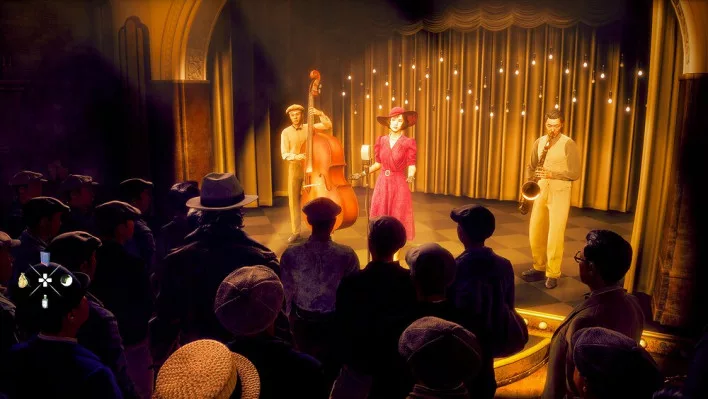
A standout feature of Stranger Than Heaven is its 'showbiz' content, which is deeply intertwined with the game's progression. Players can perform songs that require specific atmospheres, using arrangements of existing music to set the mood. These performances are not just cosmetic; the income earned from shows becomes a vital revenue source in the mid-to-late game. Furthermore, tracks carry over between eras, with their box office level rising to provide advantages in subsequent periods.
To avoid dry historical accuracy, the developers use musical arrangements to bridge the gap between the past and modern audiences. For example, an old song can be reimagined in a polka style. Players can also change the instruments used by performers—such as swapping a piano for an accordion—to create different impressions of the same song. This flexibility allows for a rich, evolving musical landscape as the eras change.
Five Eras and Five Cities
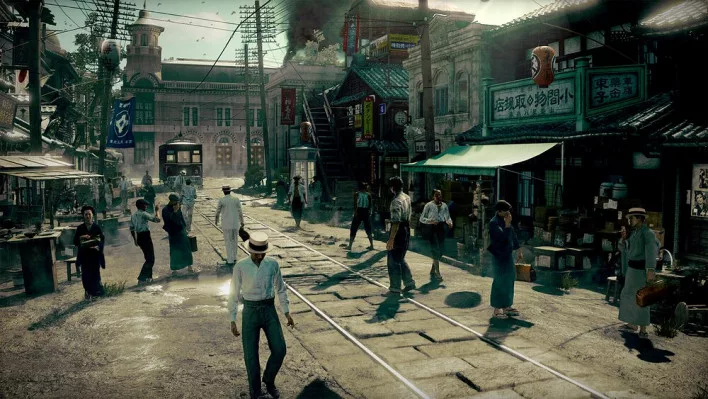
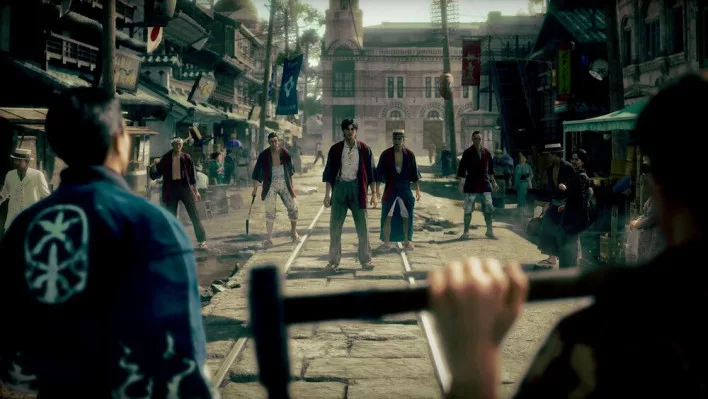
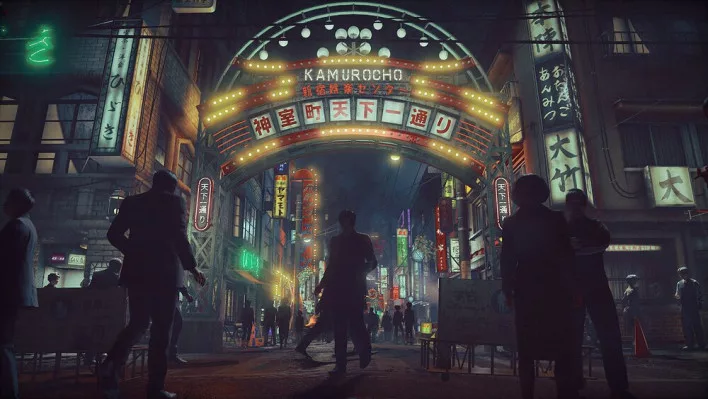
The narrative spans from Kokura in 1915 to Kamurocho in 1965. Sakamoto confirmed that all five eras and cities were part of the initial plan and have been developed with equal content density. Each era features its own variety of minigames and shops. Recreating the atmosphere of 1915 proved particularly difficult due to the scarcity of historical materials, requiring the team to rely on their imagination to create a persuasive setting.
A strict rule during development was to avoid using technology that did not exist in the respective era. In Kokura, players can enjoy traditional Japanese games like arm wrestling, spinning tops (koma), and card-slapping games (menko). As the timeline progresses to Shinjuku, players can play a simplified version of pachinko that reflects the technology of that specific period.
Unlike modern titles in the series, Stranger Than Heaven lacks comedic side stories. While side content exists, it is designed to match the serious tone and atmosphere of each specific era, ensuring that the player's immersion in the historical context remains unbroken.
Following our previous deep dive into the mechanics and historical scope of Stranger Than Heaven, we continue our conversation with the development team. This second part of our editorial feature focuses on the emotional core of the narrative, the significance of the character's journey, and the technical refinements made during development to ensure a seamless experience.
The Evolution of Makoto Daito
At the heart of Stranger Than Heaven is the profound transformation of its protagonist, Makoto Daito. The narrative is designed to track his personality and outlook on life as he ages, spanning a massive 50-year period. The developers aim to create a sense of deep empathy, allowing players to feel as though they have lived another person's life alongside their own—a sensation the team compares to the fulfillment found in finishing a great book.
This long-term character study presented a unique challenge for RGG Studio, marking their first attempt to depict a half-century within a single title. The design team worked extensively to ensure Makoto's appearance and circumstances felt authentic to each era. Interestingly, the protagonist's design includes subtle hints about his mixed heritage, such as his tattoo, which serves as a narrative clue that connects various elements of the story.
A Standalone Experience in the Like a Dragon Universe
One of the most frequent questions concerns how Stranger Than Heaven fits into the established Like a Dragon series. The developers have taken a deliberate approach to keep the game accessible to everyone. They have minimized reliance on existing lore, ensuring that players can fully enjoy the story without prior knowledge of the series. In fact, the team suggests that playing Stranger Than Heaven first might actually enrich the player's imagination when they eventually dive into other Like a Dragon titles.
Global Stars and the Role of Orpheus
The game features appearances by several globally recognized pop culture icons. Rather than casting for fame alone, the priority was finding actors who could master the specific tone of the narrative. The developers noted that these stars were incredibly professional, delivering performances and vocal work that exceeded expectations. The casting process was a collaborative effort where the actors' synergy with the game's atmosphere was paramount.
Among these stars, Snoop Dogg plays a pivotal character named Orpheus. The role is described as highly significant; the meeting between Makoto Daito and Orpheus serves as a turning point that dictates the direction of Makoto's life, making Orpheus a cornerstone of the game's narrative structure.
Refining Combat and Narrative Scale
The development process was heavily influenced by community feedback. Following the initial media preview at Summer Game Show (SGF), the team received significant input regarding the combat system. This led to extensive tuning of the combat's feel, impact, and responsiveness. The developers are continuing to make minor adjustments to ensure the combat is polished and satisfying by the time of launch.
Regarding the game's scale, the team clarified that they never intended to create a massive open-world title. Instead, they focused on a narrative-driven experience designed to stay in the player's heart. They believe they have achieved the appropriate scale to tell a story about 50 years of a single life without sacrificing the quality of the storytelling or technical stability.
A Final Message to Players
As the release approaches, the developers expressed their commitment to the project, stating they have poured everything they can into this narrative experience. They encourage players—even those unfamiliar with RGG Studio's previous work—to experience a new style of storytelling. Their ultimate goal is to deliver a game that 'gets richer the more you chew on it,' rewarding players who take the time to explore its depths.