
Splatoon Raiders: How Nintendo Turned Salmon Run Into Solo Action
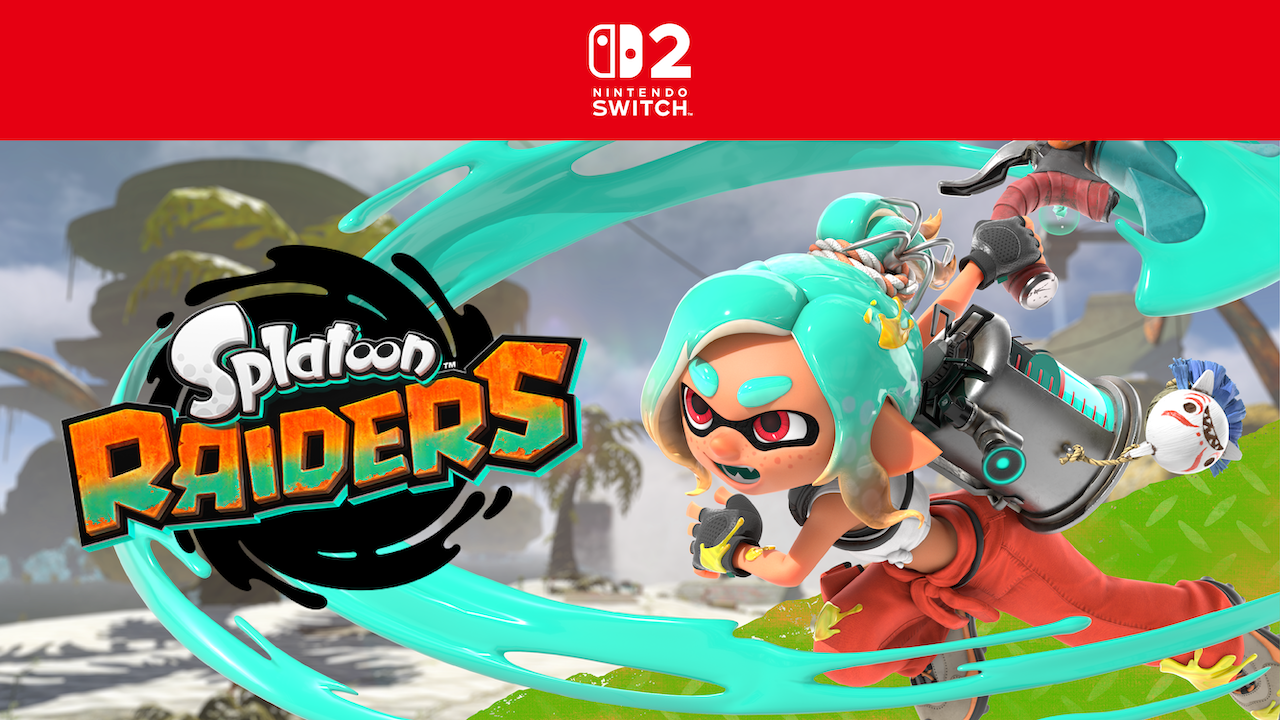
Splatoon Raiders launched July 23 as a Nintendo Switch 2 spin-off. Developer interviews show that its solo design began with Salmon Run, passed through an abandoned automated-trap prototype, and returned to active player control.
Why This Is Not Splatoon 4
Producer Seita Inoue describes Raiders as a separate title focused on the series' noncompetitive side. The team wanted to turn ingredients from story modes and Salmon Run from secondary offerings into a complete game.
Nintendo has not abandoned competitive Splatoon. Separation lets Raiders change progression, enemy density, and the role of gadgets without also serving the balance requirements of territory matches.
The Base-Defense Prototype Became Too Passive
An early version involved placing many traps and watching them hold back Salmonid waves. It addressed a real load problem: work designed for four Salmon Run participants could not simply be assigned to one character.
A fortress of automatic devices removed Splatoon's recognizable action density. The player moved, inked ground, and shifted forms less often, so base defense was discarded as the central concept.
Gadgets Returned Initiative to the Player
The final model combines a weapon with two equipped gadgets. Devices can support a forward charge, a high jump, or a short hover, and each enters cooldown after use.
Two slots create a compact rotation. While one gadget is unavailable, the player shoots, moves, or activates the other. Salmon Run's workload survives, but assistance comes from the player's action set instead of three teammates.
Chaos Needs Clear Signals
Large Salmonid crowds can make defeat unreadable, particularly when attacks arrive from behind. The developers used audio cues and visual design to warn about threats and separate important events from general noise.
That is essential in a solo adaptation. A co-op partner can spot danger or revive an ally; here the game itself must provide enough information or intensity becomes randomness.
Progression Teaches Multitasking
Players begin with simple gadgets before actions and upgrades expand. Character growth is not only a damage increase: it gradually adds responsibilities and enables combinations that initially seemed impossible.
Progression therefore regulates difficulty and instruction together. A player learns one tool and later integrates another into the existing rotation instead of receiving the whole system at once.
What Raiders Adds to Splatoon's Formula
Raiders preserves ink shooting, movement through painted surfaces, form shifting, and Salmonids, but changes the source of tension. Personal control of several systems replaces a human opponent and four-player coordination.
That also explains the Switch 2 exclusivity: the developers connect higher enemy counts to the console's performance. The result argues that Splatoon's identity depends not only on PvP, but on the constant link between motion, ink, and quick decisions.
Deep Cut and the Exploration Bot complete that restructuring. A companion accompanies the mechanic during raids, but the relationship does not turn the game back into a four-player match of equal participants. The helper supports a solo route while the player remains responsible for weapons, gadgets, and movement. Raiders therefore does not fill empty Salmon Run slots with bots; it redistributes duties so one person controls a wider decision set.
The Central Lesson of the Prototype
The development history separates system count from player activity. Automatic traps could process many enemies at once while leaving fewer immediate decisions to the person holding the controller. Gadgets solve a similar scaling problem but require direction, timing, and a follow-up action during cooldown. Nintendo preserved the size of the wave by changing not the number of threats, but how directly the player answers each one.
Sources
Nintendo Ask the Developer Vol. 22; Nintendo Splatoon Raiders product page; Nintendo launch information.
Аналитика MBG
