

South Korea Proposes $16 Billion for AI and Semiconductor Push
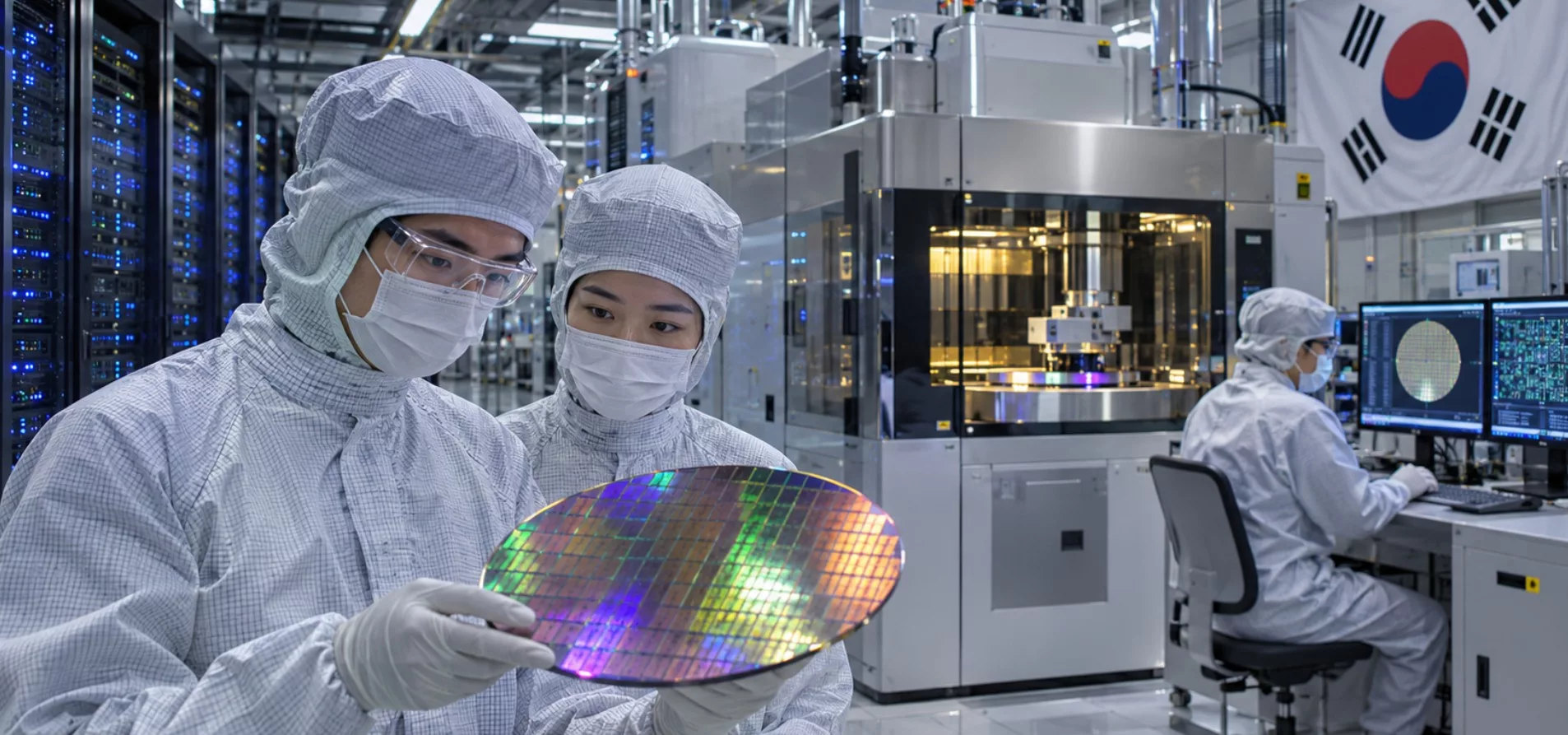
South Korea is moving beyond high-level rhetoric about future technologies and into the realm of massive infrastructure spending. President Lee Jae Myung has defended a record-breaking budget proposal for 2027, which includes 21.3 trillion won (approximately $16 billion) earmarked for AI, semiconductors, Physical AI, and AI data centers. This proposed investment would nearly double the spending levels seen in the current year, signaling Seoul's intent to not just participate in, but actively dominate the global AI and memory industries.
The strategic direction of this proposal is clear: securing the momentum of the global AI expansion. As data centers worldwide scale up, the demand for high-performance memory chips—specifically High Bandwidth Memory (HBM) and Server DRAM—is skyrocketing. This puts South Korean giants Samsung Electronics and SK hynix at the center of the global supply chain. To protect this industrial advantage, the government's plan goes beyond mere R&D, focusing on the physical requirements of large-scale production and computing clusters.
Infrastructure: The Backbone of Semiconductor Fabs
A critical takeaway from the budget outline is the recognition that modern semiconductor fabrication plants (fabs) are heavily dependent on local utility infrastructure. Building a factory is only the first step; without massive, reliable supplies of electricity and water, as well as advanced logistics and transport links, a high-tech facility becomes a massive liability. To prevent such bottlenecks, the proposed budget allocates approximately 2.1 trillion won specifically for electricity, water, and industrial infrastructure to support new manufacturing sites.
Furthermore, the plan includes roughly 2 trillion won dedicated to expanding semiconductor production capacities. This is a direct response to the need for more manufacturing throughput to meet the surging global demand for AI-related components.
Physical AI and Industrial Integration
South Korea is also looking toward 'Physical AI'—AI systems that interact directly with the physical world. This includes robotics, autonomous systems, smart factories, and applications where AI integrates with sensors and industrial actuators. The budget proposes around 500 billion won for demonstration and application projects in this sector, aiming to bridge the gap between digital intelligence and industrial automation.
While the scale of the $16 billion package is significant, it is important to note that this is currently a budget proposal. The 21.3 trillion won figure must still be approved by the National Assembly. While the final allocation for specific line items may shift during the legislative process, the overarching political signal is unmistakable: Seoul views the race for AI infrastructure and semiconductor supremacy as a vital strategic priority.
Гика
