
Sony's Upgraded PlayStation Portal Player Adds Internal Storage
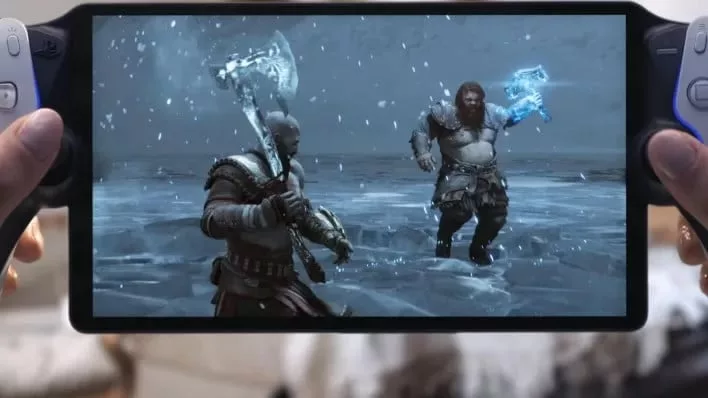
Sony is evolving its handheld lineup. Following the 2023 launch of the PlayStation Portal—a device primarily designed for remote play from a PS5—the company is now introducing a new iteration that shifts its identity and hardware capabilities. The upcoming model, rebranded as the PlayStation Portal Player, will feature additional internal storage, a move Sony claims is intended to support "future features," though the specific nature of these capabilities remains undisclosed.
The shift in nomenclature from 'Remote Play' to 'Player' suggests a broader vision for the device's utility. While the original Portal was strictly a streaming peripheral, the addition of internal storage hints at a transition toward a more self-contained experience. However, Sony has been notably vague regarding what this extra capacity will actually enable. Whether it serves as a buffer for more complex streaming tasks or facilitates local content, the company has not yet provided a roadmap for these promised features.
Storage capacity and emulation potential
While official specifications for the new storage capacity have not been released, the hardware community has already begun investigating the device. Renowned hacker Andy "theflow" Nguyen has reportedly identified 6GB of available free space within the system. If this capacity is significantly expanded in the new model, it could make the handheld a much more viable option for enthusiasts interested in emulation. Nguyen demonstrated the device running Grand Theft Auto: Liberty City Stories via the PPSSPP emulator, showing the game running natively, though no formal benchmarks or detailed performance metrics were provided to confirm the stability of such use cases.
Availability and regional limitations
The PlayStation Portal Player is scheduled to launch in Japan on December 10, priced at 39,980 Yen. This matches the MSRP of the current model. Initial availability will be limited to the Japanese market, featuring Japanese language support and requiring a Japanese PlayStation Network (PSN) account. While this regional-first approach is common—similar to how Nintendo has handled certain Switch 2 launch strategies—it remains to be seen if a global rollout will follow.
Гика
