The AI-Driven Solo Success: How 'Slotbound' Hit 200,000 Sales

Can a developer with zero formal experience in game production create a commercial hit using nothing but AI prompts and sheer determination? The recent success of 'Slotbound' suggests the answer is a resounding yes. Within just one week of its Steam release, the debut title from solo developer Min Kim has surpassed 200,000 copies sold, proving that the barrier to entry for indie development is being fundamentally reshaped by generative technology.
The numbers behind 'Slotbound' are staggering for a debut project. Developed over the course of a single year by Min Kim, the CEO of Optima Arch, the game has already generated approximately $1.33 million (1.8 billion won) in gross revenue. The momentum was immediate: within the first 48 hours of launch, the game surpassed 470 million won in revenue. This success follows a highly successful demo phase on Steam, where the game climbed from 29th to 2nd place in the real-time demo player rankings, peaking at 447 concurrent players on its first day.
A New Paradigm: Coding Through Conversation
What makes 'Slotbound' a significant case study is not just its sales, but its production method. Kim revealed that virtually all of the game's code was written by AI. Eschewing traditional lectures or textbooks, Kim learned the LÖVE (LÖVE2D) engine and the Lua programming language through a process of iterative prompting. He described a workflow of explaining desired features in plain language, testing the AI's output, and making manual adjustments when the code failed to function as intended.
The technical challenge was not in writing syntax, but in managing the AI's limitations. Kim noted that early in development, AI models were prone to breaking existing features while attempting to fix new ones. To combat this, he developed automated tests to verify the entire game state after every fix and even created a tool to inspect game screens pixel by pixel. 'Ultimately, what I had to master wasn't coding syntax,' Kim explained, 'but how to describe problems accurately and how to verify if they were truly fixed.'
The High Stakes of Solo Development
For Kim, the decision to go solo was driven by necessity and a personal promise. Having dropped out of a computer science program in the UK and returning to South Korea at age 24, he faced a difficult job market with no formal resume. He was motivated by a vow to his family to achieve stability before turning thirty. With no external investment, government support, or even a successful application to the 2026 Indie Game Dev Camp, Kim relied entirely on his military service savings and the sale of personal belongings to fund his dream.
The financial overhead was kept to an absolute minimum. Most of his expenses were limited to Steam registration fees, asset packs, and monthly subscriptions for AI coding tools. To maximize his limited budget, Kim would alternate between different AI service accounts—such as Copilot and OpenAI's Codex—to stay within the usage limits of each. This lean approach allowed him to focus entirely on the game, though it came at the cost of a self-imposed social isolation.
Genre Blending and the 'Core Fun Factor'
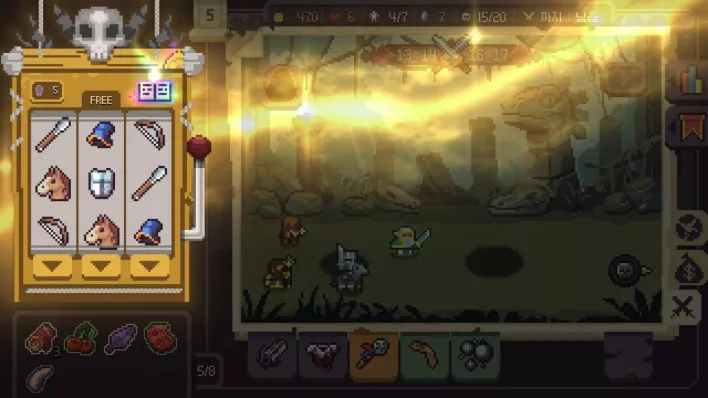
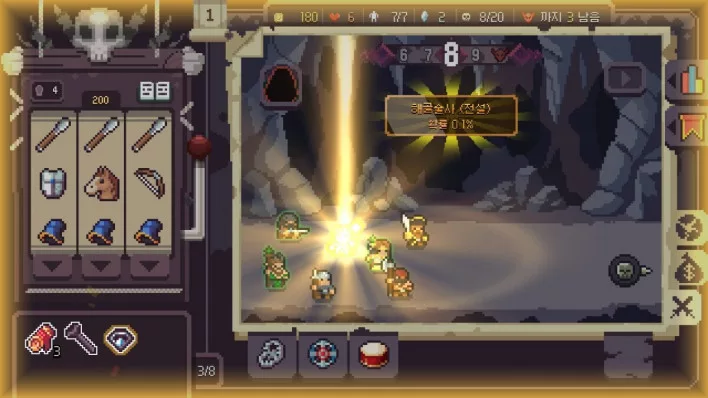
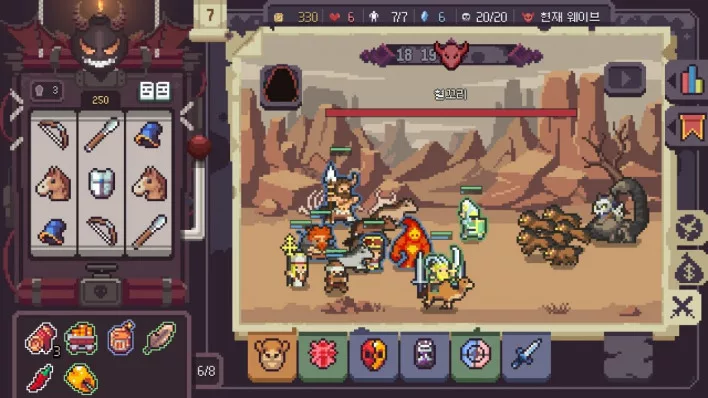
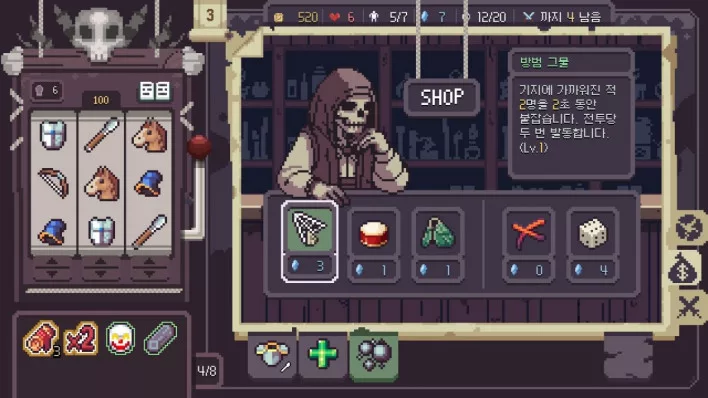
The gameplay of 'Slotbound' is a unique hybrid of slot machines, auto-battlers, and roguelikes. Players spin a 3x3 slot machine to summon units, which they then level up or promote to defend against waves of enemies. The concept was born from Kim's observation of existing games; while many slot-based games focused on 1-on-1 combat or stat boosts, he saw a gap for a more dynamic, army-building experience. 'I thought, "Why doesn't this exist? This is it!" and started right away,' he recalled.
Despite the heavy reliance on AI for programming and certain visual assets—including menu backgrounds, animations, and VFX—Kim has been transparent about his methods. He disclosed the use of generative AI on his Steam page, stating that he believes passion and effort can still resonate with players even when using these tools. He emphasized that while AI is a powerful tool for production, the ultimate responsibility for the game's quality and enjoyment rests solely with the creator.
Focusing on the Core Loop
For Kim, the secret to solo development was a ruthless focus on a single element of fun: the moment of spinning slots to create an army. He treated this core mechanic as the project's North Star, discarding any ideas that threatened to compromise that specific feeling, regardless of how promising they seemed on paper.
To manage the workload alone, Kim relied heavily on automation and intuition. He implemented automated testing to ensure new code fixes didn't break existing features—a necessity when working without a QA team. His development process was driven by a mix of instinct and direct player feedback; while he relied on his own intuition for immediate adjustments, dedicated players testing the demo were instrumental in identifying late-stage balancing issues.
His approach to scheduling was less about strict time management and more about pure momentum. Kim described a lifestyle of sleeping only when exhausted and spending almost all waking hours developing, often building ideas as they came to him rather than following a rigid priority list.
The Viral Surge and the Cost of Success
The explosion in popularity for Slotbound was largely unexpected. Kim admitted he wasn't closely monitoring analytics during development, noting that the game's visibility surged suddenly following the demo's release, particularly on YouTube and within the Chinese market. This surge was so rapid that his previous marketing efforts on Reddit and Threads had almost no impact on the final outcome.
The commercial reality was even more staggering than his projections. While Kim had hoped for 100 million won in the first 24 hours and 500 million won within a week, the actual sales far exceeded these expectations. Currently, China is the top-selling country, with Chinese-language reviews accounting for approximately half of the total Steam feedback, followed by English and Korean.
However, rapid success brought immediate technical debt. In the ten days following the launch, Kim was forced to release over 10 updates to address a cascade of issues, including:
The Decision to Self-Publish
Despite numerous inquiries from publishers, Kim chose to self-publish. His reasoning was twofold: the deals offered were not significant enough to justify giving up equity, and he believed the modern marketing landscape—dominated by creators and short-form video—was something he could navigate more effectively on his own. He expressed a determination to push through the difficult journey solo rather than trading ownership for ease of management.
Looking Ahead: AI and the Future of Solo Dev
Looking toward the future, Kim plans to continue solo development for the foreseeable future, with his next title expected to begin development around early 2027. He noted that while AI is lowering the entry barrier for new creators, the ultimate responsibility of finishing a game remains a human endeavor. He also touched upon the need for government support in the indie ecosystem, specifically regarding international copyright enforcement, noting that solo developers often lack the resources to combat knock-off games on foreign platforms.
Despite the challenges, Kim remains optimistic about his career. He emphasized that his goal is to build long-term trust with players, stating that he has no intention of disappearing after a single hit. 'I'm not someone who will disappear after making one game,' he promised. 'I have so many games I want to make in the future.'
The Weight of Solo Development
Achieving a milestone of 200,000 copies sold is a significant feat for any studio, but for a first-time developer working entirely alone, the implications are even more profound. The journey of creating Slotbound was not merely about coding mechanics or designing levels; it was an exercise in extreme multitasking. Without a dedicated team to handle art, sound, quality assurance, or marketing, the developer had to act as every department simultaneously. This approach, while allowing for a singular, uncompromising vision, introduces a level of complexity that most professional studios avoid by hiring specialists.
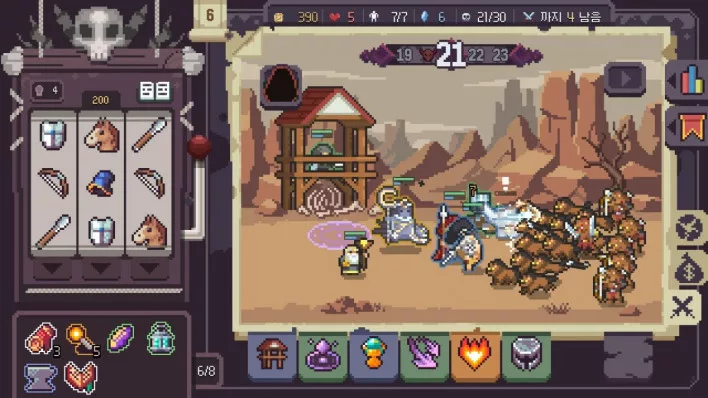
The technical architecture of the game reflects this solitary effort. Every system—from the core gameplay loop to the user interface—had to be built from the ground up without the benefit of a collaborative feedback loop during the initial stages. This often means that the developer must solve problems that would typically be delegated to a specialist, such as optimizing performance for various hardware configurations or ensuring the stability of the game's economy. The scale of success seen with Slotbound suggests that the developer managed to navigate these technical hurdles without the traditional safety nets provided by a larger production team.
Marketing and Community Management
Beyond the development cycle, the logistical challenge of bringing a game to market is often where solo projects falter. For Slotbound, the transition from a personal project to a commercial product required managing community expectations and maintaining a presence in the market. In a landscape dominated by large-scale publishers with massive marketing budgets, a solo developer must rely on organic growth, word-of-mouth, and strategic visibility to reach a significant audience. The 200,000-unit milestone indicates that the game's visibility was sufficient to penetrate the market effectively, likely driven by the strength of the core gameplay loop rather than an expensive advertising campaign.
The success of this project serves as a case study for the modern indie landscape. It demonstrates that while the risks of solo development are exponentially higher due to the lack of specialized oversight, the potential for direct connection with the player base and the preservation of artistic integrity remains a powerful motivator. As the developer moves forward, the primary question remains whether this momentum can be sustained through subsequent updates or if the limitations of a single-person operation will eventually necessitate a shift toward a more traditional studio structure.