Samsung Galaxy Tab S12+ Review: A Premium Tablet with a Power Problem
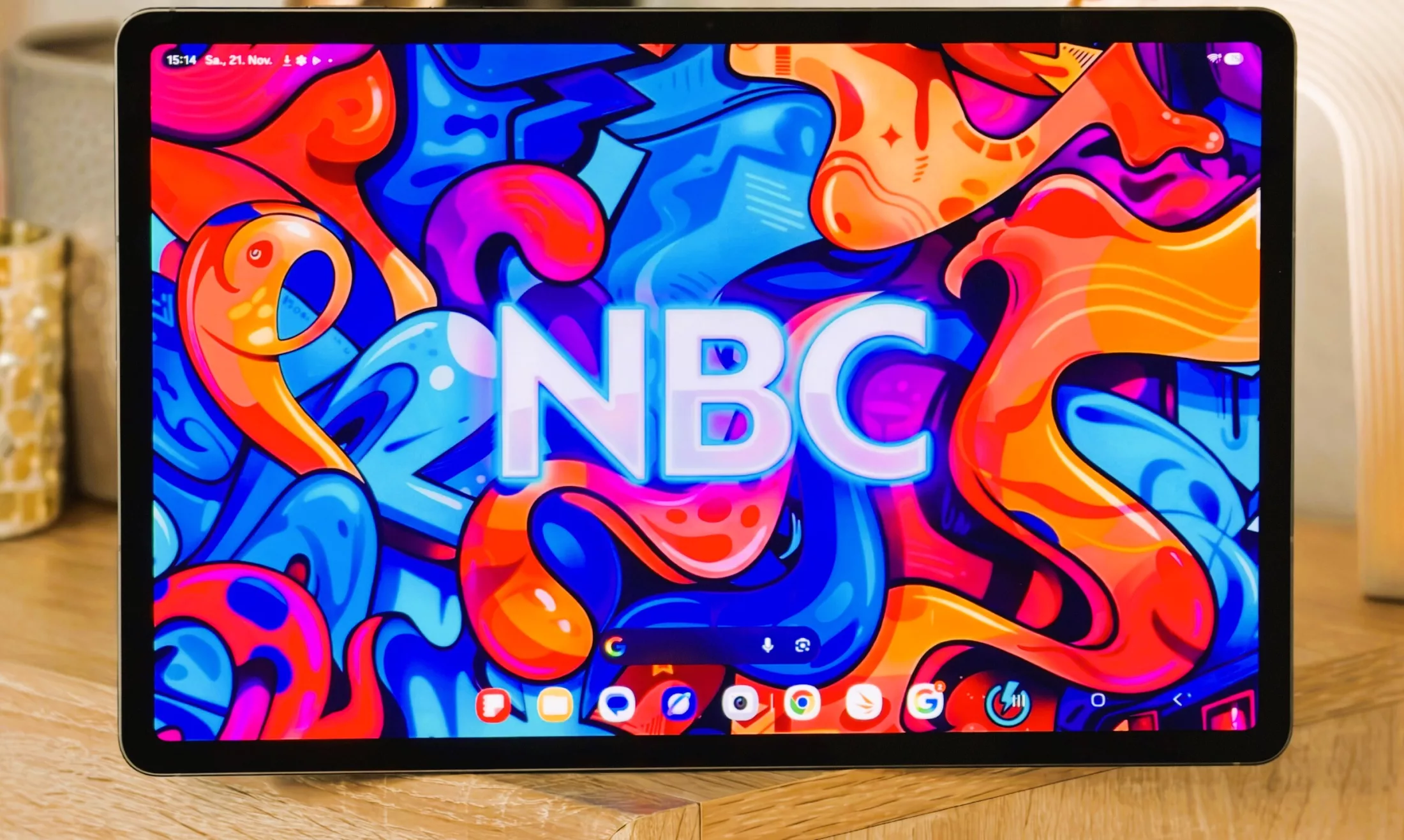
Samsung's latest premium tablet, the Galaxy Tab S12+, arrives with a high-end MediaTek Dimensity 9500 chipset and a price tag reaching up to $1,549. While it excels in areas like display quality, S Pen integration, and long-term software longevity, our testing reveals significant drawbacks in energy efficiency and display flicker that may give potential buyers pause.
The Galaxy Tab S12+ is a versatile, well-rounded flagship that leans heavily into Samsung's established strengths. With the inclusion of the S Pen in the box and the productivity-focused Samsung DeX interface, it remains a powerhouse for multitasking and creative work. Furthermore, Samsung’s commitment to software longevity is a standout feature, promising seven years of Android OS upgrades and security updates—a significant advantage over many competitors.
Performance and Connectivity
Despite moving away from Snapdragon for this iteration, the MediaTek Dimensity 9500 provides ample headroom for demanding tasks, including gaming and AI-driven features. The device also maintains several practical advantages, such as a reliable fingerprint sensor and a microSDXC slot for expandable storage (up to 2 TB). For users requiring mobile connectivity, the 5G version includes essential GNSS positioning, a feature lacking in some rivals like Xiaomi or Honor.
The Efficiency and Display Trade-off
However, the premium experience comes with notable compromises. Our testing highlighted unexpectedly poor efficiency, leading to shorter-than-expected battery life for a tablet of this scale. Additionally, the display features a low PWM (Pulse Width Modulation) dimming frequency, which can cause eye strain for users sensitive to screen flicker. The device also lacks Wi-Fi 7 support, which is a missed opportunity for a flagship released in late 2026.
Build and Display Quality
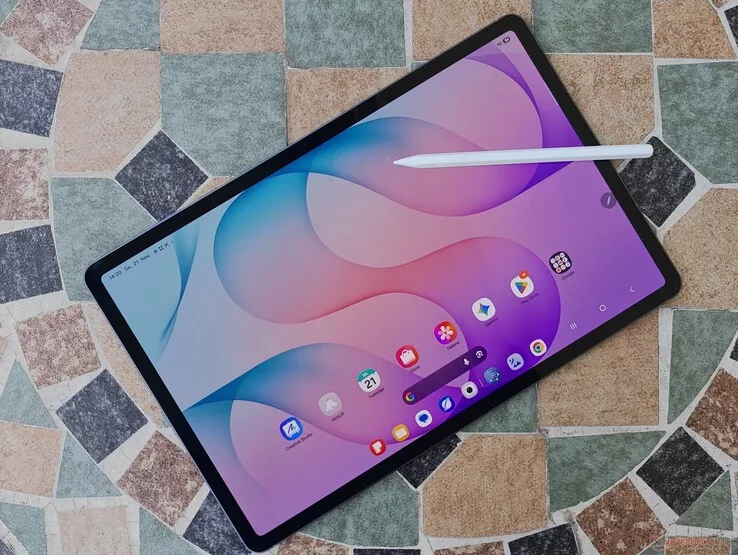
Physically, the Tab S12+ is exceptionally well-built with an aluminum chassis that carries an IP68 rating for dust and water resistance. While it feels premium, it is not the lightest in its class; for instance, the Honor MagicPad 4 is noticeably lighter. The 12.6-inch Dynamic AMOLED 2X display remains one of the best in the industry, offering vibrant colors and high brightness, though the screen-to-body ratio is slightly lower than that of the Ultra model.
Storage and Expansion
While the internal UFS 4.0 storage is fast, the microSDXC card reader performance is somewhat underwhelming compared to some competitors. In our tests, the Tab S12+ achieved average transfer speeds of approximately 32.94 MB/s for sequential writes with an Angelbird AV Pro V60 card, trailing behind the Lenovo Yoga Tab Plus Gen 2, which utilized a Snapdragon 8 Elite chipset.
Connectivity and GNSS: Wi-Fi 6E and inconsistent positioning
The Galaxy Tab S12+ supports Wi-Fi 6E, though it notably lacks Wi-Fi 7 support. Despite this, the 6 GHz band provides impressive speeds; in our tests using an ASUS RT-BE96U router, we saw peaks exceeding 2,000 Mbps. The device is available in both a Wi-Fi model and a 5G version, the latter of which includes a nano-SIM slot and eSIM support.
While the Wi-Fi performance is robust, the GNSS (Global Navigation Satellite System) performance in the Wi-Fi model left something to be desired. During outdoor testing, the Tab S12+ relied on single-band GNSS, resulting in relatively low accuracy and fairly weak signal strength.
Cameras: Decent for video calls and documents
The tablet features a 12 MP front-facing camera located in the display bezel. It includes autofocus and a wide 120-degree field of view, making it well-suited for video calls. It is capable of recording video in UHD resolution.
The 13 MP rear camera is a slight resolution bump over the front sensor. While it is more than adequate for photographing documents, our test shots lacked the sharpness and dynamic range we expected. However, the autofocus performed reliably, and color analysis showed no major outliers.
Display: A top-tier AMOLED panel with a PWM caveat
The 12.6-inch AMOLED display is one of the standout features, offering a 120 Hz refresh rate and excellent brightness. We measured over 1,500 cd/m² during HDR video playback and in APL18 patterns (representative of everyday use), though the Honor MagicPad 4 managed to reach higher peak levels.
However, there is a technical trade-off regarding eye comfort: the display uses Pulse-Width Modulation (PWM) for brightness control but lacks high-frequency PWM dimming. We measured the PWM frequency at just 240 Hz, whereas competitors like the MagicPad 4 offer much higher 5,280 Hz dimming.
Input and Accessories: S Pen and Biometrics
The included S Pen is highly responsive for handwriting; while Samsung does not officially specify the latency, no meaningful delay was observed during use. Notably, the S Pen does not require charging, which means it lacks Bluetooth-based gesture controls. The 12.6-inch touchscreen is responsive, though the tablet lacks a vibration motor for haptic feedback.
For security, the tablet features an optical fingerprint sensor beneath the OLED panel, which we found easy to reach and reliable in daily use. It also supports face unlock, though this method is less secure.
Package and Warranty
- Included: USB-C to USB-C cable, quick-start guide, and S Pen.
- Optional accessories: Book Cover (approx. $50 MSRP) and Anti-Reflecting Screen Protector (approx. $20 MSRP).
- Warranty: 24 months in Germany (36 months via Amazon.de); Samsung Care+ available starting at approximately $190.
Display: Exceptional Speed, Potential Eye Strain
The Galaxy Tab S12+ features a 12.6-inch AMOLED panel with a resolution of 2800x1752. In terms of raw speed, the display is outstanding. Response times for both Black-to-White (1.87 ms combined) and Grey-to-Grey (1.49 ms combined) are exceptionally fast, outperforming the vast majority of tested devices. This makes the tablet an excellent choice for fast-paced 3D gaming where motion clarity is critical.
However, there is a significant caveat for users sensitive to screen flickering. The backlight uses Pulse-Width Modulation (PWM) to control brightness, and the measured frequency is 240 Hz with a modulation amplitude of 16.63%. While this falls within the low-risk range of the IEEE 1789-2015 standards, 240 Hz is relatively low. Users prone to eyestrain or headaches from PWM may find this problematic at lower brightness settings.
Color accuracy is a strong suit for this device. Using the Calman software to evaluate the panel against the sRGB color space, the Delta E values for both colors and grayscale remained within the target range (<3). This ensures that color differences are barely noticeable to the naked eye.
Performance: The Dimensity 9500 Factor
Unlike many competitors that rely on Qualcomm's Snapdragon chips, the Galaxy Tab S12+ is powered by the MediaTek Dimensity 9500. While it isn't a Snapdragon 8 Elite, it is far from slow. In Geekbench 7 single-core tests, the Dimensity 9500 delivered 2892 points, which is actually higher than the Snapdragon 8 Elite found in the Lenovo Yoga Tab Plus Gen 2 (2628 points) and the Snapdragon 8 Gen 5 in the Xiaomi Pad 9 Pro (2448 points). In multi-core scenarios, the Dimensity 9500 remains highly competitive, trailing only slightly behind the top-tier Snapdragon 8 Elite and Snapdragon 8 Gen 5 implementations.
Samsung claims a 61% boost in AI performance compared to the previous generation. This is reflected in the NPU capabilities, where the Tab S12+ shows a clear advantage in AI inference tasks compared to the Snapdragon-based competitors like the Honor MagicPad 4 and Xiaomi Pad 9 Pro.
In productivity-focused benchmarks like PCMark for Android (Work 3.x), the Dimensity 9500 scores 17,283 points. This places it ahead of the Xiaomi Pad 9 Pro (16,756 points) and the previous generation Galaxy Tab S10+ (16,684 points), though it still sits behind the Lenovo Yoga Tab Plus Gen 2 (24,691 points).
Benchmark Performance and Core Processing
The Samsung Galaxy Tab S12+ is powered by the MediaTek Dimensity 9500 chipset, paired with the Mali G1-Ultra MC12 GPU and 12 GB of RAM. In the BaseMark OS II suite, the tablet achieved 12,288 points, outperforming the Xiaomi Pad 9 Pro (Snapdragon 8 Gen 5) by 3% and significantly leading the previous generation Samsung Galaxy Tab S10+ (Dimensity 9300+), which scored 11,606 points.
System-level performance shows a notable improvement in efficiency and speed. The Tab S12+ recorded 15,927 points in the System test, a slight 1% increase over the Galaxy Tab S10+. However, the memory subsystem tells a different story: the tablet scored 13,588 points, which is a 22% decrease compared to the S10+ and falls below the average for the Dimensity 9500 class (10,485 points) in this specific metric.
Graphics and Gaming Capabilities
The Mali G1-Ultra MC12 GPU demonstrates strong graphical capabilities, particularly in high-resolution scenarios. In the GFXBench 4K Aztec Ruins High Tier Offscreen test, the device maintained a smooth 60 fps, which is a significant leap over the 23,324 average for the tablet class. In 3DMark tests, the Tab S12+ showed dominance in several categories, particularly in the Solar Bay Unlimited test, where it scored 15,401 points—outperforming the Lenovo Yoga Tab Plus Gen 2 (Adreno 830) by 26% and the Xiaomi Pad 9 Pro (Adreno 829) by 37%.
Despite its graphical strength, the tablet does not quite reach the absolute peak of the fastest flagship chips in every metric. While it leads in many 3DMark scenarios, it remains behind the top-tier performance seen in some specialized benchmarks, though it remains a powerhouse for modern mobile gaming.
AI Inference and Machine Learning
The Dimensity 9500's NPU shows impressive results in AI-focused workloads. In the UL Procyon AI Inference for Android (NNAPI) test, the Tab S12+ scored 23,383 points, which is a massive 220% increase over the Samsung Galaxy Tab S10+. However, it still trails behind the Lenovo Yoga Tab Plus Gen 2 (Snapdragon 8 Elite) in this specific metric.
In Geekbench AI testing, the results are more nuanced. While the tablet shows strong performance in Quantized NPU 1.7 tasks (1,789 points), it lags behind the class average in Single Precision and Half Precision NPU tests. Interestingly, the AI Benchmark V6 score of 26,603 points places it significantly above the class average (5,335 points), highlighting its specialized capability for modern AI-driven applications.
Storage and Overall Throughput
In terms of raw throughput, the Samsung Galaxy Tab S12+ achieved a massive 3,631,798 points in AnTuTu v12, slightly edging out the average for the Dimensity 9500 platform. This high score, supported by UFS 4.0 flash storage, ensures the device handles heavy multitasking and large file operations with ease.
GPU Performance and 3D Rendering
The Samsung Galaxy Tab S12+ is equipped with the MediaTek Dimensity 9500 chipset, featuring the Mali G1-Ultra MC12 GPU. In heavy 3D rendering tests, the tablet shows significant strength in specific scenarios but struggles to maintain dominance across all workloads. In the 3DMark Solar Bay Extreme test, the device achieved 1,463 points, trailing significantly behind the Xiaomi Pad 9 Pro (5,681 points), which utilizes the Snapdragon 8 Gen 5 with Adreno 829. However, the S12+ finds its stride in Steel Nomad Light, where it delivered 3,324 points, outperforming the Lenovo Yoga Tab Plus Gen 2 (2,186 points) and the Samsung Galaxy Tab S10+ (1,894 points).
The performance gap becomes more apparent in GFXBench's offscreen tests. In the Manhattan ES 3.1 Offscreen benchmark, the S12+ reached 376 fps, notably higher than the Galaxy Tab S10+ (219 fps) and the Lenovo Yoga Tab Plus Gen 2 (262 fps). Interestingly, in the Aztec Ruins High Tier Offscreen test, the S12+ recorded 141 fps, which is outperformed by the Honor MagicPad 4 (107 fps) and Xiaomi Pad 9 Pro (103 fps) in some contexts, but it remains highly competitive against the previous generation S10+ (72 fps).
Web Rendering and Synthetic Benchmarks
When shifting from heavy graphics to web-based processing, the results for the Dimensity 9500 are more nuanced. In Jetstream 2, the S12+ scored 295.365 points, which is actually 11% lower than the average for the Dimensity 9500 class (262 points) but sits below the top performers like the Lenovo Yoga Tab Plus Gen 2 (374.899 points). In Octane V2, the tablet achieved 99,833 points, placing it ahead of the Honor MagicPad 4 (90,273 points) and Xiaomi Pad 9 Pro (84,673 points), though it falls short of the Lenovo Yoga Tab Plus Gen 2 (104,477 points).
The most impressive metric for the S12+ in this suite is the Mozilla Kraken 1.1 test, where it achieved a score of 362.1 ms. This result is faster than the average for the Dimensity 9500 (575 ms) and significantly outperforms the previous Galaxy Tab S10+ (639.3 ms), positioning it as a very capable device for web-based tasks and high-speed script execution.
Thermal Management and Emissions
For the first time, Samsung has implemented a 3D vapor chamber in its tablet to dissipate heat more effectively, which is most critical during sustained workloads. This hardware addition helps significantly: performance drops in 3DMark stress tests are notably less severe than those seen on the previous Galaxy Tab S10+. While competitors still maintain slightly more consistent performance levels, the Galaxy Tab S12+ significantly narrows the performance gap on paper compared to its predecessor.
Temperature Profile
Despite the new cooling solution, the device exhibits uneven surface temperatures under load. The average temperature on the upper side reaches 37.9 °C, which is higher than the 30 °C average for other tablets in its class. More concerning are the peak temperatures: the bottom of the device can heat up to 49.4 °C, compared to a class average of 33.2 °C. However, in idle usage, the device remains efficient, with an average upper-side temperature of 28.2 °C, slightly better than the class average of 30 °C.
3DMark Stress Test Stability
- Wild Life Stress Test: 83.6% stability (Dimensity 9500, Mali G1-Ultra MC12)
- Wild Life Extreme Stress Test: 77.9% stability (Dimensity 9500, Mali G1-Ultra MC12)
- Solar Bay Stress Test Stability: 79.1% stability (Dimensity 9500, Mali G1-Ultra MC12)
- Steel Nomad Light Stress Test Stability: 78.4% stability (Dimensity 9500, Mali G1-Ultra MC12)
Audio Performance
The premium speakers on the Galaxy Tab S12+ provide a fairly balanced sound profile with an emphasis on mids and highs. While the low frequencies are somewhat subdued in pink noise tests—with bass levels averaging 9.5% lower than the median—some bass is still audible. The device supports wireless audio via Bluetooth 6.0 or through the USB port.
- Loudness: 87.3 dB (relatively loud)
- Mids: Balanced and linear (only 2.3% deviation from median)
- Highs: Balanced and linear (only 3.2% deviation from median)
- Bass: Reduced (9.5% lower than median), with average linearity
Battery and Power Consumption
The Galaxy Tab S12+ is not particularly power-efficient, showing significant draw during both idle and load states. The 10,600 mAh battery requires approximately two hours for a full recharge when using a compatible 45 W power bank. Power consumption measurements show an idle draw of approximately 5.97 W and a load draw of roughly 15.7 W.
Power Consumption and Efficiency
In terms of power efficiency, the Galaxy Tab S12+ demonstrates a mixed profile. Under load, the device consumes an average of 15.67 W, which is significantly higher than the 9.28 W average seen in the class representative MediaTek Dimensity 9500 benchmark. However, in idle states at 150 cd/m², the tablet shows a relatively stable power draw, averaging 4.13 W. When compared to the Honor MagicPad 4 (Snapdragon 8 Gen 5), which averages 6.75 W in idle and 11 W under load, the Samsung device is more power-hungry during active tasks but maintains a competitive idle profile.
Battery Life: A Disappointing Result
Despite its 10,600 mAh battery, the Galaxy Tab S12+ delivered unexpectedly short battery life in real-world testing. In a Wi-Fi web surfing test (Chrome 154) with the display brightness set to 150 cd/m², the tablet lasted only 12 hours and 18 minutes. This result is disappointing when compared to competitors like the Xiaomi Pad 9 Pro, which achieved 22.3 hours, or the Lenovo Yoga Tab Plus Gen 2, which reached 20 hours. While it outperforms the previous Samsung Galaxy Tab S10+ (8.4 hours), it fails to match the endurance of the Honor MagicPad 4 (13.1 hours) or the high-capacity leaders in its segment.
Verdict and Hardware Summary
The Galaxy Tab S12+ stands as a top-tier tablet with a high-quality 12.60-inch AMOLED display featuring a 16:10 aspect ratio, making it an excellent choice for media consumption. The inclusion of the S Pen, optional 5G connectivity, and a waterproof case enhance its utility for students and mobile professionals. However, its ambitious price tag and the aforementioned battery limitations are key considerations for potential buyers.
Technical Specifications at a Glance
The Thinness Paradox
The Samsung Galaxy Tab S12+ is a masterclass in industrial design, pushing the boundaries of how thin a high-end tablet can realistically be. The chassis is remarkably slim, making it an effortless device to handle for media consumption or light productivity on the go. However, this pursuit of an ultra-thin form factor appears to have come at a direct cost to the internal hardware's ability to maintain peak performance. While the device feels premium and modern, the physical constraints of its chassis create a thermal and power-delivery bottleneck that prevents it from reaching the heights of its predecessor.
Performance: A Step Backward?
In a surprising turn for a new generation, the Galaxy Tab S12+ does not consistently outperform the previous model in raw processing tasks. While the S12+ features updated architecture, real-world benchmarks and sustained workloads show that the device struggles to maintain high clock speeds. This is likely due to the aggressive thermal throttling required to keep the ultra-thin chassis from overheating. Consequently, users may find that while the tablet is faster in short, bursty tasks, it falls behind the older model during intensive, prolonged applications like video editing or high-fidelity gaming.
The discrepancy between theoretical peak performance and sustained actual performance is the defining characteristic of this device. It is a tablet designed for elegance and portability rather than raw, unbridled power. For users who prioritize a lightweight, premium-feeling device for streaming and web browsing, the S12+ is an exceptional piece of hardware. However, for power users who rely on the tablet as a primary workstation, the performance regression compared to the previous generation is a significant caveat that cannot be ignored.