Is a massive price drop the savior for a camera disaster? Samsung Galaxy S26 FE reviewed
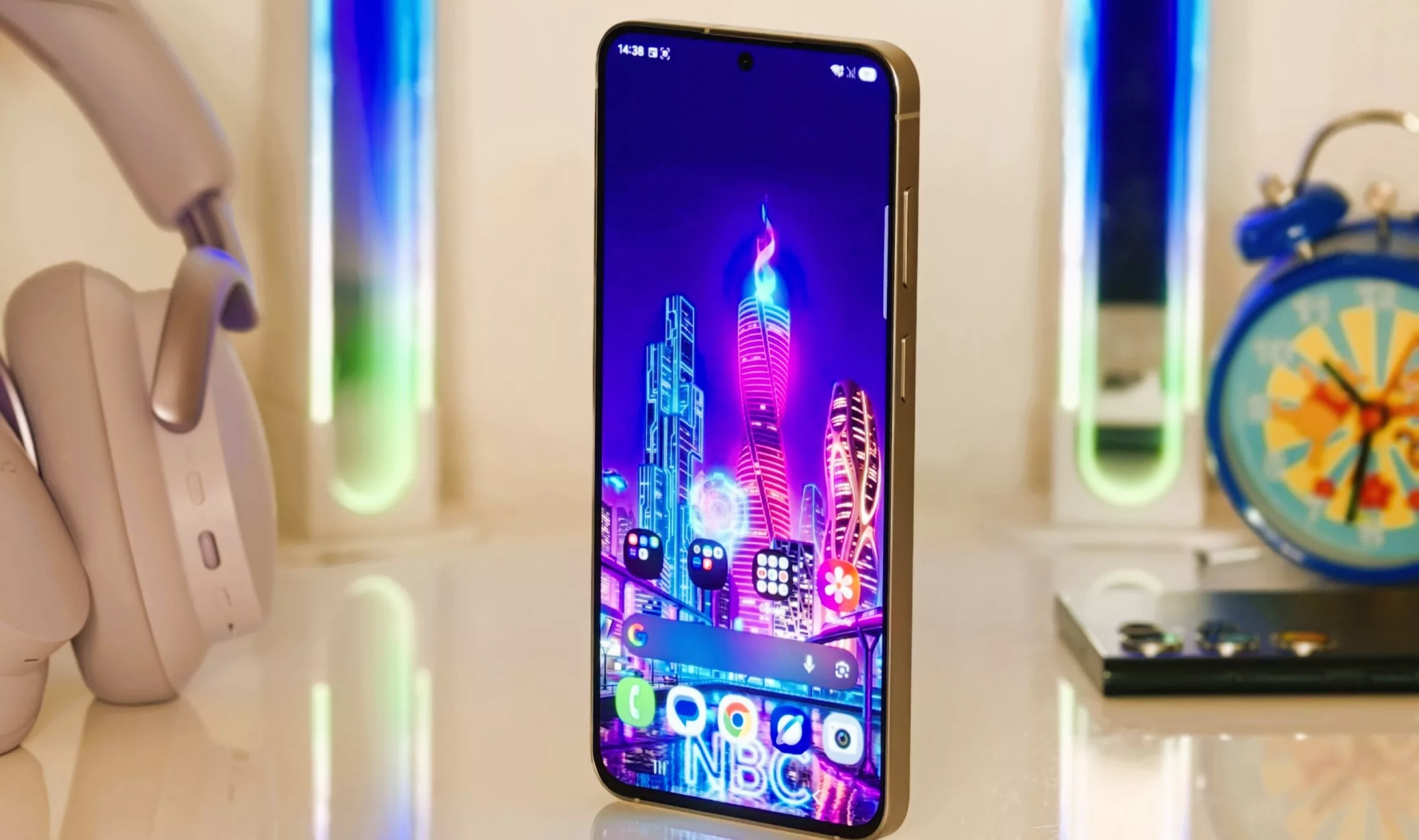
The Samsung Galaxy S26 FE enters a crowded market with a complicated identity. While its premium build and long-term support are undeniable, the device arrives with significant compromises—most notably a disappointing camera setup and a regressive USB 2.0 interface. However, a recent, substantial price drop has shifted the conversation: can this 'Fan Edition' actually deliver value, or is it a collection of hardware shortcuts?
The Galaxy S26 FE is a device of contradictions. On one hand, it offers a premium feel, an excellent 120Hz AMOLED display, and an industry-leading seven-year update guarantee. On the other, it suffers from technical decisions that feel outdated for a 2026 release. The most glaring issue is the telephoto camera—an 8 MP sensor that struggles to provide sufficient detail, which feels particularly brazen given the device's original premium-tier MSRP.
A Premium Build with Mid-Range Limitations
Physically, the S26 FE is well-constructed, featuring an IP68 rating for water and dust resistance. At 7 mm thick and weighing 193 grams, it is relatively slim and light, though its angular design might feel less ergonomic in the hand compared to its more rounded siblings. The display is a highlight, utilizing a high-quality 6.7-inch AMOLED panel protected by Corning Gorilla Glass Victus+. While the screen-to-body ratio is impressive at around 89%, it still falls behind the even slimmer bezels found on the Galaxy S26+.
The USB 2.0 and Camera Dilemma
Despite its high-end aspirations, the connectivity options are a major step backward. Samsung has opted for the slow USB 2.0 standard, which significantly impacts data transfer speeds—our tests showed a sluggish 35 Mbit/s when using an external SSD. This choice also removes support for video output and the Samsung DeX interface, a notable omission for a device in this price bracket. Furthermore, while the 50 MP main camera performs solidly, the 8 MP telephoto and the ultra-wide-angle lenses lack the detail expected from a modern flagship-adjacent device.
Performance and Longevity
Under the hood, the S26 FE is powered by the Exynos 2500 chipset. While the device manages thermal throttling reasonably well, the overall performance and battery life are described as merely average. On the bright side, Samsung's commitment to software longevity is exemplary; the device is slated to receive OS and security updates for seven years, ensuring it remains relevant well into the next decade.
Connectivity and Networking
The Galaxy S26 FE lacks Wi-Fi 7 and Bluetooth 6, which makes it feel somewhat outdated for a device with a $699 starting MSRP in 2026. However, in real-world testing with a reference router, the device demonstrated solid performance for both data transmission and reception. It is well-equipped for mobile connectivity, supporting 5G and a wide range of LTE frequency bands.
In our iperf3 tests, the Galaxy S26 FE achieved Wi-Fi 6E speeds of approximately 1424 Mbps (transmit) and 1811 Mbps (receive) when tested against a Wi-Fi 6/7 router. While these are respectable, they fall significantly behind the Xiaomi 17T Pro, which utilizes Wi-Fi 7 (802.11be) to reach speeds exceeding 3800 Mbps in both directions.
Navigation and Voice Features
For outdoor navigation, the dual-band GNSS provides quick location fixes with an accuracy of roughly 3 meters. While it performs comparably to the Garmin Venu 2, we noticed some noticeable deviations from the actual route. Despite these minor discrepancies, the device remains highly reliable for everyday navigation.
The device supports dual nanoSIM or dual-eSIM configurations and provides high-quality voice reproduction. It includes standard features like VoNR, VoLTE, and Wi-Fi Calling, alongside Samsung's Galaxy AI integration for calls.
Camera Performance: A Mixed Bag
The camera hardware remains largely unchanged from the S24 FE, which is a concern for a 2026 mid-range release. The 50MP main sensor (f/1.8, OIS) is the standout, delivering appealing photos in both daylight and low-light conditions with excellent color accuracy. However, the secondary lenses are a major weak point.
The 8MP telephoto lens (3x zoom) uses a tiny 1/4.4-inch sensor and struggles outside of optimal lighting, lacking detail and sharpness even in daylight. Similarly, the 12MP ultra-wide-angle lens (123-degree FOV) is limited by its small 1/3.2-inch sensor. On the software side, Galaxy AI features like 'My FanCam' for video cropping and 'Photo Assist' for generative editing are noteworthy additions.
Display and Biometrics
The 6.7-inch AMOLED display features a 120 Hz refresh rate, though our testing showed it only toggles between 120 Hz and 60 Hz, with no evidence of LTPO technology. Peak brightness reaches 1,900 nits, which is impressive for everyday use, though it trails behind some competitors like the Xiaomi 17T Pro. A significant drawback is the low PWM dimming frequency of just 240 Hz, which lacks the high-frequency dimming found in many modern mid-range devices to reduce flicker-induced eye strain.
Biometrics may be a point of frustration for those used to Samsung's flagship ultrasonic sensors. The S26 FE uses an optical fingerprint sensor that often requires multiple attempts or a firm press to register. While 2D facial recognition is available, it is notably less secure.
What's in the Box?
- USB-C cable
- SIM eject tool
- No charger included
Display: Fast Response Times and PWM Concerns
The Galaxy S26 FE's AMOLED panel excels in motion clarity. With response times of 1.02 ms (Black to White) and 1.3 ms (50% to 80% Grey), it outperforms the vast majority of tested devices, making it highly suitable for fast-paced gaming where ghosting is a concern. In fact, only about 5% of devices in the comparison group show better response rates.
However, the display may not be suitable for everyone due to its Pulse Width Modulation (PWM) characteristics. The device uses a 240 Hz flickering frequency with an amplitude of 16.76%. This relatively low frequency could cause eyestrain or headaches for users sensitive to screen flickering.
Color accuracy remains within the target range for the sRGB color space (dE 2000 of 2.3), though it falls slightly behind competitors like the Motorola Edge 70 Plus in terms of precision. While the colors are accurate, slight deviations are visible to the human eye.
Performance: The Exynos 2500 Factor
Positioned as the entry-level model in the Galaxy S26 series, the FE variant utilizes the previous generation's Exynos 2500 chipset paired with 8 GB of RAM, rather than the latest Exynos 2600 found in the flagship models.
Benchmark results show a mixed performance profile. In Geekbench 7 single-core tests, the Exynos 2500 lags behind the Xiaomi 17T Pro's Dimensity 9500. However, the Samsung chipset shows strength in AI-related tasks, performing better in AI benchmarks compared to some competitors. In multi-core scenarios and CrossMark tests, the device maintains competitive performance, staying within the average range for its class.
Benchmark Performance and System Efficiency
The Samsung Galaxy S26 FE, powered by the Exynos 2500 and Xclipse 950 GPU, shows a clear performance uplift over its predecessor, the Galaxy S25 FE. In BaseMark OS II testing, the S26 FE achieved an overall score of 10,578 points, representing a 7% increase compared to the S25 FE's 9,879 points. This improvement is consistent across most system-level metrics. For instance, in the System benchmark, the S26 FE scored 13,921 points, outperforming the S25 FE (14,640 points) only in specific sub-tests, while the overall trend shows the S26 FE maintaining a competitive edge in memory and web browsing tasks.
Memory and Web Performance
- BaseMark OS II (Overall): 10,578 points (S26 FE) vs 9,879 points (S25 FE)
- System: 13,921 points (S26 FE) vs 14,640 points (S25 FE)
- Memory: 10,675 points (S26 FE) vs 12,343 points (S25 FE)
- Web: 2,245 points (S26 FE) vs 1,987 points (S25 FE)
Graphics and Gaming Capabilities
The most notable advancement in the Galaxy S26 FE is found in its graphics processing. The integrated Xclipse 950 GPU demonstrates impressive results in demanding scenarios. In 3DMark Wild Life Extreme Unlimited, the device scored 5,343 points, a significant jump from the 4,142 points recorded by the S25 FE. This performance translates to real-world usability; even when running demanding titles at high 4K resolution, the device can reach up to 47 frames per second, suggesting a smooth gaming experience for modern mobile titles.
3DMark Benchmark Comparison
- Wild Life Extreme Unlimited: 5,343 points (S26 FE) vs 4,142 points (S25 FE)
- Wild Life Extreme: 5,381 points (S26 FE) vs 4,421 points (S25 FE)
- Wild Life Unlimited: 19,453 points (S26 FE) vs 15,464 points (S25 FE)
- Solar Bay: 11,343 points (S26 FE) vs 8,797 points (S25 FE)
- Solar Bay Extreme: 1,401 points (S26 FE) vs 937 points (S25 FE)
AI Inference and Machine Learning
With the increasing importance of on-device AI, the S26 FE's NPU performance is a key metric. In UL Procyon AI Inference for Android (NNAPI), the device achieved 18,654 points, a substantial leap from the 11,781 points of the S25 FE. Geekbench AI results further highlight this capability, particularly in Quantized NPU 1.7 tests, where the S26 FE scored 1,339 points, compared to 1,096 points on the previous generation. While it still trails behind the flagship Exynos 2600 found in the S26+, the S26 FE shows a clear optimization for AI-driven tasks compared to its predecessor.
AI Benchmark Summary
- UL Procyon AI (NNAPI): 18,654 points (S26 FE) vs 11,781 points (S25 FE)
- Geekbench AI (Quantized NPU 1.7): 1,339 points (S26 FE) vs 1,096 points (S25 FE)
- AI Benchmark Score V6: 1,754 points (S26 FE) vs 934 points (S25 FE)
Benchmark Performance: A Step Up in Raw Power
The Galaxy S26 FE, powered by the Exynos 2500 and Xclipse 950 GPU, shows a clear performance uplift over its predecessor, the Galaxy S25 FE. In 3DMark Steel Nomad Light (Unlimited), the S26 FE achieved 2554 points, representing a 24% increase compared to the 1944 points recorded by the S25 FE. In the standard Steel Nomad Light test, the S26 FE reached 2681 points, outperforming the S25 FE's 2017 points by approximately 25%.
However, the device struggles to match the top-tier performance of the Galaxy S26+ or the Xiaomi 17T Pro in heavy graphical workloads. In GFXBench 3.0 1080p Manhattan (Offscreen), the S26 FE delivered 281 fps, trailing behind the Galaxy S26+ (439 fps) and the Xiaomi 17T Pro (420 fps). In the demanding 4K Aztec Ruins High Tier (Offscreen) test, the S26 FE managed 47 fps, while the Galaxy S26+ achieved 56 fps and the Xiaomi 17T Pro reached 60 fps.
Web and Synthetic Benchmarks
In web-based and synthetic benchmarks, the S26 FE demonstrates its position within the mid-to-high range. In Jetstream 2, it scored 231,654 points, which is significantly higher than the class average for smartphones (205 points) but falls behind the Galaxy S26+ (354,246 points). In Octane V2, the device recorded 57,211 points, sitting below the Galaxy S26+ (85,043 points) but above the class average (51,974 points). Interestingly, in the Mozilla Kraken 1.1 test, the S26 FE's score of 422.9 ms (where lower is better) is slightly better than the class average (483 ms) and the S25 FE (483 ms), though it remains slower than the Galaxy S26+ (387.8 ms).
Thermal Management and Throttling
Thermal performance is a mixed bag. During testing, the Exynos SoC reached peak temperatures of approximately 43 °C, which is neither exceptionally high nor low. The more critical factor is how the device handles sustained loads. While the Galaxy S26 FE shows less throttling in 3DMark stress tests compared to the S25 FE, it still experiences a significant performance reduction of roughly 40 percent under sustained pressure.
Storage and Memory Throughput
The device is equipped with 128 GB of UFS 3.1 Flash storage. In terms of sequential read speeds, it reached 2009.12 MB/s, which is lower than the 3756.44 MB/s seen in the S25 FE (which uses UFS 4.0). Sequential write speeds were measured at 1762.43 MB/s. In random 4KB read/write tests, the S26 FE recorded 322.87 MB/s for reads and 424.09 MB/s for writes, performing within the expected range for UFS 3.1, though trailing behind the faster UFS 4.0 implementations found in higher-end models.
Thermal Performance and Stress Testing
The Samsung Galaxy S26 FE exhibits notable thermal challenges under load. During our testing, the device reached a maximum temperature of 44.5 °C (112 °F) on the bottom side, which is significantly higher than the smartphone class average of 34.1 °C (93 °F). On the upper side, the average temperature under maximal load was measured at 41.9 °C (107 °F), compared to the 33 °C (91 °F) average for similar devices in its class. Even in idle states, the device remains relatively warm, with an average upper-side temperature of 30.9 °C (88 °F).
3DMark Stability Results
Audio Quality: Decent Volume, Weak Bass
The stereo speakers on the Galaxy S26 FE do not set new benchmarks for mobile audio, but they provide a pleasant sound with a touch of bass during everyday use. However, the device struggles in the very high-frequency range. While the speakers can reach a relatively loud 91.5 dB, they show a significant deficit in the bass department, with levels averaging 20% lower than the median. The mids and highs are somewhat elevated compared to the median, but the overall linearity of the sound is only average, with an 18.4% difference from the median.
Battery and Power Consumption
Equipped with a 4,900 mAh battery, the Galaxy S26 FE supports 45W wired and 15W wireless charging. However, the device's power management is a point of concern: it actually lost charge during our stress tests. The power consumption is unremarkable, with an idle draw exceeding 2W, which leaves room for improvement. Under load, the average power consumption was measured at 13.4W, which is significantly higher than the 6.81W average seen in the broader smartphone class.
Battery Life and Charging
In our Wi-Fi web browsing battery test, the Galaxy S26 FE delivered a solid runtime. However, in the context of 2026, the recorded 15.5 hours isn't particularly impressive. Once depleted, the Samsung phone requires approximately 80 minutes to reach a full charge.
Verdict
For anyone looking for a large Samsung phone, the Galaxy S26 FE presents an interesting option within the Galaxy ecosystem. However, given the expectations implied by the 'Fan Edition' label, the model proves to be a disappointment in many respects.
Technical Specifications and Alternatives
- Samsung Galaxy S26 FE: Samsung Exynos 2500, 8 GB Memory, 128 GB UFS 3.1, 6.70" 2340x1080 385 PPI AMOLED (List Price: 799€)
- Motorola Edge 70 Plus: Qualcomm Snapdragon 7s Gen 3, 8 GB Memory, 256 GB UFS 3.1, 6.78" 2772x1272 450 PPI AMOLED (List Price: 599€)
- Xiaomi 17T Pro: MediaTek Dimensity 9500, 12 GB Memory, 512 GB UFS 4.1 Flash, 6.83" 2772x1280 447 PPI AMOLED (List Price: 1000€)
- Samsung Galaxy S26+: Samsung Exynos 2600, 12 GB Memory, 256 GB UFS 4.0 Flash, 6.70" 3120x1440 513 PPI LTPO-AMOLED (List Price: 1249€)
- Samsung Galaxy S25 FE: Samsung Exynos 2400, 8 GB Memory, 256 GB UFS 4.0 Flash, 6.70" 2340x1080 382 PPI AMOLED (List Price: 809€)