The Siege Legacy: How Map Modernization and Ranked 3.0 Define the Future of R6S
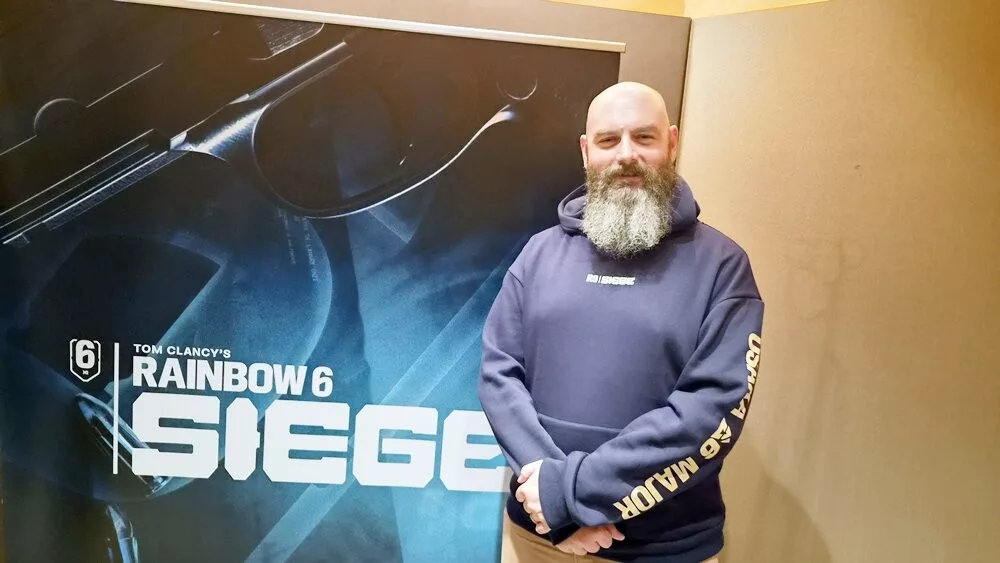
As Rainbow Six Siege enters its eleventh year of service, the development team faces a unique challenge: how to evolve a massive live-service title without disrupting the delicate competitive equilibrium built over a decade. The upcoming Year 11 Season 4 (Y11S4) update, arriving on December 1, highlights this balancing act. From the cancellation of the Bulletproof Drone due to fairness concerns to the introduction of Solo/Duo queues in Ranked 3.0, Ubisoft is learning that knowing what to let go is just as vital as adding new features. In an exclusive interview, Creative Director Joshua Mills explains how the team is refining the core Siege experience through operator overhauls, map modernization, and new social connectivity.
The core of the Y11S4 update lies in a fundamental shift for support operators. Doc and Thunderbird are both receiving major overhauls to their healing abilities. According to Joshua Mills, the goal for Doc was to make his healing more intuitive and impactful in a high-stakes environment where one-shot headshots often render traditional healing ineffective. The development focus was on ensuring that healing provides a tangible, combat-ready advantage without requiring players to stop fighting entirely.
This rework extends to Thunderbird to ensure that Doc's remasterization does not overshadow her unique identity. Mills notes that both operators are being repositioned as true 'combat medics'—operators who can perform essential support actions and immediately return to the fight. Internal testing suggests that this change allows players to maintain their primary combat roles while utilizing healing as a secondary, highly effective tool.
Completing the Map Modernization Initiative
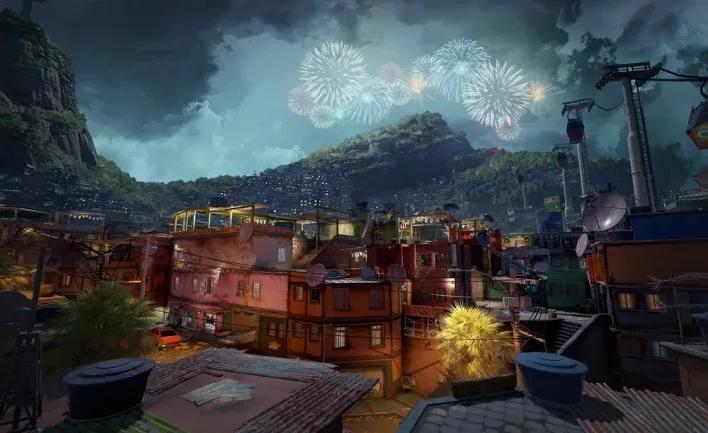
The visual and structural landscape of Siege is undergoing its final major transformation. Following the 'Siege X' initiative introduced in Year 10 Season 2, which brought updated lighting, textures, and destructible elements to Pro League and Ranked maps, the team is now turning its attention to the remaining casual maps. This season, the modernization project reaches its conclusion with updates to Bank, Favela, Yacht, and Tower.
While Mills acknowledges that maps like Favela have historically been subjects of player criticism and may not be ideal for the highest levels of competitive play, he emphasizes the importance of maintaining quality standards across the entire game. The goal is to ensure that every map in the Siege ecosystem meets the modern visual and technical standards established by the recent modernization efforts.
Ranked 3.0 and the Path to a 'Connected Siege'
The competitive structure of the game is also shifting with the introduction of Ranked 3.0. A key addition is the implementation of Solo/Duo and Flex queues, a direct response to frequent community requests. This change is intended to provide flexibility, allowing players to enjoy the game in their preferred format, especially during holiday periods when forming a full five-stack can be difficult.
To complement these competitive changes, Ubisoft is introducing the Social Hub. Rather than being a mere quality-of-life improvement, Mills describes the Social Hub as the foundation for a 'Connected Siege.' The feature aims to bridge the gap between casual play and organized competition by making it easier for players to find teammates in Solo/Duo queues and form the full five-stacks required for major events like the Siege Cup.
In a recent discussion regarding the tactical evolution of Rainbow Six Siege, Creative Director Joshua Mills addressed the core tension that defines the game: the inherent asymmetry between attackers and defenders. While the game's fundamental design necessitates that attackers face a tougher mission due to their lack of prior knowledge, Mills noted a disconnect in how players currently approach this challenge. Despite the introduction of expanded intel-gathering tools through operators like Deimos, Snake, and Dokkaebi, attacker win rates have not seen a corresponding rise, suggesting that players are not yet fully utilizing the information available to them.
Mills emphasized that raw mechanical skill and gunplay are insufficient against a well-coordinated defense. He drew a parallel to the early Rainbow Six titles, where success relied on methodical room clearing—using cameras to assess, planning moves, and executing simultaneous breaches. While modern Siege allows for this level of coordination, Mills observed that it is not yet a common occurrence in high-level play. The development team is currently exploring ways to encourage closer coordination among attackers, noting that if successful, defenders might eventually find the attackers' capabilities too overwhelming.
Managing Defensive Power and Competitive Integrity
The introduction of half-height reinforcements has been a significant point of discussion. Mills explained that these are being tested in the 'Testing Grounds' to observe the unexpected defensive setups players might create. To maintain a balanced risk-reward dynamic, half-height reinforcements are being restricted as a secondary gadget choice, forcing players to choose between utility like deployable shields or these new fortifications. This creates a struggle for initiative, where losing control of a reinforced position leaves defenders notably vulnerable.
When asked about the decision to cancel the Bulletproof Drone—a feature that was reportedly scrapped to protect competitive fairness—Mills stated that maintaining competitive integrity is a non-negotiable priority. While the team aims to deliver new features to satisfy the community, any idea that threatens the long-term health and fairness of the game is discarded. He emphasized that transparently communicating these difficult decisions is vital for maintaining player trust.
The Future: 'Focused Excellence'
Regarding the balance between operators, specifically the impact of Thunderbird's ability to cleanse status effects on Warden's utility, Mills argued that the two operators serve different niches. While Thunderbird is a team-oriented support, Warden remains a combat-focused, aggressive operator. He believes that even with overlapping capabilities, both will maintain their distinct roles within the meta.
Looking toward the next decade, Mills introduced the concept of 'Focused Excellence' as the guiding principle for the development team. Rather than attempting to reinvent the core mechanics of Siege, the goal is to perfect existing strengths. This includes technical stability, minimizing crashes, and maintaining robust anti-cheat measures. For Mills, the ultimate objective is to ensure a seamless environment where the game can continue to evolve without losing its fundamental identity.
The Technical Debt of Legacy Maps
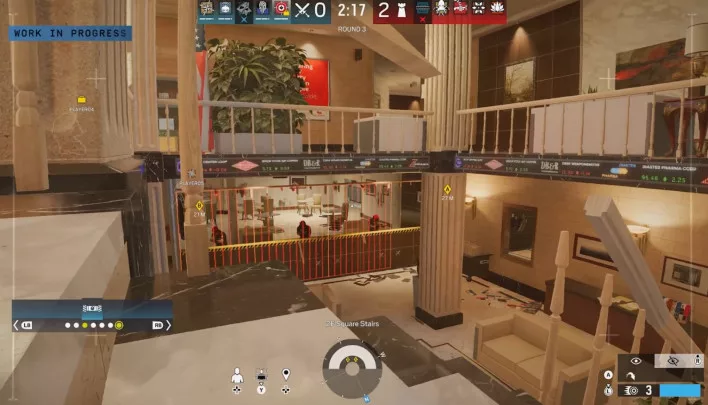
In the final segment of our deep dive into the R6S X initiative, Creative Director Joshua Mills addresses the core motivation behind the massive overhaul: the accumulation of technical debt. Mills explains that as Rainbow Six Siege has evolved over the years, the original geometry of many maps became increasingly incompatible with modern lighting engines and high-fidelity textures. This wasn't merely an aesthetic choice but a structural necessity to ensure the game's longevity in a competitive landscape.
The modernization process involves more than just applying new skins to old assets. According to Mills, the team had to rebuild several key sightlines and verticality elements that were originally designed under different tactical constraints. The goal was to maintain the 'soul' of the maps—the specific layouts that professional players have mastered—while removing the visual clutter and 'dead zones' that hindered high-level play.
Balancing Visual Fidelity with Competitive Integrity
One of the most significant challenges discussed was the implementation of advanced lighting and shadows. While modern rendering allows for much more immersive environments, it also introduces risks regarding player visibility and competitive fairness. Mills emphasizes that the R6S X project prioritized 'readability' above all else. This meant that even with more realistic lighting, the silhouettes of operators and the outlines of destructible elements must remain unmistakable.
To achieve this, the development team utilized a hybrid approach: high-resolution textures for environmental detail, paired with stylized, high-contrast lighting for critical tactical areas. This ensures that while a room might look more realistic than ever, the tactical information—such as a doorway or a specific piece of cover—is never lost in shadow.
The Future of Map Design in R6S X
Looking ahead, Mills suggests that the R6S X framework will serve as the blueprint for all future map releases. The modularity introduced during this modernization phase allows the team to deploy new content more rapidly and with higher visual consistency. The project marks a transition from a period of reactive updates to a proactive era of environmental storytelling and technical excellence.
Ultimately, the R6S X initiative is about preparing the foundation for the next decade of Rainbow Six Siege. By resolving the underlying technical issues of the past, the developers are ensuring that the tactical depth of the game is matched by a visual experience that meets modern standards without compromising the competitive precision that the community demands.