

OnePlus 16 Review: A High-Performance Flagship with Spectacular Battery Life
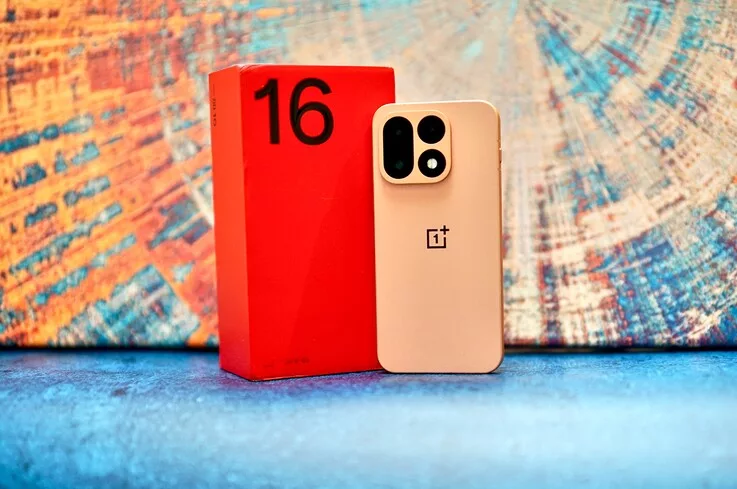
The OnePlus 16 arrives as a powerhouse featuring Qualcomm's latest flagship SoC, but its release strategy marks a significant shift for the brand. As OnePlus scales back its presence in Western markets to focus on China and India, this device stands as a testament to what the brand can achieve: a high-performance flagship with a massive battery and a premium build, albeit with some regional compromises.
The OnePlus 16 is a highly intriguing device that proves why the brand's downsizing is a loss for international enthusiasts. It manages to balance high-end specifications with a price point that remains relatively controlled compared to other modern flagships. With a high-quality chassis, a top-notch display, and a camera system that holds its own, it positions itself as a serious contender in the premium segment.
Regional Availability and Trade-offs
However, there is a catch for those outside of China and India. Currently, the OnePlus 16 is primarily available as an import, which introduces several practical drawbacks. Most notably, the Chinese version lacks eSIM compatibility and misses certain 4G bands (such as Band 20) that are crucial for connectivity in rural areas. While 5G support covers most essential frequencies, these omissions are significant for global users. There are rumors suggesting an Indian release might follow, which could provide a better option for international buyers seeking a more globally compatible version.
Design and Build Quality
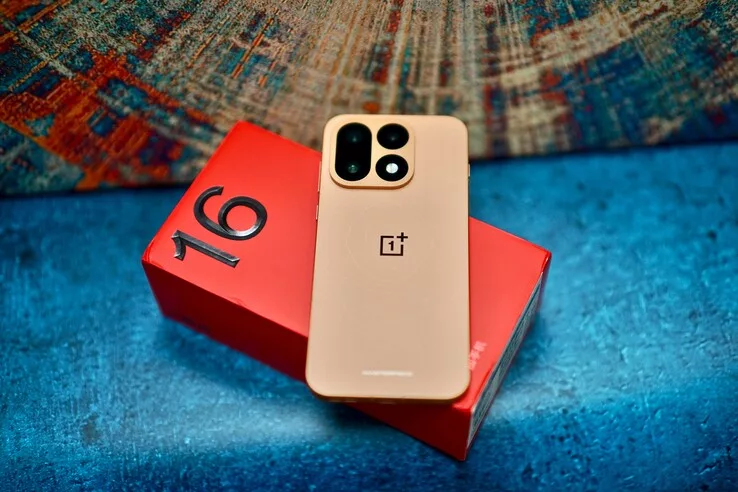
The build quality is convincing, featuring a dust- and waterproof housing (certified IP66/68/69/69K). The design language, characterized by rounded corners and flat surfaces, draws subtle inspiration from the clean aesthetic of the iPhone. Weighing 220g, the device feels substantial but not overly heavy. The aesthetic options vary from a light-orange 'Mars' inspired case with shimmering patterns to a more minimalist dark gray version.
Display and Connectivity
The device features a vibrant 6.78-inch AMOLED display with a 185 Hz refresh rate and a resolution of 2772 x 1272 pixels. While the screen is bright and offers excellent color reproduction, it does exhibit PWM flickering at approximately 150 Hz, which may be a consideration for sensitive users. On the connectivity front, the phone supports Wi-Fi 7, delivering high-speed and stable data transfers in testing. However, the in-display fingerprint sensor is positioned quite high on the screen, which might be difficult to reach for users with smaller hands.
Software: The End of OxygenOS
OnePlus is moving away from its distinct OxygenOS identity. With the release of ColorOS 17, which supports a vast majority of global languages, OnePlus devices now run the exact same operating system as Oppo devices. While Oppo typically provides monthly updates, no specific update commitment has been officially announced for the OnePlus 16. However, given that Oppo offers at least six years of security patches and five major Android version upgrades for its devices, it is expected that the OnePlus 16 will follow a similar long-term support policy.
Cameras: Solid, but not the absolute best
The camera system on the OnePlus 16 represents a steady evolution rather than a revolutionary leap. While it delivers good image quality with plenty of detail in most scenarios, some blurring can occur occasionally. In low-light conditions, the brightening effect is described as adequate rather than outstanding. The front camera also sees minor updates, though it faces stiff competition as Oppo positions its Find X series as the brand's top-tier photographic offering.
Selfies generally turn out well, though there is a tendency for bright areas in the image to appear slightly overexposed. In terms of color accuracy, the device shows a Delta E (color error) of 6.01 for the ColorChecker, with a maximum error reaching 10.42, indicating generally reliable but not perfect color reproduction.
Display: Vibrant and Fast, with a Note on PWM
The 6.8-inch AMOLED display is highly vibrant, covering 99.6% of the sRGB color gamut. It is bright enough for outdoor use, reaching 1,121 cd/m² on a full white screen, though it trails behind some other flagships like the Samsung Galaxy S26 Ultra or Vivo X300 Ultra in peak HDR brightness. Response times are excellent, with the screen changing colors very quickly, which is ideal for gaming and reducing ghosting.
However, there is a significant caveat for sensitive users: the display uses Pulse Width Modulation (PWM) to dim the screen, with a measured frequency of approximately 153 Hz. This relatively low frequency can cause eye strain or headaches for those sensitive to flickering. While DC dimming is available as an alternative, users should test the screen in person before committing to a purchase.
Networking: High-Speed Wi-Fi Performance
The OnePlus 16 demonstrates strong networking capabilities, particularly with Wi-Fi 6/7. In iperf3 tests using a Wi-Fi 6/7 RT-BE96U router, the device achieved average transmit speeds of 2,186 Mbit/s and receive speeds of 2,275 Mbit/s. While these results are impressive, they represent roughly 59% to 65% of the theoretical maximums in certain test configurations, showing that while the hardware is highly capable, real-world throughput is subject to environmental and protocol overhead.
Display Response Times and Gaming Readiness
The display performance is highly optimized for fast-paced gaming. In our testing, the screen demonstrated exceptionally fast response rates, with a combined black-to-white rise and fall time of just 0.9 ms (0.4 ms rise and 0.5 ms fall). Similarly, the 50% to 80% grey response time was measured at 0.9 ms. These results place the device well above the class average, with only 4% of all tested devices showing better response times, making it a strong contender for competitive mobile gaming.
Performance and Thermal Management
Powered by the latest Qualcomm Snapdragon 8 Elite Extreme Gen 6, the OnePlus 16 delivers lightning-fast performance. Interestingly, OnePlus has opted for a slightly throttled approach compared to some competitors. While previous OnePlus models were known for thermal issues, this iteration remains surprisingly cool even under prolonged workloads. This strategy results in moderate performance losses under sustained load, suggesting that the manufacturer prioritizes consistent, stable performance over achieving brief, unsustainable peaks—an approach that is highly beneficial for long gaming sessions.
In terms of audio, the device features two separate speakers that produce good sound quality. While they rarely sound strained even at maximum volume, they lack significant bass presence. For audio enthusiasts, the phone supports a wide range of Bluetooth codecs for external peripherals.
Battery Life and Charging
The standout feature is the massive 9,000 mAh battery. In our Wi-Fi-based everyday usage test, the device lasted over 29 hours of continuous use. With occasional standby periods, the phone is capable of lasting several days on a single charge. Charging efficiency is also high; whether using wired or wireless methods, the longest measured charging time was 1 hour and 30 minutes.
Benchmark Performance
Benchmark data shows the Snapdragon 8 Elite Extreme Gen 6 performing strongly, though it sits slightly behind some top-tier competitors in specific synthetic tests like 3DMark Wild Life Unlimited, where the Samsung Galaxy S26 Ultra (Snapdragon 8 Elite Gen 5 for Galaxy) leads by a significant margin.
- Geekbench 7.0 (Single-Core): 2888 (OnePlus 16) vs 3285 (Average Snapdragon 8 Elite Extreme Gen 6)
- Geekbench 7.0 (Multi-Core): 10014 (OnePlus 16) vs 11284 (Average Snapdragon 8 Elite Extreme Gen 6)
- Geekbench 6.7 (Single-Core): 3877 (OnePlus 16) vs 4099 (Average Snapdragon 8 Elite Extreme Gen 6)
- Geekbench 6.7 (Multi-Core): 11324 (OnePlus 16) vs 12162 (Average Snapdragon 8 Elite Extreme Gen 6)
- 3DMark Wild Life Unlimited: 23859 (OnePlus 16) vs 26930 (Average Snapdragon 8 Elite Extreme Gen 6)
- 3DMark Wild Life Extreme: 7578 (OnePlus 16) vs 7578 (Average Snapdragon 8 Elite Extreme Gen 6)
- 3DMark Steel Nomad Light: 2840 (OnePlus 16) vs 2840 (Average Snapdragon 8 Elite Extreme Gen 6)
Performance and Graphics Benchmarks
The OnePlus 16 is equipped with the Qualcomm Snapdragon 8 Elite Extreme Gen 6 and the Adreno 850 GPU. In GFXBench testing, the device shows a mixed performance profile compared to its current flagship rivals. In the Aztec Ruins Normal Tier (Onscreen), the device delivers 60 fps, which is consistent with the average for the Snapdragon 8 Elite Extreme Gen 6, but falls behind the high-refresh-rate performance of the Samsung Galaxy S26 Ultra and Vivo X300 Ultra, which achieved 120 fps in the same test.
When shifting to higher resolutions and offscreen rendering, the gap becomes more apparent. At 2560x1440 (Aztec Ruins High Tier, Offscreen), the OnePlus 16 maintains 86 fps, trailing behind the Vivo X300 Ultra (129 fps) and the Samsung Galaxy S26 Ultra (127 fps). In the most demanding 4K (3840x2160) offscreen test, the device manages 45 fps, which is significantly higher than the class average of 23.5 fps, but sits below the Samsung Galaxy S26 Ultra, which reached 59 fps.
AI and NPU Capabilities
The NPU performance of the Snapdragon 8 Elite Extreme Gen 6 shows a significant disparity depending on the precision used in Geekbench AI. In Single Precision (NPU 1.7), the OnePlus 16 scored 551 points, performing slightly above the class average of 537 points. However, in Half Precision (NPU 1.7), the device scored 547 points, which is substantially lower than the Apple iPhone 17 Pro Max, which reached 36,297 points in the same category.
In Quantized NPU (1.7) tests, the OnePlus 16 achieved 1,348 points. While this is a solid result compared to the class average of 2,662 points, it remains well behind the Apple iPhone 17 Pro Max, which recorded 48,828 points, highlighting the massive performance gap in specialized AI workloads between the current Qualcomm architecture and Apple's A19 Pro.
CrossMark and Productivity
CrossMark results indicate that the OnePlus 16 (1,987 points) trails behind the top-tier competitors like the Sony Xperia 1 VIII (2,611 points) and the Vivo X300 Ultra (2,576 points) in overall performance. This trend continues in specific sub-categories: in Productivity, the device scored 1,445 points, while in Creativity, it reached 1,460 points. Both scores are notably lower than the Vivo X300 Ultra, which leads in these categories with 2,187 and 1,963 points, respectively.
Storage and Memory Throughput
Data from AndroBench 3-5 reveals that the OnePlus 16 features highly efficient storage performance. The device achieved a Sequential Read speed of 3,610.3 MB/s and a Sequential Write speed of 3,777 MB/s. These figures are significantly higher than the class average for 512 GB UFS 4.1 flash storage, which typically sees around 2,299 MB/s for reads and 2,015 MB/s for writes. Notably, the OnePlus 16's write speeds are nearly double the average, outperforming the Samsung Galaxy S26 Ultra (1,658.91 MB/s) in sequential write tasks.
In terms of Random Read/Write performance, the OnePlus 16 shows strong Random Read speeds at 498.6 MB/s and Random Write speeds at 837.5 MB/s. While these are robust, they remain within the expected range for high-end mobile storage, though they do not reach the extreme peaks seen in some of the top-performing competitors in random access latency tests.
Thermal Management and Stress Stability
Under heavy load, the OnePlus 16 maintains impressive thermal control. The upper side reaches an average temperature of 37.2 °C, which is slightly higher than the smartphone class average of 33 °C. However, the maximum temperature recorded on the upper side was 39 °C, staying well within comfortable limits. The bottom of the device reaches a maximum of 38.7 °C, compared to a class average of 34.1 °C. Despite these slightly higher operating temperatures, the device's thermal profile remains stable during intensive tasks.
3DMark Benchmarks: Stability and Performance
In 3DMark stress tests, the OnePlus 16, powered by the Snapdragon 8 Elite Extreme Gen 6 and Adreno 850, demonstrates exceptional stability. In the Wild Life Stress Test, it achieved a stability score of 117.1%, significantly outperforming the Samsung Galaxy S26 Ultra (51.4%) and Sony Xperia 1 VIII (55%). In the Solar Bay Extreme Stress Test, it showed a stability of 78.8%, nearly matching the Samsung Galaxy S26 Ultra (78.5%) and notably outperforming the Apple iPhone 17 Pro Max (63.5%).
- Wild Life Extreme: 65.2% stability (compared to Vivo X300 Ultra's 60.4%)
- Solar Bay Stress Test: 72.3% stability
- Steel Nomad Light: 61.6% stability
Audio Analysis: Loud but Bass-Light
The audio performance of the OnePlus 16 is a mixed bag. The speakers are relatively loud, reaching 82.2 dB. However, the low-end performance is a weak point; the bass is nearly non-existent, measuring on average 16.3% lower than the median. On the other hand, the mid-range and high-frequency responses are well-balanced and linear, staying within 3.7% to 5.2% of the median values. Compared to other devices in its class, the OnePlus 16's overall sound linearity is rated as average, with 92% of tested devices in the class performing worse in this specific metric.
Battery Life and Power Consumption
The standout feature of the OnePlus 16 is undoubtedly its massive 9000 mAh battery. This capacity translates into extraordinary endurance. In WiFi websurfing tests, the device lasted 29 hours and 14 minutes, outperforming the Samsung Galaxy S26 Ultra (17.9h), Vivo X300 Ultra (23h), and Sony Xperia 1 VIII (22.7h). It even managed to slightly edge out the Apple iPhone 17 Pro Max (28.6h) in this specific scenario. While the load-based runtime is significantly shorter at 3.7 hours, the overall energy efficiency remains high for a device with such high-performance components.
- WiFi Websurfing: 29h 14min
- Idle Average Power Consumption: 1.2 W
- Load Average Power Consumption: 14.91 W (compared to 6.82 W class average)
The OnePlus 16 arrives as a significant milestone for the brand, positioning itself as a flagship capable of redefining endurance in the premium segment. While many manufacturers focus on incremental camera improvements or slimness, OnePlus has prioritized a combination of high-performance silicon and massive energy capacity, making it a standout contender for the 2027 flagship landscape.
Performance and the Snapdragon 8 Elite Extreme Gen 6
At the heart of the OnePlus 16 lies the Qualcomm Snapdragon 8 Elite Extreme Gen 6, marking a notable shift in mobile processing power. This chipset is the first of its kind to be featured in a flagship smartphone, bringing a new level of computational efficiency and raw performance to the device. The integration of this specific architecture allows the OnePlus 16 to handle demanding tasks with a level of fluidity that sets a new benchmark for the industry.
Spectacular Battery Life and Efficiency
The most striking aspect of the OnePlus 16 is its battery performance. The device manages to deliver what can only be described as spectacular battery life, a feat achieved through the synergy between the highly efficient Snapdragon 8 Elite Extreme Gen 6 and optimized power management. This makes the device particularly attractive for power users who require long-lasting performance without frequent recharging cycles.
While the high-performance capabilities of the chipset are impressive, the real-world implication for the user is a device that maintains peak performance without sacrificing longevity. This balance is often difficult to achieve in flagship devices, where high-refresh-rate displays and powerful GPUs typically drain batteries rapidly.
Гика
