NVIDIA Rubin HPC: Next-Gen Accelerator to Feature Over 50,000 CUDA Cores
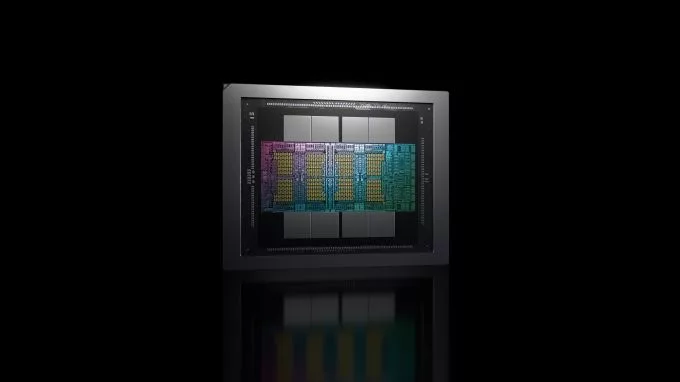
At the SC26 Supercomputing Conference, NVIDIA unveiled the Rubin HPC, a new accelerator specifically engineered for scientific computing, technical simulations, and data-intensive analysis. The hardware aims to push the boundaries of High Performance Computing (HPC) by delivering a massive leap in parallel processing capabilities, headlined by a core count exceeding 50,000 CUDA cores.
The scale of this upgrade is significant when compared to the current Blackwell architecture. For instance, a Blackwell Ultra-based B300 accelerator features 20,480 CUDA cores distributed across 160 Streaming Multiprocessors (SMs). The Rubin HPC would therefore offer more than a 2.4x increase in CUDA cores, surpassing even the theoretical maximum of the GB202 chip, which tops out at 24,576 CUDA cores. While the sheer number of cores is impressive, NVIDIA has not yet disclosed how these 50,000+ cores will be organized or how many GPU dies will be utilized to achieve this density.
Addressing the Memory Bottleneck
NVIDIA emphasizes that raw core count is not the only driver for this performance jump. The architecture is designed to scale computing power and data transfer rates in tandem. This is a direct response to the demands of many HPC applications—such as climate modeling, fluid dynamics, genomic analysis, and financial risk calculations—where access to irregularly distributed data in memory often becomes the primary bottleneck. Specifically, the architecture introduces hardware acceleration for sparse data access, aimed at feeding the CUDA cores more efficiently and reducing idle time during stencil calculations, sorting, and reduction operations.
The FP64 Challenge and Interconnects
A critical distinction in NVIDIA's roadmap is the focus on precision. While the Blackwell Ultra B300 is optimized for AI workloads with lower precision, its native FP64 (double-precision) performance is relatively low at approximately 1.25 TFLOPS. In contrast, the older B200 offers around 37 TFLOPS of FP64 performance, which remains vital for many classical scientific simulations. NVIDIA has not yet revealed the specific FP32 or FP64 performance targets for Rubin HPC, making it impossible to determine its theoretical peak TFLOPS or PFLOPS at this stage.
Communication between accelerators is also a key pillar of the Rubin HPC design. The accelerator is expected to support the seventh generation of NVLink. While the Blackwell and Blackwell Ultra series utilize NVLink 5—providing bidirectional GPU-to-GPU bandwidth of up to 1.8 TB/s—the standard Rubin accelerators will move to NVLink 6. The specific bandwidth capabilities of NVLink 7 in conjunction with the Rubin HPC architecture remain undisclosed in the current announcement.
Beyond raw hardware, NVIDIA is integrating 'agentic AI' into scientific research workflows. This involves AI agents that can independently investigate materials, molecules, or technical structures and then verify the results through simulations. Rubin HPC is intended to accelerate these specific, complex computational loops, supported by existing CUDA-X libraries optimized for scientific algorithms.
While the shift toward massive core counts and improved sparse data handling suggests a significant leap over Blackwell, a practical assessment of the Rubin HPC's impact remains pending. Until NVIDIA provides concrete data on FP32/FP64 throughput, memory bandwidth, power consumption, and official benchmarks, the true performance gains remain theoretical. NVIDIA anticipates the availability of Rubin HPC in 2028.