

MTG CEO Maria Redin on doubling company size after acquiring Raid: Shadow Legends

Maria Redin, president and CEO of Swedish mobile giant MTG (Modern Times Group), has outlined a bold vision for the company's future following its $620 million acquisition of Plarium, creator of the hit title Raid: Shadow Legends. Redin confirms that MTG aims to double its size again within three to five years, emphasizing that while organic growth is vital in a maturing market, strategic acquisitions remain essential. Beyond expansion, the company has restructured its internal landscape into two distinct divisions—Playsimple and Playamp—and is aggressively integrating AI tools to maintain a competitive edge without sacrificing creative integrity.
The acquisition of Plarium in February last year marked a significant milestone for MTG, but it was merely the opening move in a larger strategic plan. Redin stated that the company's post-acquisition vision is to double its size once more, a target she believes is achievable given MTG's track record of tripling in scale during the 2021-2023 period. However, the mobile gaming landscape has shifted dramatically; what was once a blue ocean of rapid, double-digit growth has turned red as the market matures. Redin notes that growing now requires taking market share from competitors or acquiring them entirely.
To manage this expansion and integration effectively, MTG has reorganized its portfolio into two primary "districts." The Casual District, formerly known as Playsimple (named after the India-based studio behind WordTrip), focuses on free-to-play, ad-driven titles. This division includes studios like InnoGames (Forge of Empires), Hutch (F1 Clash), Ninja Kiwi (Bloons TD 6), and Futureplay (Merge Gardens). The Midcore District, now branded as Playamp, encompasses titles with in-app purchases (IAPs) that make up the majority of MTG's revenue. This group includes Snowprint (Warhammer 40,000: Tacticus) and Plarium itself.
The rebranding is more than cosmetic; it reflects a deliberate shift toward building what Redin calls "one of the leading gaming villages." The goal is to foster an environment where founders and teams can thrive post-acquisition, ensuring retention and continued innovation. Redin emphasizes that creativity and data-driven decisions are the best marriage in gaming, and retaining talent is crucial for scaling businesses successfully. By creating an enjoyable work environment, MTG aims to keep its acquired companies' leadership on board, which is essential for realizing the true potential of these partnerships.

Behind the scenes, MTG is driving a standardization of technology and tools across its studios. While Redin acknowledges the pitfalls of forced tech unification—citing Electronic Arts' struggles with the Frostbite engine as a cautionary tale—she asserts that MTG's approach is selective and tailored to each division's needs. Playsimple will retain its unique tech stack as a foundation for future casual acquisitions, while Playamp will selectively adopt parts of Plarium's tech suite, such as the GoGame marketing platform and PDP data platform. These tools are being enhanced with new features to supercharge output across the board without stifling individual studio identities.
Generative AI is another major pillar of MTG's strategy, reflecting a broader industry trend. Redin acknowledges that while AI cannot replace human creativity, it is indispensable for maintaining pace with competitors. The company is embedding AI into its production chain for tasks like A/B testing, graphics generation, QA, coding, and art analysis. Successes achieved at individual studios are being shared and rolled out group-wide to maximize efficiency. Redin stresses that while AI can handle capacity shortfalls in analysis and logic, the core creativity and vision of their team must remain human-led.
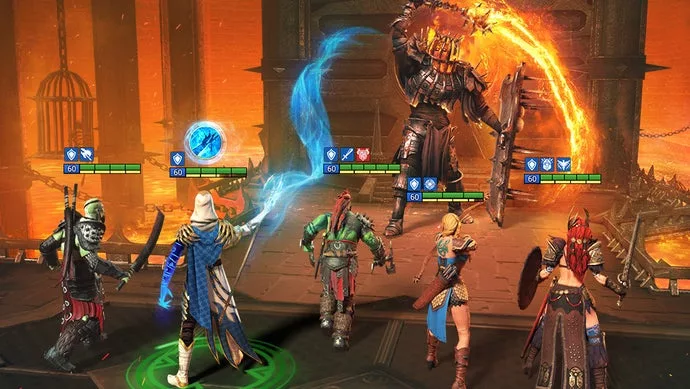
Looking ahead, MTG plans to continue investing in new games despite the challenges of scaling them. Currently, around 80% of revenue comes from Playamp, with Playsimple contributing about 20%. Redin envisions a potential third district centered on core capabilities like marketing platforms or data analytics, though the exact form is still under consideration. She remains committed to evergreen IPs like Raid: Shadow Legends, which has many years ahead of it, while also maintaining a pipeline of new titles to retain the creative DNA of their studios.
Redin acknowledges the difficulty of making successful new games, citing Supercell's struggles with incubation programs as an example. However, she believes that not investing in new titles would erode the passion and drive that define MTG's studios. With three billion gamers worldwide, she sees significant growth potential, even if hyper-growth has stabilized to low single-digit rates. To grow beyond these averages, MTG must continue to invest in strong evergreen IPs while bringing fresh games to market, balancing stability with innovation.
Флешка
