
Monster Hunter Wilds One Year Later: How Capcom Reinvented the Hunt
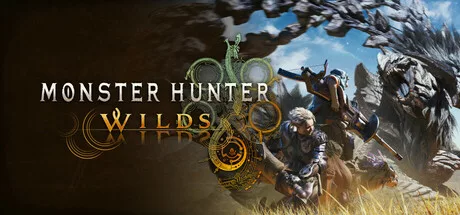
February 2025. Capcom releases Monster Hunter Wilds — a successor to the World lineage that brought millions of new players to the series in 2018. Expectations are enormous. The result is even more so.
Wilds is not an evolution of Monster Hunter — it is a reimagination. Capcom dared to break what was already working.
On February 28, 2025, Monster Hunter Wilds launched simultaneously on PC, PlayStation 5, and Xbox Series X/S. Within the first three days, the game sold over 8 million copies — a series record. By May 2026, the figure exceeded 22 million. Wilds was not just a continuation of Monster Hunter: World — it was a statement about what action-RPG can look like.
The Living Ecosystem: No Longer Just an Arena
The key breakthrough in Wilds is not the graphics or the new monsters, though both are excellent. The key breakthrough is the dynamic ecosystem. For the first time in the series, monsters exist in a real world: they hunt each other, migrate, respond to weather, and establish territories.
In Monster Hunter World, monsters waited for you in their zones. In Wilds, they live their own lives. Rathalos flies off to hunt and returns with prey. Doshaguma migrates in herds through the canyon during monsoon season. The region apex — Arkveld — hunts at night and avoids human camps.
This system changes everything. A hunt becomes observation and planning, not just combat. You enter a mission into a living world that does not wait for you.
Combat, Weapons, and Seikret
Capcom did not touch the fundamental combat mechanics — wisely. All 14 weapon types from World and Rise are present. But each has been reworked: animations are smoother, timings are more precise, and new Focus Strikes give a genuine sense of impulse attacks.
The fundamental addition is the Seikret, a mount that replaces fast travel across the map. You now ride through biomes, see the world from a new perspective, and can continue preparing for battle while moving.
Another change: weather events. Tempests are real-time ecosystem updates that shift hunting rules — storms reduce visibility, droughts open new caves, and volcanic eruptions drive monsters from familiar territory.
A Year of Updates: What Capcom Added
In its first year, Wilds received five major Title Updates. Each added one or two new monsters, new weapons or armor, an event, and a collaboration.
- Title Update 1 (April 2025): Return of Mizutsune and a new group arena
- Title Update 2 (June 2025): Amatsu — the flying wyvern from Generations, fully redesigned
- Title Update 3 (September 2025): Savage Deviljho and a Final Fantasy XIV collaboration
- Title Update 4 (January 2026): Fatalis — the series hardest monster, as a content season finale
- Title Update 5 (March 2026): Siege Mode — a new 16-player raid format against Elder Dragon class X
Criticism did come, however. The first months saw PC optimization issues: players with mid-range cards (RTX 3070 and below) reported fps drops in high-monster-density areas. Capcom released three performance patches; by late 2025 the situation stabilized.
Community: From Skeptics to Evangelists
Monster Hunter has always lived through its community. In Wilds, this is especially visible. In one year, YouTube and Twitch saw over 400,000 videos with guides, speedruns, and solo kills of endgame monsters. Peak total views exceeded 2 billion.
Speedrunning became a distinct phenomenon — the community split between Solo Any% and Full Roster Co-op categories. Records update weekly. Capcom officially backed speedrun culture by adding a Timer Mode to the options.
Verdict: What Comes Next for Monster Hunter
Wilds is not perfect. The story remains the series' weak link — characters are flat, motivations thin. The crafting system has been simplified to a degree that some veterans see as a loss of depth. Multiplayer remains unfriendly to newcomers; the lobby system is dated.
But as a gameplay experience, this is the best Capcom has ever made for the franchise. The world lives without you. The hunt demands attention and adaptation. Every monster is a separate story, not just an HP bar.
At State of Play in March 2026, Capcom announced continued Wilds support through 2027 and hinted at a new chapter — likely a large expansion in the style of Iceborne for World. The community is anticipating.
Monster Hunter Wilds is not just a great game. It is a new standard for the hunting genre and one of the best action-RPGs in recent years.
Редакция MBG
