Microsoft uses USB4 to link Windows PCs for distributed AI workloads
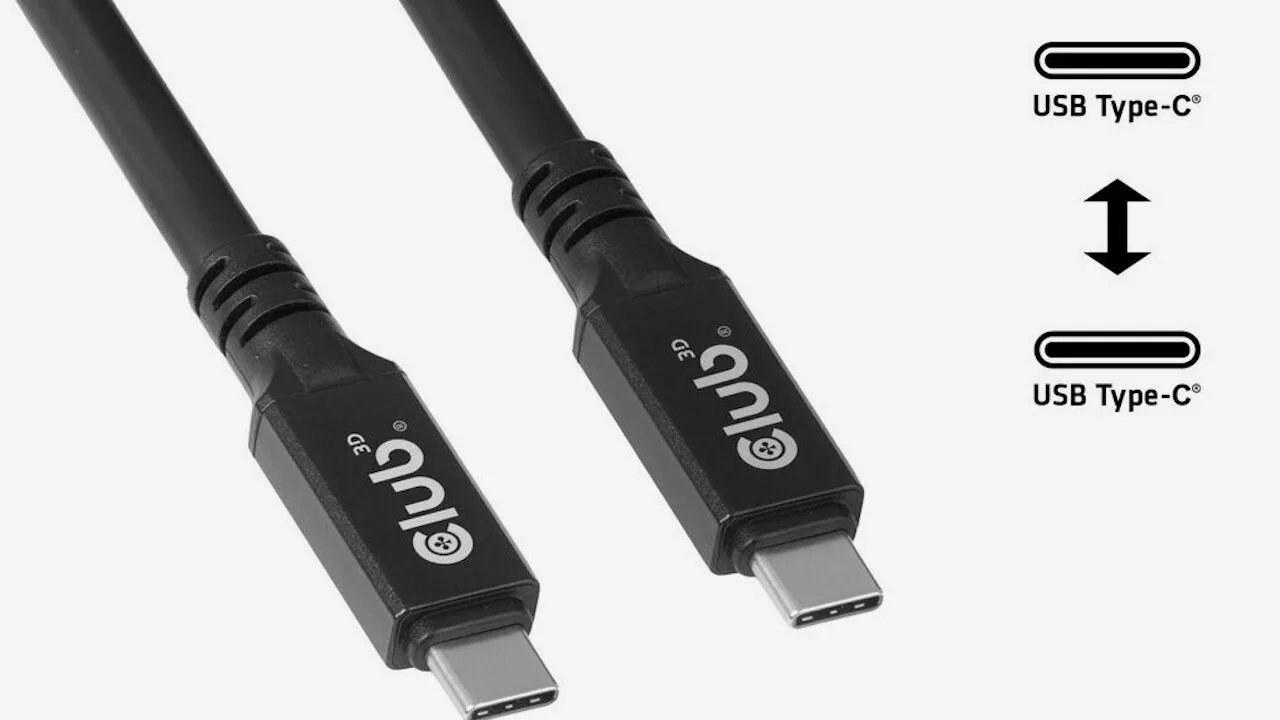
Microsoft is working on a way to turn a cluster of Mini-PCs into a distributed computing unit for large-scale AI tasks. By leveraging the USB4 interface to implement Remote Direct Memory Access (RDMA), the company aims to significantly reduce latency in data transfers between machines, effectively allowing Windows 11 to treat a USB4 connection as a high-speed network path for memory-intensive workloads.
Traditionally, a standard USB cable is designed for a host-to-device relationship, not for networking two computers together. However, the USB4 standard changes this dynamic, allowing two PCs to establish a direct network connection. While Windows 11 already recognizes such a connection as a network adapter for basic file sharing, Microsoft is pushing this capability much further by integrating RDMA over USB4. This technology allows data to move between the RAM of participating PCs with fewer intermediate processing steps, drastically reducing the time it takes for information to travel between systems.
In Microsoft's internal tests, this RDMA implementation achieved a round-trip latency of 28 to 50 microseconds for small messages. This is approximately a quarter of the latency experienced during standard UDP transmission over the same USB4 cable. While Microsoft has not released comparative data against dedicated Ethernet connections, the reduction in latency is critical for Large Language Models (LLMs). During text generation, these models must constantly exchange data between nodes; high latency in these exchanges can become a major bottleneck.
Distributed AI: Benchmarks and Hardware Setups
To demonstrate the practical application, Microsoft conducted a laboratory experiment using three Mini-PCs equipped with Ryzen AI Max+ 395 processors and Radeon 8060S graphics, each featuring 128 GB of RAM. The machines were interconnected via 40-Gb/s USB4 links in a mesh configuration, providing a combined pool of memory. Running a 4-bit quantized version of the Qwen3-235B-A22B model (235 billion parameters), the cluster achieved a generation speed of approximately 18.5 tokens per second. For comparison, AMD reported a slightly higher output of 21.98 tokens per second in their own setup using three similar machines, though these are not independent measurements.
Intel also explored similar distributed configurations. Their test setup utilized three PCs with Core Ultra Series 3 processors and 64 GB of RAM each, running the gpt-oss-120b model. This configuration reached 49.4 tokens per second. Adding a fourth PC to the cluster increased the speed to 54.2 tokens per second—a gain of nearly 10% at the same context length. It is important to note that these speeds cannot be directly compared due to the different AI models used in the AMD and Intel tests.
Availability and Technical Requirements
While the source code for the NetworkDirect provider for USB4 and a modified version of llama.cpp is already available, the necessary Windows 11 version has not yet been released to the general public. It is expected to arrive via an experimental Insider Channel. Currently, testing requires users to manually enable the feature and turn on Test Signing, which necessitates disabling Secure Boot. Consequently, Microsoft recommends using dedicated test machines for these experiments.
The hardware requirements for a three-node cluster similar to the AMD test involve each PC having two USB4 ports, requiring a total of three cables to create a direct mesh. Microsoft noted that a daisy-chain configuration significantly degrades performance. It remains to be seen whether RDMA over USB4 will become a standard feature in Windows or which specific applications will officially support this distributed computing capability.