

Microsoft Paint runs DOOM as a 'monitor': Project by Azure CTO uses real engine
In the world of retro gaming, another DOOM port has emerged, but this one stands out for its unusual architecture. Developed by Mark Russinovich, the Chief Technology Officer (CTO) of Microsoft's cloud division Azure, the project is called DoomPaint. It uses the classic image editor Microsoft Paint as a 'monitor' to display the in-game action.
The Mechanism: An OLE Clipboard Hack
The core of this project relies on a technical trick using OLE (Object Linking and Embedding) capabilities. The game engine (ViZDoom) runs in a 'headless' mode, meaning it does not send the image to a video output monitor. Instead, every frame of the game is placed on the Windows clipboard, where Microsoft Paint automatically picks it up and renders it onto its canvas.
The author notes that this solution allows the game to run at an acceptable performance level—up to 35 FPS. Russinovich considers this figure 'charming' specifically in the context of 1990s PC gaming. However, he honestly warns that speed can sometimes drop to a level he ironically calls 'spreadsheet-tier,' hinting at the characteristic lag typical of older software.
It is important to understand: Paint here acts only as a visualizer. It does not participate in computing game logic or physics—that is handled by the ViZDoom engine. As the author ironically noted, 'Paint has never computed anything.'
Technical Details and Compatibility
The project uses the original shareware version of DOOM1.WAD. To fill in the episodes missing from the free version, licensed Freedoom packs (with an open BSD license) are applied. Sound and music also work correctly.
According to instructions on the project page, the system can handle full performance at a resolution of 320 x 200 pixels. Users can increase the resolution up to 640 x 400, though this may affect frame stability.
The code is distributed under the MIT license. All files, resources, and instructions are available for download and study on the official GitHub repository, where detailed guides for running the project can also be found.
About the Developer
Mark Russinovich is a well-known specialist in the industry who joined Microsoft in 2006. He transformed SysInternals into a key Windows diagnostic tool and later shaped the architecture of security and reliability for the cloud platform Azure. In recent years, he has actively participated in discussions regarding the problematic legacy of the Windows 11 system.
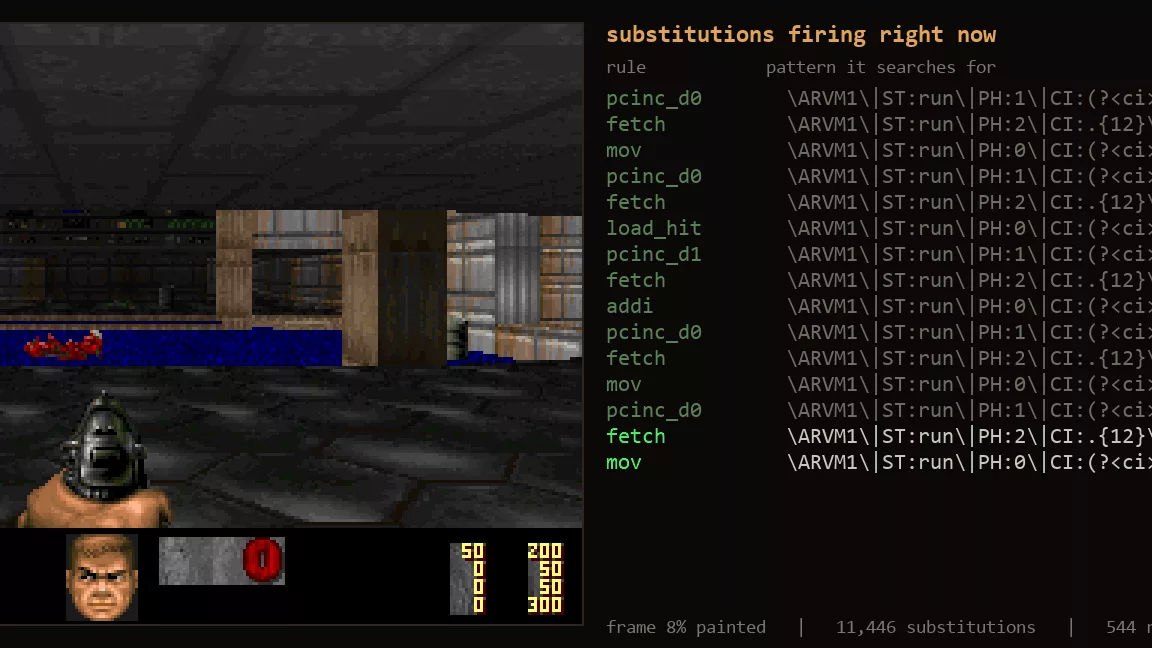
Fascination with retro gaming is not unusual for him. Russinovich previously demonstrated his programming skills by running DOOM using only regular expressions.
Гика
