
Microsoft Unveils Maia 300: AI Accelerator with 288 GB HBM4 and 1 kW TDP
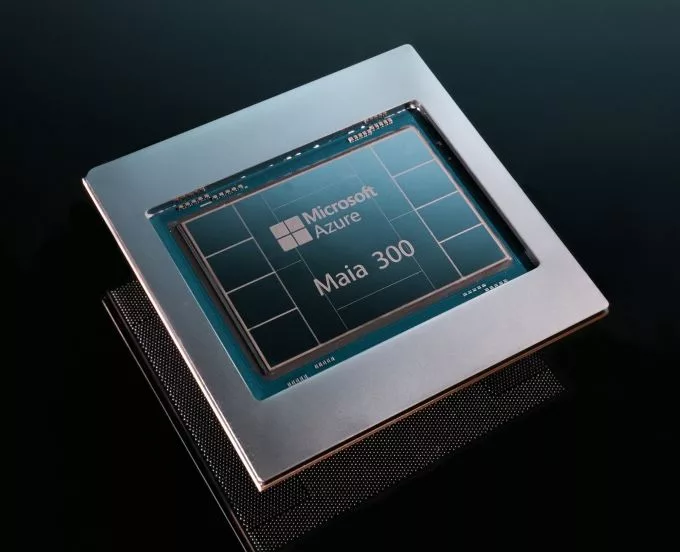
Microsoft has introduced the third generation of its custom AI accelerators, named Maia 300. This new hardware is designed to scale the company's proprietary AI services within the Azure cloud infrastructure, focusing on maximizing throughput for internal workloads.
Architecture and Memory Specifications
The Maia 300 will be manufactured by TSMC using the N2P process node. The most significant upgrade is the integration of HBM4 memory. Each package features eight 36 GB HBM4 stacks, providing a total of 288 GB of memory with an estimated bandwidth of 18 TB/s. The chiplet-based design includes the main compute die, two I/O chiplets, and four memory controller chiplets.
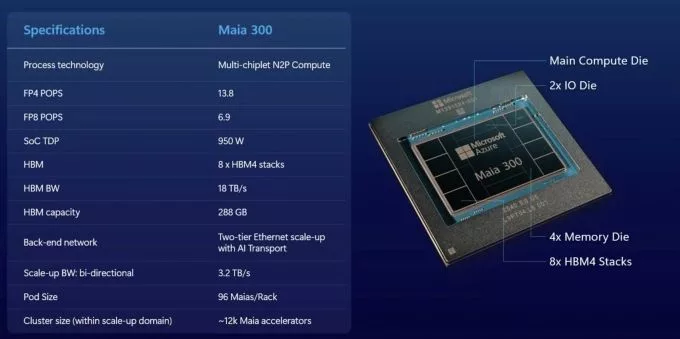
Microsoft reports the following peak performance metrics:
- 6.9 PFLOPS at FP8 precision;
- 13.8 PFLOPS at FP4 precision.
In terms of efficiency, the company claims that Maia 300 can generate approximately 40% more tokens than its predecessor, the Maia 200, at the same power consumption level.
Scalability and Power Demands
The deployment model involves grouping four accelerators into a single module. A standard rack will house 24 of these modules, totaling 96 Maia 300 accelerators. A fully loaded rack is expected to consume up to 167 kW, placing it in a similar power bracket to NVIDIA's Vera Rubin NVL72 systems. Individually, each accelerator is rated at approximately 1 kW.
Starting in 2027, Microsoft plans to deploy these systems across its Azure data centers at a massive scale. This move is intended to reduce reliance on external accelerator vendors and tailor hardware specifically to their AI service requirements. The scale of this rollout is immense: deploying one million Maia 300 chips would require a staggering 576 PB of HBM4 memory, necessitating multi-billion dollar investments in manufacturing and supply chains.
Гика
