

Intel and Microsoft Update PC Gaming: DX Linear Algebra and Shader Delivery Explained
Intel has detailed joint work with Microsoft across DirectX Linear Algebra, Advanced Shader Delivery, DirectStorage 1.4, and Microsoft PIX. These are developer, distribution, and driver foundations, not an instant performance update for every existing PC game.
DirectX Linear Algebra Opens Matrix Hardware
DirectX Linear Algebra gives shaders a standardized path to matrix operations needed by small neural networks inside the graphics pipeline. On Intel Arc, those workloads can use XMX engines. Potential applications include neural materials, image reconstruction, and other neural-rendering methods.
An API does not improve an older game automatically. A developer must integrate an algorithm, prepare a model, and select execution paths for supported hardware. Player-facing results depend on implementation quality, training data, and the available frame budget.
Advanced Shader Delivery Moves Compilation Earlier
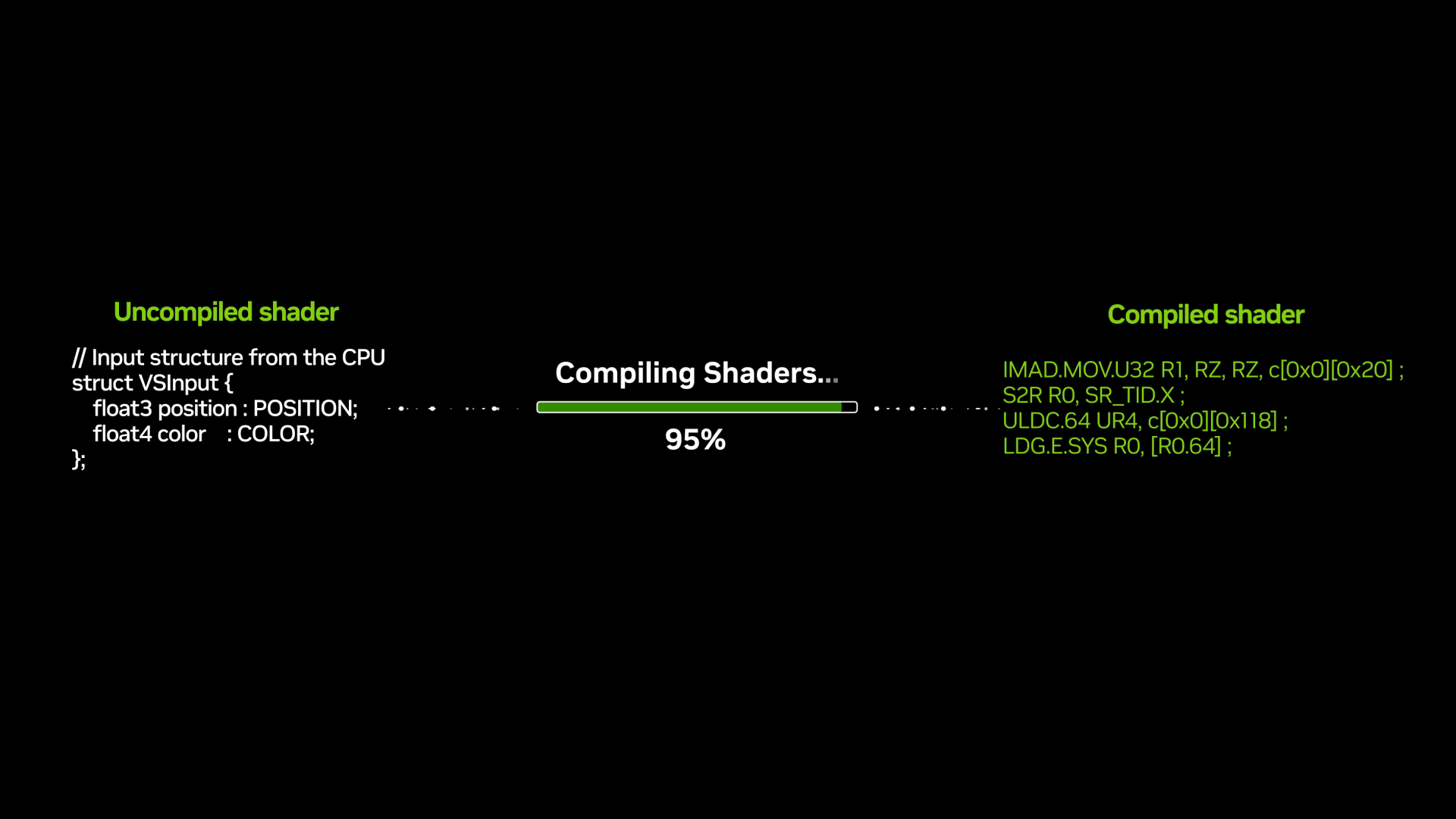
Advanced Shader Delivery lets a developer package pipeline states in a State Object Database. A GPU vendor processes it with an offline compiler to create a Precompiled Shader Database that can be delivered with the game. The goal is to remove some compilation from first launch.
That may shorten loading and shader-compilation stutter, but not every hitch comes from shaders. Asset streaming, CPU logic, networking, and memory pressure remain separate causes. Intel describes driver support as a near-future direction rather than a universal present feature.
Why a Compiled Database Is Version-Specific
A precompiled shader needs to match graphics architecture, driver behavior, and game state. A major game patch or driver update may require rebuilding part of the database. Advanced Shader Delivery is therefore a maintained service process, not one permanent file.
A robust implementation needs to use the delivered database and fall back safely to local compilation when a required variant is missing. Players need both shorter first launch and correct rendering after an update.
DirectStorage 1.4 Adds Zstandard
DirectStorage 1.4 supports Zstandard. The compression method can provide better ratios with CPU decompression, reducing game data size and storage transfers. Actual benefit depends on asset types and the engine's streaming package.
Zstandard does not turn a slow drive into a fast GPU or remove memory requirements. If a game decompresses too much at once or schedules streaming poorly, the format cannot solve the delay by itself. Its value is a more flexible size-and-speed tradeoff.
PIX Finds the Boundary Between Game and Driver
Microsoft PIX is gaining crash diagnostics and Shader Explorer, with Intel contributing to core capabilities. A developer can trace a shader, pipeline state, and the point where behavior diverges from expectation more precisely.
This is indirect technology for players: installing PIX does not increase frame rate. The benefit arrives when a studio and GPU vendor reproduce a fault faster, issue a driver fix, or optimize a specific rendering pass.
What the Hardware Stack Needs
Matrix workloads benefit most from GPUs with dedicated accelerators, including XMX on Intel Arc. A standardized DirectX route still needs to span device classes. Developers will select fallback implementations or disable costly effects when hardware support is insufficient.
Advanced Shader Delivery also requires cooperation among a store or delivery service, game studio, vendor compiler, and driver. Buying a new graphics card alone does not activate that chain across every game; supporting updates are required at each layer.
When Players Can Measure the Result
The first meaningful evidence will come from games that announce support and compare identical scenes. Advanced Shader Delivery should be evaluated through first-launch time and frame-time graphs; DirectStorage through install size and streaming; DX Linear Algebra through neural-effect quality and cost.
Until those tests exist, platform potential is the accurate description. Intel and Microsoft are creating a shared path for several generations of tools, while adoption determines the outcome. Sources: Intel Developer article from July 2026; Microsoft DirectX Developer Blog; NVIDIA DirectX developer resources.
Аналитика MBG
