

Intel GPU D-Series: Massive Memory Bandwidth for AI Inference
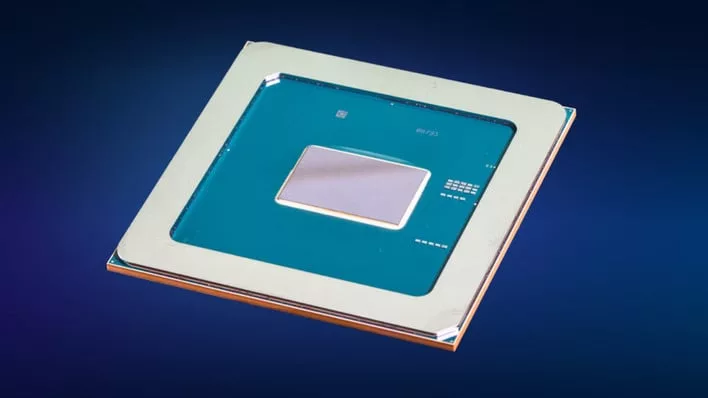
Intel has officially revealed the final form of its Crescent Island project, branded as the Intel GPU D-Series. This move marks the company's latest push into the data center AI accelerator market, led by the Intel GPU D270. Built on the new Xe3P architecture—the full version of the Xe3 architecture seen in Panther Lake—this accelerator is specifically designed for inference workloads.
Memory Capacity Over Raw Speed
The standout feature of the D-Series is its memory configuration rather than just raw compute. While the silicon is technically capable of supporting up to 480GB of memory, the standard PCIe form-factor card will ship with 160GB of LPDDR5X. However, Intel has noted that partners will be able to develop high-capacity versions reaching up to 480GB.
This massive capacity is vital for handling large-scale models. Intel claims a single card can accommodate models with up to 300 billion parameters, while an eight-GPU system could potentially handle models exceeding one trillion parameters. By opting for LPDDR5X instead of exotic HBM, Intel has achieved a massive 1280-bit memory bus running at 9.6 Gbps, resulting in an impressive 1.5TB/s of memory bandwidth.
Architecture and Compute Capabilities
The D270 features 32 Xe3P cores and 256 XMX matrix engines. Despite being branded as a GPU, this silicon lacks any graphics output functionality, focusing entirely on AI tasks. It offers broad numerical format support, ranging from low-precision inference—supporting formats like FP8, FP4, and MXFP4—to high-precision FP64 scientific computing.
To simplify deployment, Intel has designed the D-Series for existing data center environments. The accelerator utilizes PCIe 5.0, operates within a 350W power envelope, and relies on air cooling, avoiding the need for specialized liquid-cooling infrastructure. On the software side, it is built on the Xe software foundation and targets established frameworks like PyTorch and vLLM.
Strategic Positioning
This launch follows Intel's previous efforts with Gaudi, which were well-regarded but struggled with market adoption. While earlier AI hardware often focused on model training, the D-Series targets the exploding demand for inference. In this segment, memory capacity, serving efficiency, and token generation costs are often more critical than peak theoretical throughput. While customer sampling is currently underway, official pricing and availability dates have yet to be announced.
Гика
