

IBM Quantum System Two Debuts in Chicago: Nighthawk Processor Features 120 Qubits and 218 Tunable Couplers
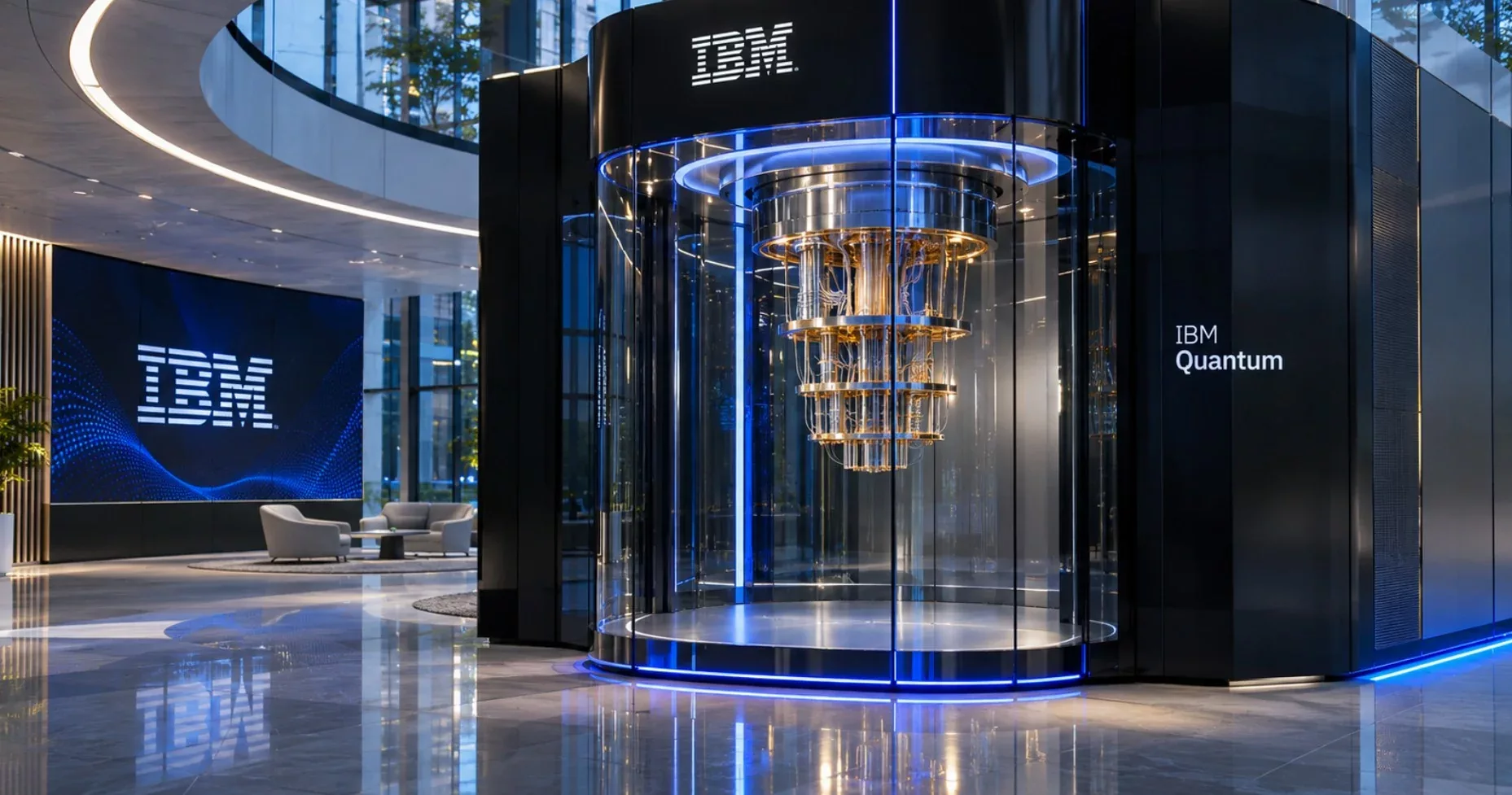
While a count of 120 qubits might not seem revolutionary compared to the massive scale of modern AI accelerators, quantum computing operates on fundamentally different principles. On November 6, 2026, IBM, in collaboration with the University of Chicago, officially commissioned its latest Quantum System Two at the Hyde Park Labs. At the heart of this system lies the Quantum Nighthawk r2 processor, which utilizes 120 qubits and 218 tunable couplers to push the boundaries of complex quantum algorithm development.
The new quantum computer is currently housed in the Hyde Park Labs in southern Chicago, a research facility opened in 2025 that hosts various scientific institutions and tech startups. The IBM Quantum System Two is installed on the street-facing level behind large glass panels, making it visible to passersby. Once the Illinois Quantum and Microelectronics Park is completed on the former US Steel South Works site, the system is expected to relocate there. This move will integrate the system into the National Quantum Algorithm Center (NQAC), a hub established in 2024 to develop quantum algorithms for scientific and industrial applications through partnerships between IBM, the University of Chicago, and various research institutions.
Architecture and Connectivity: Beyond Qubit Counts
IBM's Nighthawk r2 processor utilizes superconducting qubits controlled by precise microwave signals, requiring extreme cryogenic cooling to operate. The architecture is based on a square lattice topology, where each qubit can connect to up to four neighbors. This increased connectivity density is a critical factor for quantum computing; when qubits are not directly linked, additional operations are required to entangle their states, which increases the number of necessary quantum gates and introduces a higher risk of errors.
- Physical Qubits: 120
- Tunable Couplers: 218
- Reset Elements: 120
- Total Physical Quantum Elements: 458
- Connection Topology: Square Lattice
- Neighboring Connections: Up to four per qubit
- Circuit Throughput (per IBM): Over 100,000 circuits per second
- Supported Circuit Depth: Demonstrated calculations with more than 7,500 gates
It is important to note that the reported throughput and circuit depth are performance metrics under specific conditions defined in IBM's technical publications. They do not represent universal benchmarks for all quantum algorithms. However, a significant architectural improvement in the Nighthawk r2 is the implementation of a fast, independent reset function. In quantum computing, qubits must be returned to a defined starting state before a new execution. By allowing individual qubits to be reset independently—rather than requiring a global reset of the entire processor—IBM claims the Nighthawk r2 can achieve up to a 25-fold increase in circuit throughput compared to the previous Heron platform.
The Challenge of Error and Logical Qubits
While the 25x speedup is a significant technical milestone for research, it should not be confused with a 25x acceleration for any arbitrary calculation. Actual execution time remains heavily dependent on circuit structure, measurement requirements, and the specific error mitigation or correction methods used. Furthermore, physical qubits remain highly sensitive to environmental noise and have limited coherence times. The long-term goal of the industry is to group multiple physical qubits into 'logical qubits' through quantum error correction to achieve reliable computation. However, the 120 qubits in the Nighthawk processor are physical units, not 120 fully error-corrected logical qubits, and the additional couplers and reset elements do not increase the actual qubit count.
IBM's strategy focuses on 'Quantum-Centric Supercomputing,' where quantum processors work in close coordination with classical high-performance computing (HPC) systems. In this model, classical computers handle task preparation, processor control, and the processing of measurement results. While IBM has demonstrated advantages in specific tasks—such as molecular system simulations and optimization problems—compared to leading classical methods, these results are limited to clearly defined benchmarks and do not imply a general superiority of quantum systems over classical supercomputers.
The deployment of the IBM Quantum System Two in Chicago, scheduled for November 6, 2026, marks a significant milestone in the collaboration between IBM and the University of Chicago. This installation is designed to serve as a cornerstone of the regional research network, providing advanced computational resources for academic and scientific investigations.
Nighthawk r2: Architecture and Connectivity
At the heart of the Chicago installation is the Nighthawk r2 processor. According to technical documentation from IBM Quantum, this specific architecture is characterized by a configuration of 120 qubits. To manage the complex interactions required for quantum operations, the processor utilizes 218 couplers, which facilitate the necessary entanglement and gate operations between qubits.
Beyond raw qubit count, the Nighthawk r2 introduces specific architectural improvements aimed at increasing operational efficiency. Key technical features include a rapid reset function, which significantly reduces the time required to return qubits to their ground state, and enhanced circuit throughput. These advancements are intended to optimize the execution of complex quantum algorithms by minimizing idle time between operations.
Research Applications and Long-term Strategy
The University of Chicago's involvement focuses on leveraging the System Two's capabilities for diverse research applications. The long-term planning for this site positions it as a permanent fixture in the quantum research ecosystem, allowing for sustained development in areas such as quantum chemistry, materials science, and complex system modeling. This deployment is part of IBM's broader strategy to integrate quantum hardware into established scientific research workflows.
Гика
