
OLED, PaperMatte, and the Google Gap: Huawei MatePad Air (2026) Analysis
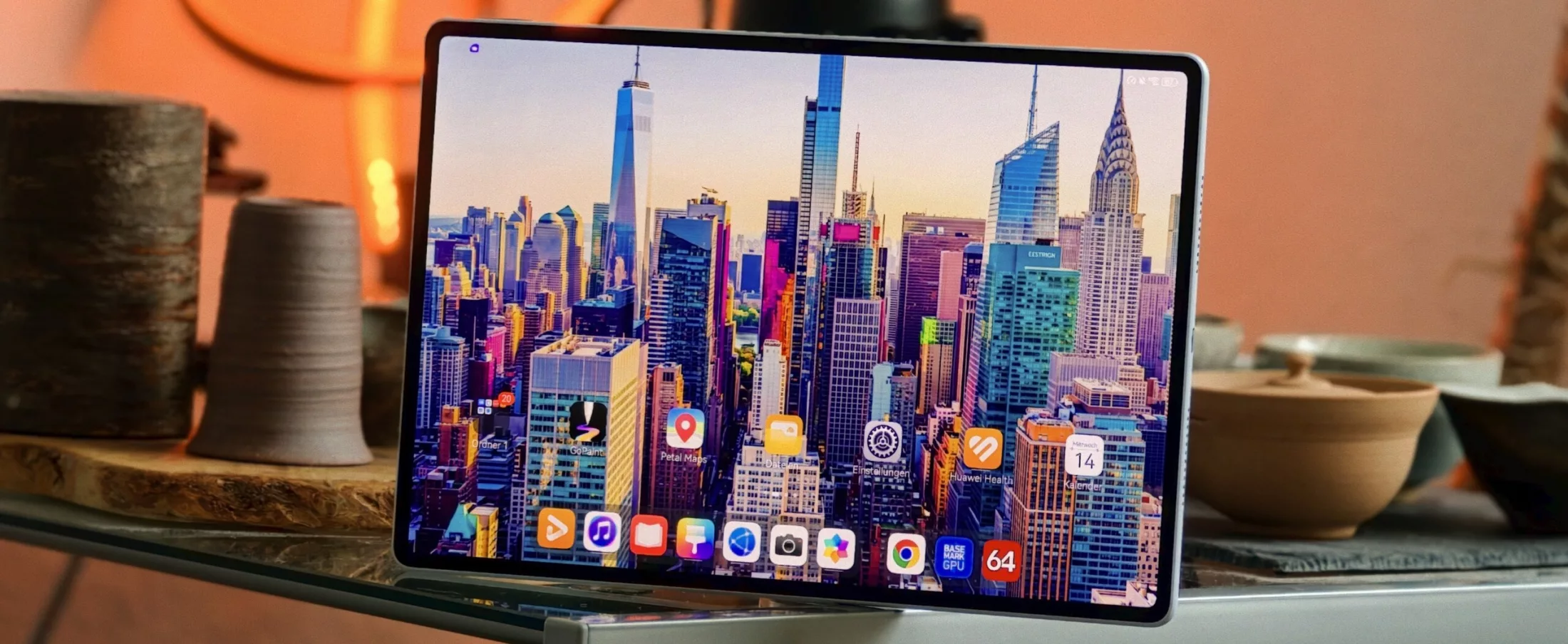
The new Huawei MatePad Air (2026) is an attempt to challenge the iPad Air by focusing on unique display characteristics and high-end accessories. This thin and light device (509g) is primarily aimed at students and professionals who prioritize reading and note-taking. However, behind its impressive exterior lie significant compromises in performance and software availability.
A Display That Stands Out
The centerpiece of the device is the 12-inch OLED panel, featuring a 2800 x 1840 resolution and a 144 Hz refresh rate. The standout feature is the PaperMatte surface. While matte coatings on LCDs can sometimes make images look slightly blurry, this coating works beautifully on an OLED panel, significantly reducing reflections without sacrificing the deep blacks characteristic of the technology. With peak brightness exceeding 1,200 cd/m², it is exceptionally bright for a mid-range tablet, noticeably outperforming the Apple iPad Air 11 (2026) and only trailing behind top-tier models like the Honor MagicPad 4.
For users sensitive to PWM (Pulse-Width Modulation) flickering, the device offers a high-frequency dimming solution. While the base frequency is 360 Hz, Huawei has implemented high-frequency PWM at over 1,400 Hz, which should minimize eye strain for most users.
Hardware and Performance: The Mid-Range Trade-off
The tablet is powered by the in-house 8-core HiSilicon Kirin T93C (5nm). In everyday multitasking and web browsing, the performance is solid and lag-free. However, when it comes to heavy graphical workloads and AI benchmarks, the MatePad Air lags significantly behind competitors using Qualcomm or MediaTek chipsets. It struggles particularly in AI-driven tasks, where it ranks among the lower performers in its class.
On the multimedia side, Huawei has not cut corners: the six-speaker system delivers excellent audio, and the inclusion of Wi-Fi 7 (though lacking the 6 GHz band) allows for impressive data transfer speeds, reaching nearly 2,800 Mbit/s in testing.
Software and Ergonomics
Running on HarmonyOS 4.3 (based on Android 12), the software experience remains a point of contention. There is no native access to the Google Play Store. While the Aurora Store provides a workaround for most apps, the lack of seamless Google services is a hurdle. Additionally, the absence of a dedicated desktop mode (similar to Samsung's DeX) limits its potential as a laptop replacement.
Physically, the device is expertly crafted, featuring a premium aluminum unibody with a pearlescent finish and symmetrical 4.6 mm bezels. It supports Nearlink for low-latency connection with the M-Pencil Pro stylus. However, the decision to omit biometric security—such as a fingerprint sensor or 3D Face Unlock—is a notable omission at this price point.
Verdict
The Huawei MatePad Air (2026) is a superb multimedia and productivity tool for students, thanks to its stunning PaperMatte OLED screen and high-quality build. However, if you require high-end gaming performance or a seamless Google-centric ecosystem, you may find its hardware and software limitations hard to overlook.
Гика
