

Graphene Discovery Could Unlock PC Chips 1,000x Faster Than Silicon
Physicists have successfully filmed light-driven quantum jumps in graphene for the first time, paving the way for ultrafast graphene-based transistors.
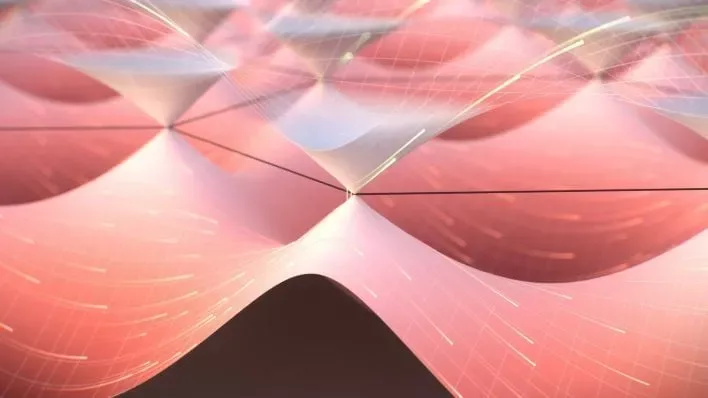
Physicists in Germany have achieved a milestone by successfully filming light-driven quantum jumps in graphene for the first time using ultra-fast laser imaging. This breakthrough could redefine the future of computing, potentially enabling graphene transistors to operate up to 1,000 times faster than current silicon-based chips while consuming significantly less power.
In traditional semiconductor environments, electrons are confined to specific energy bands, much like an elevator restricted to certain floors. However, when subjected to intense light pulses, electrons can undergo Landau-Zener-Majorana (LZM) transitions. During these events, particles appear to 'teleport' across energy gaps instantaneously, bypassing all intermediate states. Capturing these fleeting subatomic movements in real time has long been a challenge for the scientific community.
A research team from the University of Regensburg, Philipps-Universität Marburg, and Forschungszentrum Jülich engineered a 'slow-motion electron camera' with subcycle temporal resolution. This device allowed them to map the precise energy and motion states of vast numbers of electrons simultaneously. By recording these changes across the entire first Brillouin zone of graphene, the team confirmed theoretical models regarding how materials behave under extreme electromagnetic stress.
Implications for Semiconductor Engineering
This discovery holds significant implications for the computing industry as it pushes toward atomic-scale components. Understanding how electrons navigate quantum boundaries under lightwave stimulation is vital for the next generation of ultrafast semiconductor engineering. Theoretically, graphene-based transistors could offer a massive leap in performance, operating up to 1,000 times faster than traditional silicon chips while requiring only a fraction of the power.
Гика
