

SynthID Detector: Google makes AI content detection tool public
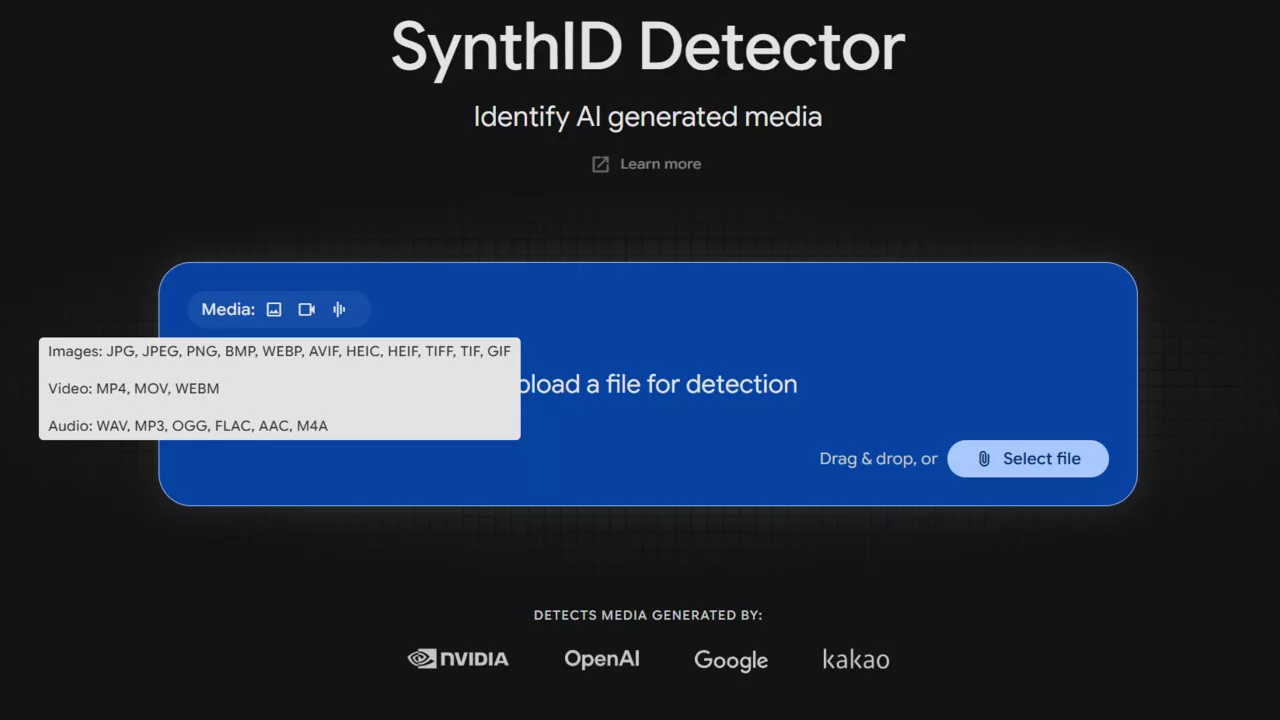
Google has released its SynthID Detector to the general public. Following a testing phase restricted to media professionals, the tool is now available for anyone to check whether a media file was generated using artificial intelligence.
How SynthID technology works
The service is based on SynthID technology, introduced by Google in 2023. It works by embedding digital watermarks into media content that are invisible to the human eye but can be read by software. This allows AI-generated content to be identified without altering the visual or auditory experience. According to Google, the system has already marked over 180 billion images, videos, and audio files.
There is a significant technical caveat: the detector can only identify media that has been previously embedded with SynthID watermarks. This includes content generated by Google's own AI tools (such as Gemini) as well as media from partners like OpenAI, Nvidia, and Kakao. If a file was created by an AI tool that does not utilize the SynthID standard, the detector will not be able to identify it as AI-generated.
Availability and supported formats
To use the SynthID Detector, users can visit synthid.com. The service is free of charge but requires a login via a Google, Apple, or ChatGPT account. The tool supports the following file formats:
- Audio: WAV, MP3, OGG, FLAC, AAC, M4A;
- Images: JPG, JPEG, PNG, BMP, WEBP, AVIF, HEIC, HEIF, TIFF, TIF, GIF;
- Video: MP4, MOV, WEBM.
Previously, detection capabilities were already integrated into Google's ecosystem, allowing users to ask the Gemini app, the Chrome browser, or Google Search to check for SynthID watermarks. Google reports that these queries exceed one million per day.
As Google expands its reach, other industry giants like Meta and Microsoft are developing their own labeling standards. However, the reliability of such systems remains a point of scrutiny; for instance, a Reuters analysis indicated that Meta's detection tools could miss a significant portion of AI-generated images if they had been cropped.
Гика
