
GeForce RTX 5090 prices hit $5,099
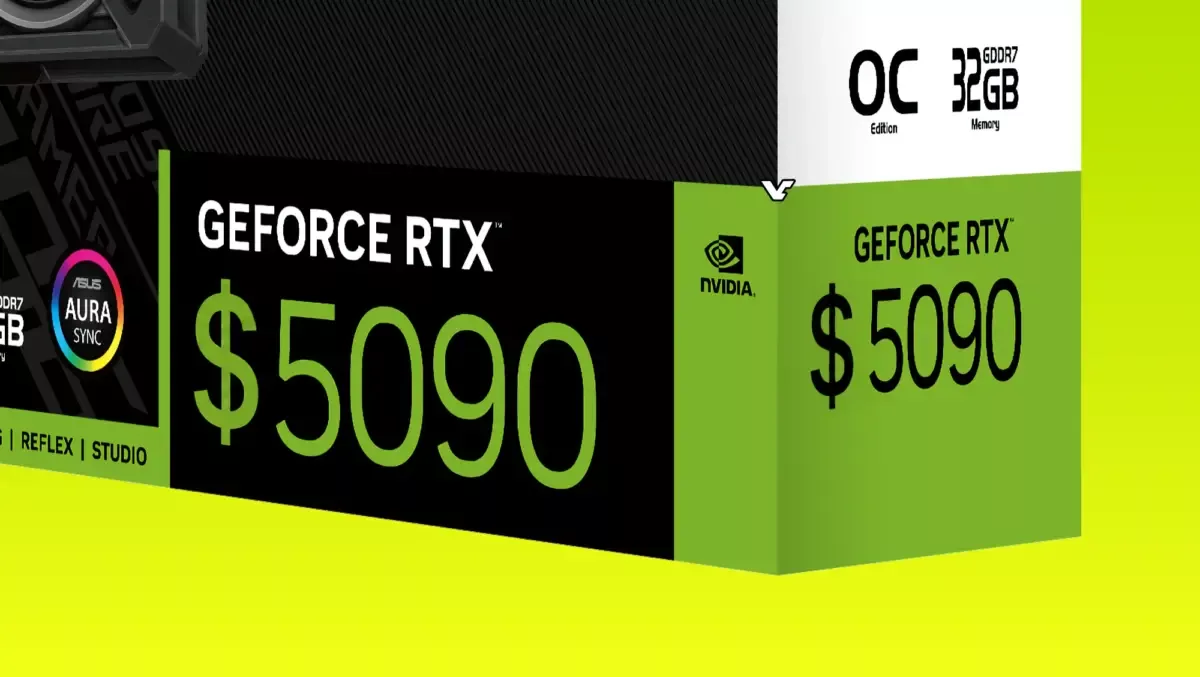
Regular GeForce RTX 5090 cards are now selling for nearly $5,000 in the US, a price point that was previously reserved for limited, extreme-overclocking halo models. According to PCPartPicker data, the ASUS TUF Gaming RTX 5090 OC is currently listed at $5,099, which is $8 higher than the official US price of the limited MSI RTX 5090 LIGHTNING Z. This marks a significant shift in the market, where standard air-cooled variants are now commanding prices that exceed those of specialized, low-volume products.
Nine months ago, the community was skeptical when ASUS announced the $3,999.99 ROG Matrix RTX 5090 and MSI followed with the $5,090.99 RTX 5090 LIGHTNING Z. At the time, these were viewed as niche collector’s items built around extreme cooling solutions, high power limits, and very low production volumes. The MSI LIGHTNING Z, for instance, was limited to 1,300 units, featured an AIO liquid cooler, and supported 800W and 1000W operating modes. It was sold in the US through a draw system, reinforcing its status as a premium, non-standard product.
Today, the pricing landscape has inverted. The ASUS TUF Gaming RTX 5090 OC, a standard air-cooled model that was never designed as a collector’s item or an extreme-overclocking platform, is now listed at $5,099 on PCPartPicker. This price is not only higher than the launch MSRP of $1,999, but it also surpasses the price of the limited MSI LIGHTNING Z. The ASUS TUF card represents a mainstream product line, yet it is now trading at a premium that was previously exclusive to halo models.
While the ASUS TUF has crossed the $5,000 threshold, other models are approaching it. PCPartPicker currently shows the Gigabyte AORUS Master at $4,929.99 as the lowest available option in this high-end group. Newegg lists the same AORUS model for $4,929.99, while the Zotac Solid OC has reached $4,999.99. Independent price tracking data indicates a steady climb for the AORUS model, which rose from $4,159.99 in early August to $4,929.99 by August 21. This trend suggests that $5,000 is becoming a standard retail price for the RTX 5090 rather than an anomaly.
The price increase is not limited to specific retailers or regions. Earlier this month, PCPartPicker showed the cheapest available RTX 5090 at $4,099.99, while Newegg’s median price had already reached $4,699.99. NVIDIA has not changed the official $1,999 MSRP, but the gap between the suggested price and the actual retail price has widened significantly. This divergence highlights a market where supply constraints and demand for high-end graphics cards are driving prices well above their initial launch values.
The situation underscores a broader trend in the GPU market, where high-end cards are increasingly becoming luxury items. The RTX 5090, which was launched as a high-performance consumer product, is now priced in a range that was previously associated with professional workstation cards or limited-edition collector’s items. This shift has implications for both gamers and enthusiasts who are looking to upgrade their systems, as the cost of entry for top-tier performance has risen sharply.
It is worth noting that these prices are for new, retail units. The used market may offer different pricing, but the trend in the new market is clear. The RTX 5090 is no longer just a high-end gaming card; it is a premium product that commands a premium price. This is a significant change from the launch period, when the card was available at or near its MSRP for a time. The current pricing reflects a market that is heavily influenced by supply and demand, with demand for high-end GPUs remaining strong despite the high prices.
For consumers, this means that upgrading to the latest and most powerful GPU is now a significant financial commitment. The RTX 5090 is no longer just a high-end gaming card; it is a premium product that commands a premium price. This is a significant change from the launch period, when the card was available at or near its MSRP for a time. The current pricing reflects a market that is heavily influenced by supply and demand, with demand for high-end GPUs remaining strong despite the high prices.
The ASUS TUF Gaming RTX 5090 OC at $5,099 is a clear indicator of this trend. It is a standard product, yet it is priced higher than limited, specialized models. This suggests that the market for high-end GPUs is not just about performance, but also about scarcity and perceived value. The RTX 5090 has become a symbol of this shift, and its price is a reflection of the current state of the GPU market.
As the market continues to evolve, it will be interesting to see how prices for other high-end GPUs are affected. The RTX 5090 is not the only card that is seeing price increases, but it is the most prominent example. The trend is likely to continue as long as demand for high-end GPUs remains strong and supply remains constrained. For now, the RTX 5090 is a $5,000 card, and that is a reality that consumers must accept.
The ASUS TUF Gaming RTX 5090 OC at $5,099 is a clear indicator of this trend. It is a standard product, yet it is priced higher than limited, specialized models. This suggests that the market for high-end GPUs is not just about performance, but also about scarcity and perceived value. The RTX 5090 has become a symbol of this shift, and its price is a reflection of the current state of the GPU market.
As the market continues to evolve, it will be interesting to see how prices for other high-end GPUs are affected. The RTX 5090 is not the only card that is seeing price increases, but it is the most prominent example. The trend is likely to continue as long as demand for high-end GPUs remains strong and supply remains constrained. For now, the RTX 5090 is a $5,000 card, and that is a reality that consumers must accept.
Гика
