Gate of Gates: Why LiTRAIL Abandoned Roguelike Mechanics for Strategy Defense
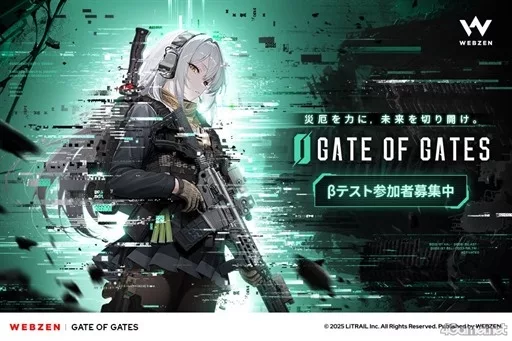
<p>The strategy defense title Gate of Gates, published by WEBZEN and developed by LiTRAIL, is undergoing a significant evolution. Following a major shift in development direction, the team has decided to move away from the roguelike growth systems showcased at G-STAR 2025 in favor of a more traditional, continuous progression model. In a deep-dive interview from G-STAR 2026, LiTRAIL's leadership discusses the internal conflicts, the challenges of balancing complexity for mobile players, and the studio's vision for revitalizing the defense genre.</p>
<p>Gate of Gates (known as 'Geogetsu' in Japan) is a post-apocalyptic military-themed strategy defense game available for PC, iOS, and Android. While the game was not exhibited at G-STAR 2026, the studio's leadership—including CEO and Producer Kim Min-gyu and Planning Team Leader Park Chan-hyuk—shared insights into the project's recent pivot. The game's narrative follows a world where 'Gates'—dimensional rifts caused by a mysterious energy resource known as 'Black Matter'—allow creatures from other realms to invade. Players act as 'Commanders,' deploying 'Tactical Bodies' (precision weapons/mercenaries) and 'Tactical Equipment' to defend against the encroaching threat.</p>
The Internal Debate: Why Roguelike Elements Were Removed
<p>One of the most significant changes discussed is the complete overhaul of the character progression system. During G-STAR 2025, the game featured a roguelike-style growth system. However, the team has since transitioned to a traditional collection-based RPG progression model. While the roguelike elements haven't been entirely discarded, they have been repurposed into a separate game mode rather than being the core progression path.</p>
<p>Park Chan-hyuk, the Planning Team Leader, explained that the decision was driven by the high learning curve of the roguelike system. "We initially aimed for the randomness and the fast-paced feeling that roguelikes provide," Park stated. "But as we developed the system, the compression of growth elements made it extremely difficult for users to understand and make informed decisions. We realized that releasing the game in that state would make it hard for players to actually enjoy it, so we returned to a traditional progression method that lowers the barrier to learning."
<p>The decision was not without controversy within the studio. Kim Min-gyu, the CEO and Producer, revealed that the team was almost evenly split on whether to include roguelike mechanics. "I personally wanted to break the standardized structure of modern subculture mobile games," Kim said. "Players want to acquire a new character and use them in battle immediately without spending excessive time on training. We thought roguelike elements could provide that speed. However, in a gacha-style game, the unpredictability of a roguelike can break the game's balance. After extensive playtesting following G-STAR, we reached the final conclusion that it was better not to pursue it as the core system."
<p>Kim expressed a sense of regret regarding the loss of certain gameplay nuances. "I am a huge fan of Final Fantasy Tactics, which allowed for mixing mage skills onto a warrior character. Our roguelike system allowed for that kind of customization," Kim noted. While the core progression is now traditional, the studio is looking for ways to reintegrate these unique elements in different modes to maintain the game's distinctiveness.
Visual Style and Tactical Depth
<p>Design choices were also heavily influenced by the genre's requirements. Initially, the team planned to use more realistic human proportions. However, they discovered that in a top-down defense game view, high-detail characters became difficult to recognize. Consequently, the developers opted for stylized SD-style characters to ensure visual clarity on the battlefield.
<p>A key differentiator for Gate of Gates is its emphasis on environmental gimmicks rather than pure stat-checking. For instance, certain stages feature fog that obscures enemies. To counter this, players must deploy lighting units. This creates a strategic choice: players can rely on provided mechanical units or attempt to 'deck-compress' by equipping characters with specific items that provide light, allowing them to clear stages without external machinery.
Character Customization and Combat
<p>The combat system revolves around modern military weaponry, with units categorized by their roles and equipment. Characters are divided into weapon types such as assault rifles or mortars. While the core progression is now focused on continuous growth, the tactical depth is maintained through equipment farming. Players can find items that grant specific abilities—like the aforementioned lighting effect—which can be equipped to characters to change their tactical utility on the field.
The World of Gate of Gates
<p>The narrative is described as a military drama set on the brink of a post-apocalyptic era. As humanity engages in endless warfare, 'Gates' begin to open, allowing creatures from other dimensions to invade. Players take on the role of a 'Commander'—a survivor of a Gate encounter who possesses the ability to foresee the invaders' actions. A central part of the lore involves 'Tactical Bodies,' biological weapons designed to adapt to the influence of 'Black Matter.'
Closed Beta Test Details
<p>The upcoming Closed Beta Test (CBT) in Japan and Korea is expected to offer significant content. Players will have access to four story chapters, each containing seven combat stages. With three difficulty levels (Normal, Hard, and Expert), there will be a total of 84 combat scenarios. Additionally, a 'Challenge Mode' will feature 12 highly difficult levels where character stats are locked to level one, turning the experience into a tactical puzzle.
In an exclusive interview, the development team behind Gate of Gates shared deep insights into the game's mechanics, its dark narrative, and the upcoming closed beta test (CBT). The discussion highlighted the studio's commitment to a serious, military-themed experience that stands apart from the typical bright aesthetics of many modern mobile games.
The gameplay revolves around modern military equipment and specialized roles. Characters are divided into several categories: attackers focused on damage, defenders, support units that boost allies' stats, and cost-recovery units. This tactical variety is central to the game's defense-oriented strategy.
Scale of the Army and Customization
The developers are planning a significant roster for the official launch. Excluding mechanical units, they expect to have over 35 characters available. When including mechanical units, the total number of playable entities will reach approximately 50. In a standard deployment, players can field 12 units at once, but a separate mode currently under development will allow for up to 20 units on the battlefield simultaneously.
Visual design is a major focus, with the art team drawing heavily from experienced subculture-style illustrators. The studio's priority is increasing the number of unique characters rather than providing excessive costume variations for each. However, they have established a rule that every character will have at least one set of casual clothing. While the main story is dark, these casual outfits are intended to be less somber, providing a contrast to the intense combat scenarios.
A Narrative on the Brink of Destruction
The story of Gate of Gates is described as a large-scale war drama. Unlike many post-apocalyptic settings, the game begins during the process of approaching the apocalypse. As humanity is locked in fierce conflicts, entities from another dimension begin to invade through 'Gates.' The narrative follows the player, acting as a Commander, as they attempt to protect their squad amidst this global collapse.
The player character is a 'Returnee'—someone who was once pulled into a Gate and returned, possessing the unique ability to 'foresee' the movements of the invading lifeforms. The combat units, known as 'Tactical Bodies,' are biological weapons created by extracting the brains of young girls, as only they can adapt to the 'Black Matter' emerging from the Gates.
December CBT: Content and Challenges
The upcoming closed beta test in Japan and South Korea will offer a substantial amount of content. The main scenario will cover four chapters, with each chapter containing seven combat stages. Since each stage features three difficulty levels (Normal, Hard, and Expert), players will encounter a total of 84 stages.
In addition to the main campaign, the CBT will include a 'Challenge Mode' consisting of 12 extremely difficult stages (three per chapter). These stages function like puzzles where character levels are fixed at Level 1, requiring players to find the 'correct answer' or specific tactical sequence to succeed, regardless of their previous progression.