

DLSS 5 runs on RTX 40 via modder workaround
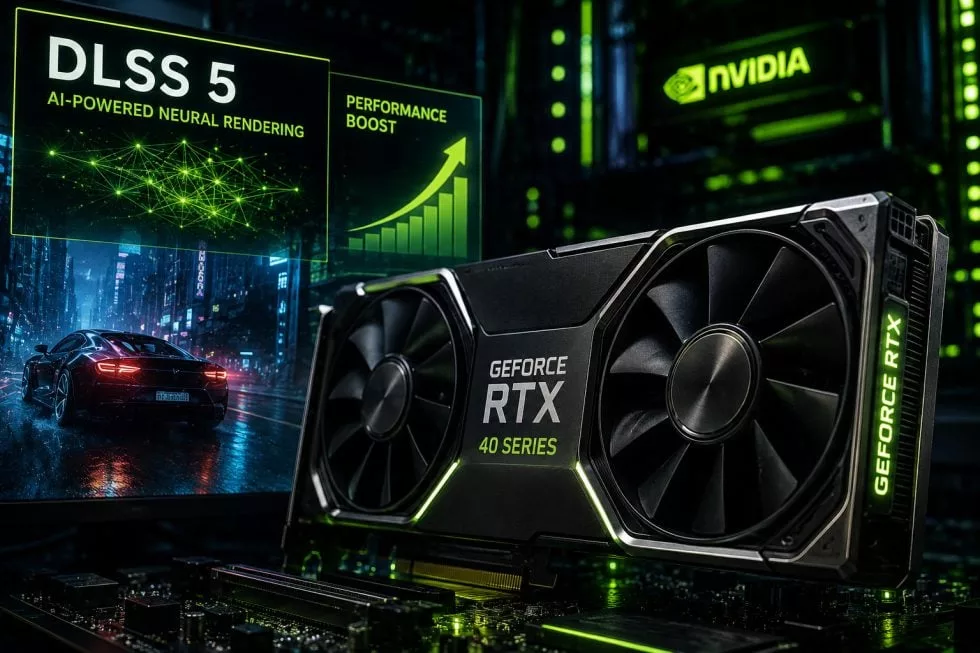
NVIDIA's upcoming DLSS 5 neural rendering technology is already generating activity before its official launch, with modders successfully porting the experimental implementation to GeForce RTX 40-series GPUs.
Modder bypasses Blackwell restrictions
The core of this development lies in the nvngx_dlssnr.dll file, which contains parts of the new neural rendering technique originally tailored for Blackwell architecture and RTX 50 hardware. Initially, these CUDA binaries were incompatible with Ada Lovelace GPUs found in the GeForce RTX 40 series. However, a modder known as Uncle Burrito analyzed the components and adapted the incompatible CUDA binaries, allowing the experimental implementation to run on cards like the GeForce RTX 4080. Tom's Hardware has verified the functionality of this modification.
FP8 calculations and performance impact
Technically, the adaptation relies heavily on FP8 (floating-point with 8 bits) calculations. The current implementation uses functions designed for Blackwell hardware, but through adjustments, parts can be executed on Ada Lovelace architecture. It is crucial to note that this does not mean NVIDIA has officially announced DLSS 5 support for all RTX 40 GPUs; rather, it is an unsupported experimental modification.
Members of the RenoDX community integrated this library into Remedy's Control. Unlike classic DLSS, which reconstructs images from a lower resolution, this experimental technique uses neural processing to actively change details of characters, surfaces, and lighting. The results are mixed: while some aspects look impressive, others appear distinctly artificial, with faces changing appearance and textures being reinterpreted.
Significant performance cost
The immense computational load highlights how experimental the current version remains. In a test published by PC Gamer using an RTX 5070 Ti, enabling the neural rendering function in Control at 4K resolution dropped the frame rate from approximately 71 FPS to 35 FPS. This represents a performance loss of around 51 percent. These figures should not be viewed as official DLSS-5 benchmarks, as the implementation is neither a finished game integration nor a final optimized NVIDIA release.
Future implications for older hardware
The successful porting to Ada Lovelace raises questions about whether even older generations like the Ampere architecture (RTX 30 series) could follow. However, technical hurdles are significantly greater there, particularly due to the lack of native support for certain FP8 operations. The fact that the technique can run on RTX 40 hardware at all is remarkable, suggesting the neural rendering implementation is not fundamentally bound to Blackwell. Nevertheless, this does not guarantee future official support, as NVIDIA could still change technical requirements or reserve specific functions for certain GPU generations.
Гика
