
Disgaea Mayhem Review: Big Numbers Move Into Real-Time Action
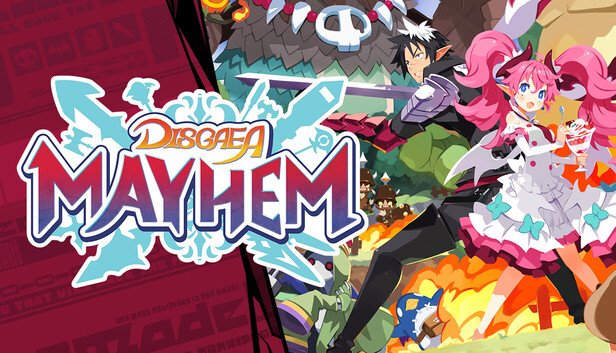
Disgaea Mayhem moves the series from turn-based tactics into a directly controlled action RPG. The central question is not whether the enormous numbers survived, but whether speed can replace the older games' decision space.
The Case of the Missing Pristine Gleam Flan
Mercenary N.A. is summoned by Tichelle, Overlord of the Super Duper Netherworld. Her late father's subjects rebelled and ate the Pristine Gleam Flan, producing a contract absurd even by Disgaea standards: recover the dessert intact.
The story preserves the series' mix of demonic hierarchy, mundane inconvenience, and solemn nonsense. It provides a useful reason to cross the Netherworld, although character building and repeatable arenas carry most of the game's long-term appeal.
Direct Control Changes How Battles Read
Instead of issuing commands on a grid, players move N.A. directly, gather enemy groups, and trigger flashy skills. Arenas deliver enemies in waves and cap episodes with larger opponents or bosses.
The format is faster and easier to understand immediately. It also removes part of the satisfaction that came from exact positioning and turn order. Decisions move from board geometry into weapons, skills, equipment, and attack timing.
Seven Weapon Classes, Seven Rhythms
The official feature set includes seven weapon classes. A sword supports direct melee, while a bow creates distance; changing weapons alters basic actions and crowd-control options.
Those distinctions matter because repetition appears quickly in a wave-based action game. Experimenting with classes, skills, and companions supports the pace better than using one unchanged loadout from beginning to end.
Disgaea Still Lives on Rising Numbers
The level cap returns at 9,999. Equipment can be improved, bills pass through the Dark Chocolate Assembly, and builds can produce hundreds of millions of damage. Magichange and familiar demons such as Prinny connect the new game to the wider series.
This is not a decorative layer. Repeating missions becomes meaningful when a new item or assembly decision visibly accelerates a clear. Players who do not enjoy optimization and replaying content will find the same structure prolonged.
A Compact Campaign With a Long Tail
Published reviews consistently describe a main story smaller than the progression available after it. The campaign therefore works as an introduction to arenas, classes, and systems rather than the final test of a build.
That balance fits Disgaea, but it requires clear expectations. A buyer seeking only a long linear campaign receives less than someone who enjoys reruns, stat growth, and searching for efficient combinations.
A Spin-Off, Not a Genre Replacement
Disgaea Mayhem successfully translates the series' exaggeration into approachable action: skills read quickly, weapons create options, and progression preserves the familiar obsession with numbers. Tichelle's ridiculous contract keeps the proper tone.
The tradeoff is reduced tactical precision and a risk of arena fatigue. It is a strong spin-off for players who value character growth and fast clears, but it does not replace mainline turn-based Disgaea for positional-tactics fans.
Mayhem works best as a test of another side of the formula. Mainline games ask where to place a unit and how to sequence abilities; this game asks how quickly a build removes a wave and how a weapon handles a dense crowd. Item World, reincarnation, and the Dark Chocolate Assembly preserve calculation between fights. Real-time combat simplifies the immediate encounter, but it does not remove progression planning altogether.
Sources
Disgaea Mayhem official site; NIS America; Nintendo Life review; RPGFan review.
Редакция MBG
