

DDR5 Repair for $16,000: Faulty PMIC Makes Memory Rework Profitable
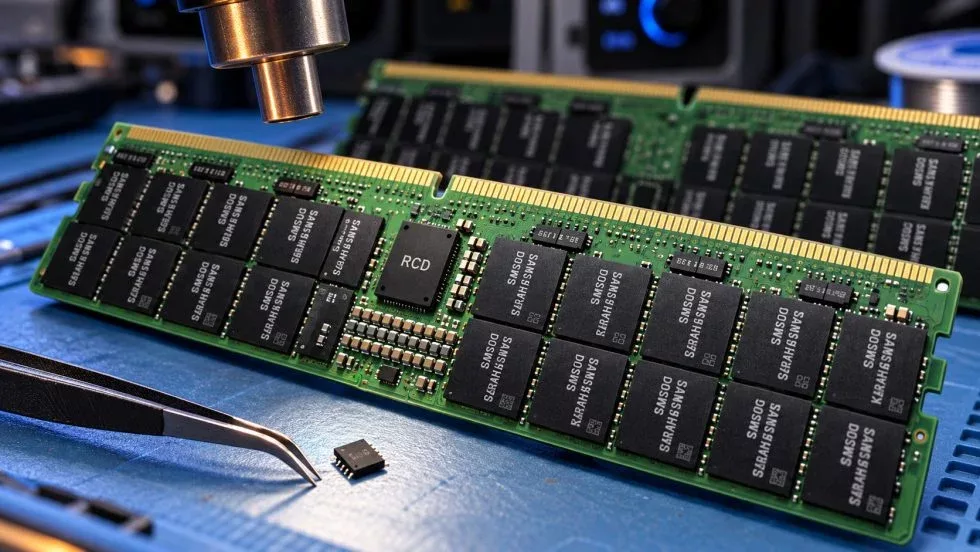
While component-level repair has long been impractical for consumer hardware, the economics of server memory are shifting. The repair service NorthWestRepair recently handled two DDR5-ECC modules with a combined estimated value of approximately $16,000. The failure of the power management components has made professional rework a viable option, especially as high-capacity server memory becomes increasingly expensive and scarce.
DDR5 Architecture and the Role of the PMIC
A major departure from the DDR4 standard is the integration of the PMIC (Power Management Integrated Circuit) directly onto the DIMM. Unlike previous generations where voltage regulation was handled by the motherboard, the PMIC on a DDR5 module manages and monitors the various supply voltages for the DRAM chips. A failure in this single chip can render the entire module non-functional, even if the actual memory dies are perfectly intact.
During the repair process, technicians encountered two distinct scenarios. The first module required a reflow process—reheating the solder joints to restore broken connections. The second module was completely unresponsive, showing no signs of power draw or heat. After using a thermal camera to locate a short circuit, the technicians had to replace the PMIC, swap out a capacitor, and repair damaged traces on the PCB edge. Only after these intensive steps could the module successfully complete its memory training process.
The Economics of Server Hardware Recovery
The viability of hardware repair is strictly tied to the cost of replacement. For a consumer-grade $150 RAM kit, the labor-intensive process involving microscopes and hot air stations is not cost-effective. However, for server RDIMM modules costing thousands of dollars, a repair costing a few hundred dollars becomes highly attractive.
The current surge in demand for AI servers is driving a need for massive amounts of DRAM, particularly high-capacity DDR5-RDIMM and 3DS-RDIMM modules. As memory prices rise and availability fluctuates, the threshold for professional rework shifts. This trend mirrors the high-end GPU market, where board-level repairs are common for expensive flagship cards, but rarely for entry-level models. In the server sector, the era of profitable memory recycling has arrived.
Гика
