

County of Fortune enters Early Access: A medieval city builder focused on entire regions
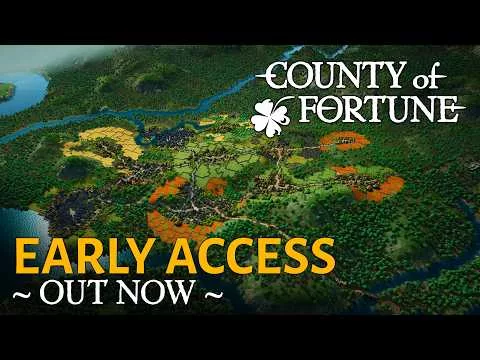
The standard city builder scope might feel too small for some players. If you have ever wanted to manage multiple settlements on a single map without starting a new save file every time, County of Fortune aims to fill that niche. The game has officially entered Early Access, shifting the focus from individual urban management to the development of an entire medieval region.
As the title suggests, the core premise of County of Fortune is the management of a whole county rather than a single isolated city. Players place settlements across a map, each laid out on a medieval grid. These settlements grow and specialize over time, eventually knitting together into a living region where geography, such as rivers and resource deposits, dictates which towns thrive and which struggle.
The gameplay scale is a defining feature. Rather than zooming in to manage every single street in one town, the game encourages players to zoom out to observe the macro-level development of the region. Success depends on how you navigate the landscape: identifying optimal terrain, utilizing river systems, managing climate considerations, and establishing efficient trade routes between your growing settlements.
As the county matures, the complexity increases through several layers of simulation. Each settlement functions uniquely based on its local resources, leading to specialized economies. Beyond infrastructure, players must navigate a layer of social and political complexity involving appointed mayors, competing noble houses, and migrating cultures that can both benefit and complicate the development of various villages.
Currently available in Early Access on Steam, the game is in its formative stages. While the procedural generation helps shape the towns as they are built, the developers are focusing on how these elements—politics, culture, and geography—intersect to create a cohesive regional experience.
Флешка
