

Buyer finds DDR4 chips disguised as DDR5 under Kingston FURY heatsink
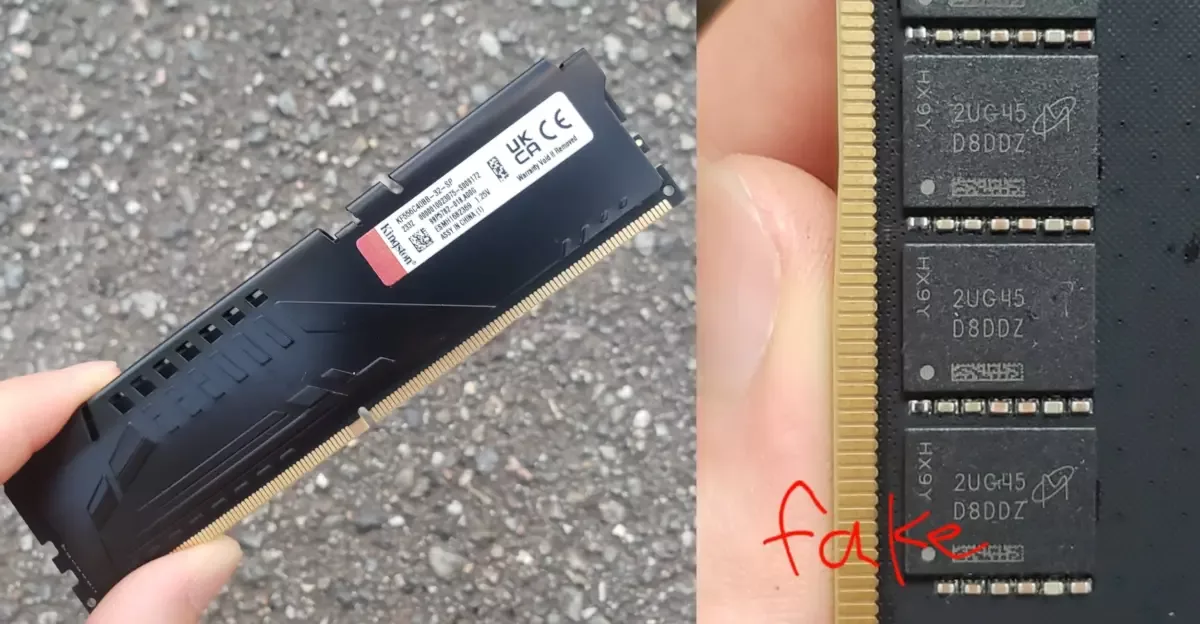
A recent discovery on the used hardware market has exposed a sophisticated scam involving Kingston FURY memory modules. A buyer who purchased an unverified DDR5 stick found that, despite the external appearance and labeling, the module was actually built around older DDR4 chips. The deception relied on using genuine-looking components from Micron to mimic a high-speed DDR5 part, making it nearly impossible to spot without physically disassembling the heatsink.
The incident was reported by user @watagjt, who acquired what appeared to be a Kingston FURY Beast module. The external packaging and labeling identified the stick as a KF556C40BB-32-SP model, which corresponds to Kingston's 32GB DDR5-5600 CL40 specifications. Visually, the heatsink and sticker looked authentic, leading the buyer to assume they had received a legitimate high-speed memory upgrade.
Upon removing the heatsink, however, the discrepancy became apparent. The PCB contained DDR4 memory chips rather than DDR5 components. Crucially, these counterfeit chips were not random knockoffs; they carried genuine Micron branding and specific part markings. The chips were identified by the code 2UG45 D8DDZ, which is a valid identifier for Micron's MT60B2G8HB-56B:G component—a 16Gb x8 DDR5 chip operating at 1.1V.
This detail highlights the sophistication of the fraud. The markings on the suspect chips were not fake; they were copied directly from an actual, legitimate DDR5 part. Micron lists D8DDZ as a valid FBGA code for high-speed memory, and real modules using these exact chips have been documented in the market. By reusing authentic identifiers, the scammers managed to make the chips appear convincing at first glance.
The physical layout of the components also played a role in the deception. Both DDR4 and DDR5 packages from Micron can utilize a 9 x 11 mm footprint, which allows them to fit on the board without immediate visual detection. However, the electrical connections differ significantly. The genuine DDR5 chip uses an 82-ball VFBGA package layout. In contrast, the counterfeit chips used in this scam employed a 78-ball TFBGA arrangement. This difference is invisible from the top but becomes clear when examining the solder points and contact pads.
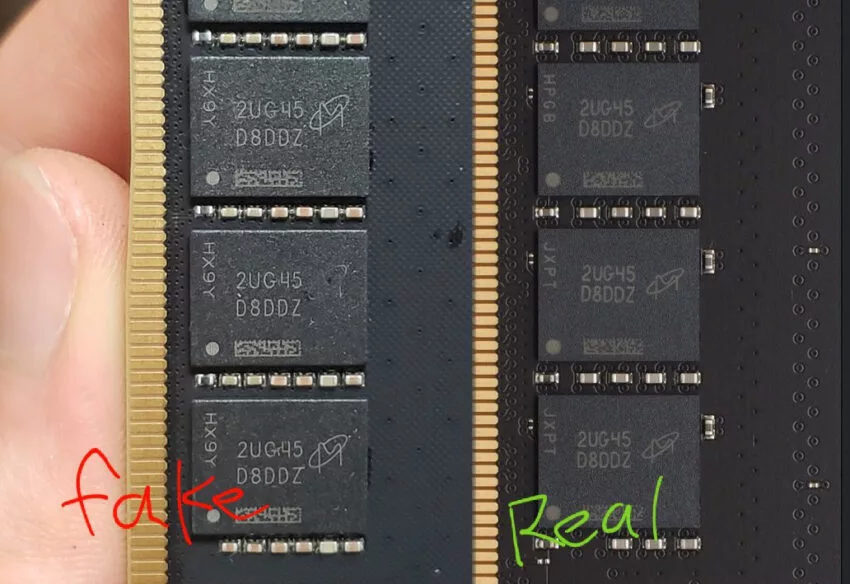
The buyer noted that flux residue and unused PCB pads further exposed the modification. The scammers did not need the chips to function as DDR5; they only needed them to remain hidden underneath the heatsink while the module was sold unchecked. This suggests the fraud targets buyers who purchase used hardware without verification or those who rely solely on external labeling.
While the photos alone cannot independently confirm the exact model of the counterfeit DDR4 chips due to obscured original markings, the combination of copied DDR5 identification, unused pads, and the mismatched BGA arrangement strongly supports the buyer's explanation. The case serves as a stark warning for enthusiasts looking to upgrade their systems with used memory: always verify the internal components and avoid relying solely on external branding or stickers.
Similar scams have occurred in the past, where GPUs were swapped out or fake dies were installed. This memory scam adds a new layer of complexity by leveraging genuine component markings to bypass visual inspection. As the market for used hardware grows, such deceptive practices may become more common, requiring buyers to be even more vigilant when purchasing unverified modules.
Гика
