

BF17: Teach My Little Sister How To Drive Demo Costs Developers $1,000 Daily
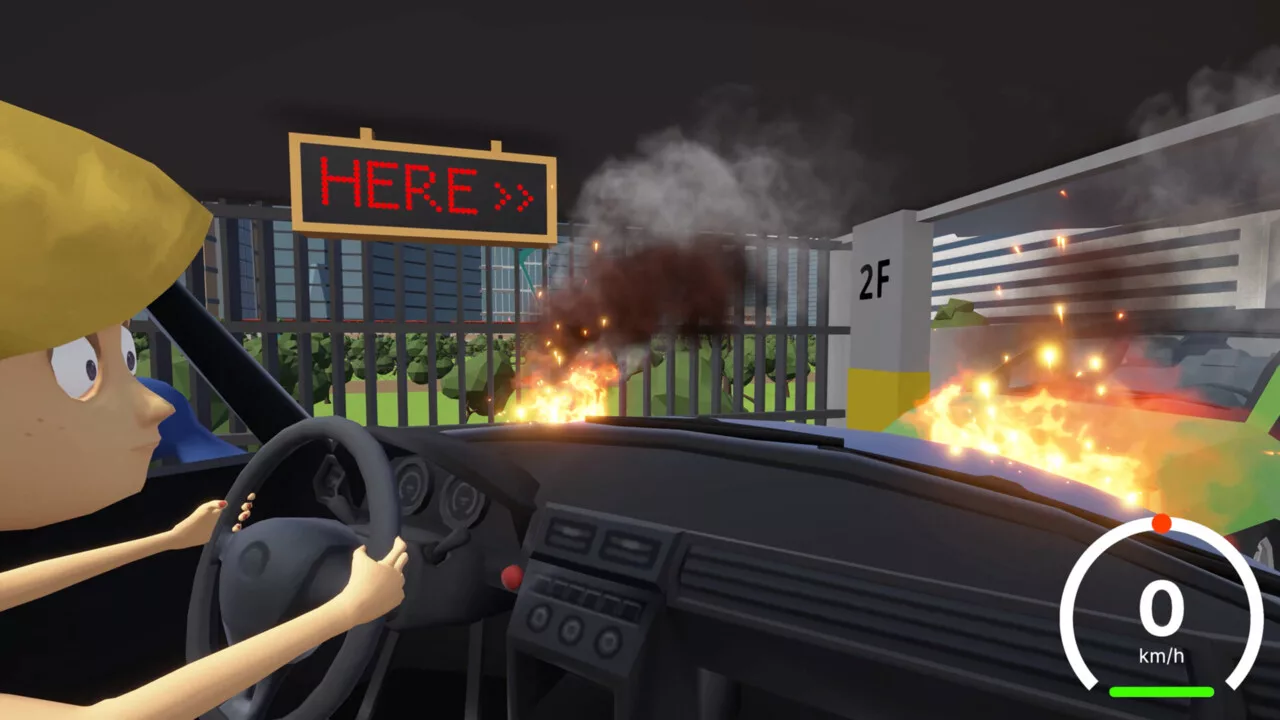
The success of Teach My Little Sister How To Drive has brought unexpected financial strain to its creators. The four-person team at Easy Fox reported that expenses for external AI services used in their free demo have spiked to over $1,000 per day following a massive surge in players.
In Teach My Little Sister How To Drive, players sit in the passenger seat and provide driving instructions to their younger sister via a microphone. Instead of traditional dialogue trees, the game utilizes generative AI to process spoken commands and generate real-time, unscripted responses. While this creates a highly immersive experience, it requires significant computational power that the studio must pay for through third-party providers.
Scaling Issues and Loans
As reported by Easy Fox in a Steam message, the number of players in the demo has increased more than twentyfold within a single month. This influx has caused AI service bills to skyrocket, leading the small team to take out a bank loan to keep the demo available. If these costs persist, the studio warns that the demo might be discontinued before the full game's planned release in January 2027.
To prevent similar issues with the full version, Easy Fox intends to factor expected AI usage costs directly into the game's price, ensuring that individual AI queries do not result in direct losses for the studio.
Technical Limitations and Local AI
The game currently utilizes Google's Gemini 2.5 Flash via Vertex AI for its dialogues. However, due to high demand and service limits, the game frequently switches to OpenAI models via the Realtime API. This transition is noticeable to players, as the AI can sometimes provide overly verbose, unnatural responses or misinterpret instructions—such as turning right when told to turn left.
Easy Fox is currently working to fix these behavioral glitches. Additionally, the developers are exploring the possibility of implementing local AI models, which would allow players with sufficiently powerful graphics cards to run the AI locally, bypassing the need for costly cloud-based services.
Гика
