

ASUS Ascent GX10: New Variant with 64 GB LPDDR5X

ASUS is expanding its lineup of compact AI computing systems. The new Ascent GX10 variant features 64 GB of LPDDR5X memory, providing a more accessible entry point into the NVIDIA DGX-Spark platform compared to the existing 128 GB model.
Architecture and Performance
While the memory capacity changes, the core hardware remains identical to the previous model. The system is built around the NVIDIA GB10 Grace Blackwell Superchip, which combines a 20-core Grace family ARM CPU with a "Blackwell" GPU featuring fifth-generation Tensor Cores. The CPU and GPU are linked via NVLink-C2C, an architecture that NVIDIA claims provides up to five times the bandwidth of a standard PCIe-5.0 connection.
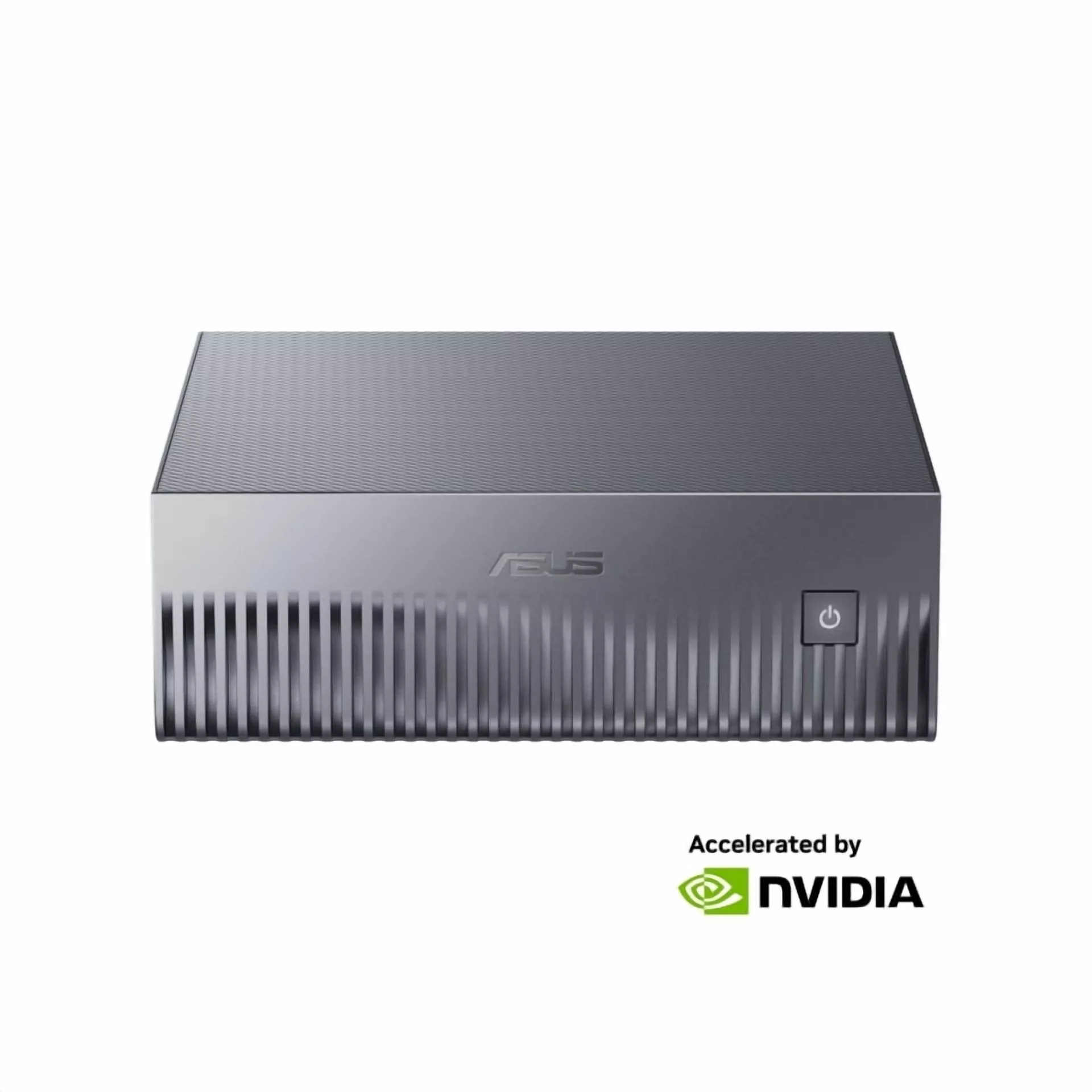
The primary modification lies in the shared memory subsystem. The new GX10-GG0062BN model provides 64 GB of LPDDR5X with a bandwidth of 273 GB/s. Thanks to the coherent memory architecture, both processing units can access the same memory pool without the need to copy data between separate system and video memory. This architecture offers significant advantages when running large language models (LLMs) locally.
Cooling and Availability
The cooling solution remains unchanged from the 128 GB version, utilizing five heatpipes, large cooling fins, and two 140 × 80 mm fans. A seven-stage fan control system manages thermal output, ensuring the compact system can handle sustained AI workloads and continuous agent operations.
The new variant comes equipped with a 1 TB SSD. While pre-orders are already available through initial retail partners in Germany, Austria, and Switzerland, ASUS has yet to announce a specific retail price for the device.
Гика
