AMD Gains Server Ground While Intel Reclaims Desktop Dominance
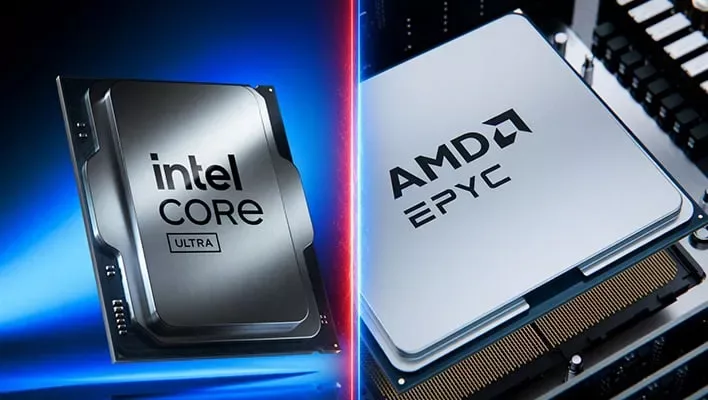
The CPU market is undergoing a notable reshuffle. According to the latest data from Mercury Research, the third quarter of 2026 has highlighted a divergence in the strategies and successes of the industry's two biggest x86 players. While AMD continues to aggressively chip away at Intel's dominance in the high-margin server sector, Intel has managed to stage a significant comeback in the desktop market, marking its first overall x86 market share gain since 2025.
The overall PC CPU market experienced an unexpected downturn in Q3, following a surprisingly strong second quarter. This decline was primarily driven by a slump in mobile CPU shipments. Both Intel and AMD have noted in their recent earnings reports that consumer demand for PCs softened significantly toward the end of the third quarter. This trend is expected to persist, with projections suggesting a decline in client CPU shipments exceeding 20% for the fourth quarter. However, the server segment remains a bright spot, showing robust growth even as the client market cools.
The Desktop Resurgence and the Mobile Slump
When looking at the broader x86 market, Intel's total share nudged up slightly to 66.1% in Q3, compared to 65.9% in Q2, though it remains down from the 69.1% recorded a year ago. AMD's overall x86 share saw a minor dip from 34.1% in Q2 to 33.9% in Q3, down from 30.9% a year prior. However, these aggregate numbers mask much more dramatic shifts within specific segments.
The desktop segment tells a much more aggressive story for Intel. The company saw a considerable increase in desktop CPU shipments, capturing a 70.1% market share in Q3. This is a significant jump from 65.1% in the previous quarter and 66.4% a year ago. Conversely, AMD's share in the desktop category fell to 29.9%, down from its record-high 34.9% in the previous quarter and 33.6% a year ago.
Analysts suggest several factors for this desktop pivot. Dean McCarron, president of Mercury Research, speculates that the decline in mobile CPU demand may have allowed Intel to reallocate more supply to the desktop market. This segment typically sees a seasonal demand spike in the third quarter, a market that Intel had reportedly been undersupplying earlier in 2026. Interestingly, AMD did not see a similar seasonal boost, potentially due to its higher exposure to the PC gaming market, which was hampered by ongoing supply constraints for gaming GPUs.
The Server Battleground and the AI Tailwinds
While the desktop is a battle of volume, the server market is a battle of high-value growth. AMD is successfully capturing more of this lucrative space, adding another percentage point in Q3 to reach a 35.5% share of the server CPU market (excluding IoT). This represents a massive 7.7 percentage-point gain compared to the same period last year. Intel, while still the market leader, saw its share slip to 64.5%, down from 65.5% in Q2 and 72.2% a year ago.
The surge in server demand is being fueled by the rapid expansion of AI infrastructure. Mercury Research noted that the server CPU segment grew by 20% year-over-year, marking the highest annual growth in nearly five years. This growth is being driven by increased shipments of workstation CPUs and small, departmental-sized AI servers. While AMD is gaining ground, Intel's Data Center and AI (DCAI) division reported its best results in 15 years, with a 78% year-over-year surge in revenue, totaling $7.3 billion last quarter.
The Arm Factor
Beyond the x86 giants, the rise of Arm-based silicon remains a critical variable. While Mercury Research notes that estimating Arm's exact impact is difficult due to the lack of centralized reporting for Arm-based server and client CPU revenues, the firm estimates that Arm has reached a record high of 15.3% of the PC client CPU market in Q3.