

Afterworld: Paradox's RPG-Driven Grand Strategy
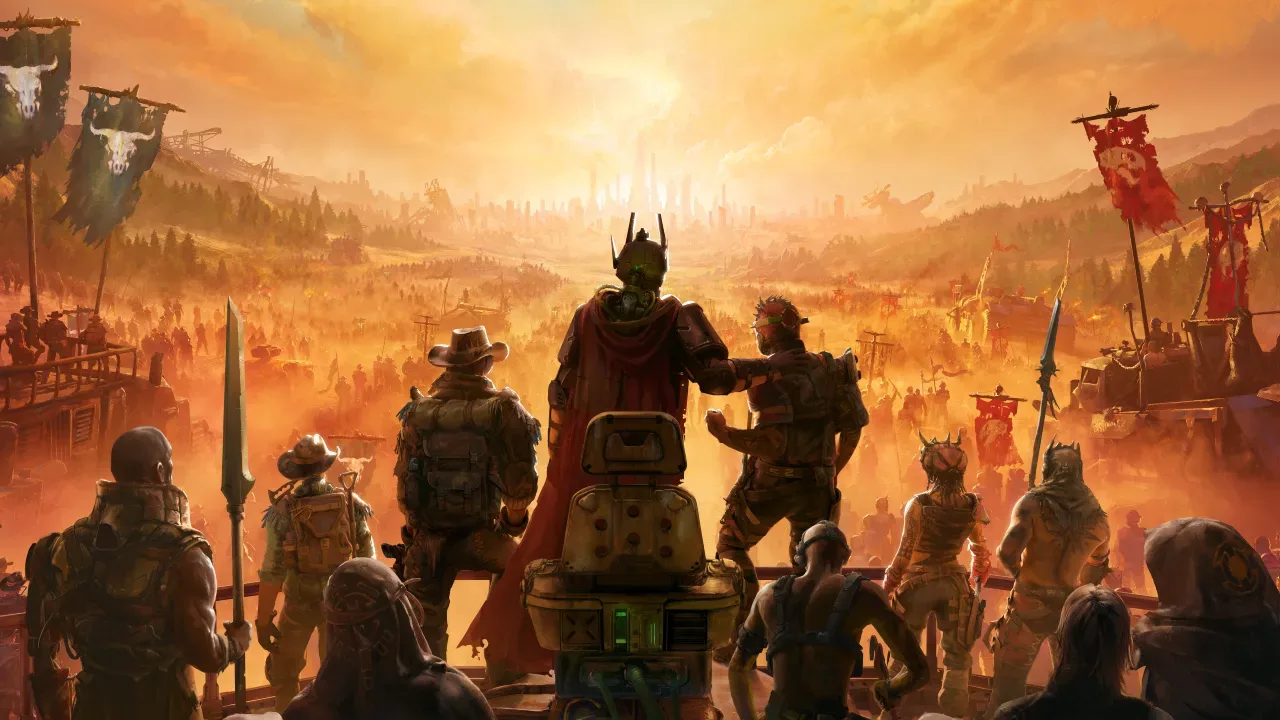
Paradox Interactive is positioning its upcoming grand strategy title Afterworld as a gateway for new players, blending traditional 4X mechanics with deep role-playing elements to lower the barrier to entry for the genre.
The grand strategy genre is defined by its immense scale, offering players the agency to build sprawling civilizations, allocate resources, and expand influence from the ground up. While titles like Civilization, Hearts of Iron, and Crusader Kings provide unparalleled storytelling opportunities for experienced players, the complexity can be daunting for newcomers. Afterworld aims to address this challenge by placing the classic 4X and grand strategy gameplay into a post-apocalyptic setting, where factions known as tribes must learn to survive and thrive in a world slowly rebuilding itself.
According to Game Developer, the game puts discovery and cultural development front and center, featuring mutants, cyborg billionaires, and rival tribes with distinct agendas. Dan Lind, game director at Paradox Development Studio, explained that the post-apocalyptic sandbox is the team’s effort to open up the grand strategy genre to a broader audience. The core of this approach is a keen focus on role-playing elements, which the developers believe will push the genre further by making the experience more accessible and narrative-driven.
“We have always been very focused on the audience that we have with our games, and I hope all of them will like this too, but since we've grown as a company, we want to broaden the audience more as well,” Lind said. He noted that while the 4X experience of starting small and expanding is central to the genre, making it easy for all players to get into can be a challenge. Lind compared the setting to other titles in the portfolio, stating, “I'm not sure how I would do this with Hearts of Iron, honestly, because it's like you're starting in the middle of history. But that's why I like this version of a post-apocalyptic setting, it's like we're restarting history and putting all players in that space forging that path into the unknown.”
The game is set in North America, centuries after total ruin. Survivors are isolated in various forms: some live in secluded bunkers, others survive on the surface in makeshift towns, and some reside in protected cities serving former wealthy individuals who have become cyborg deities. The player’s chosen tribe will steadily branch out into the larger world, establishing and expanding territory, interacting with other surviving groups, and building a new civilization. This journey involves co-existing or facing off against others with conflicting interests, all while navigating a landscape of rediscovery.
Paradox Development Studio has long been at the forefront of the grand strategy genre, with recent hits like Stellaris, Hearts of Iron IV, and Crusader Kings III. With Crusader Kings III, the team emphasized that one of the genre's great strengths is storytelling, allowing players to weave fascinating narratives as they shape their own nations and characters. For Afterworld, the developers are keen to focus on player choice within this post-apocalyptic context, tapping into complex expansion systems and branching threads of choices.
The game places a strong emphasis on evolving the tribe as a culture, not just surviving and building a network of communities. Lind highlighted the importance of player agency in defining the tribe's path: “That's something I'm betting on a lot, it's why I decided to make the tribe origins in Afterworld a bit like building your backstory of sorts. Instead of going the Stellaris route where it's a lot of settings to tune, we're gonna try to ease you into playing a role-playing game with your tribe, essentially.”
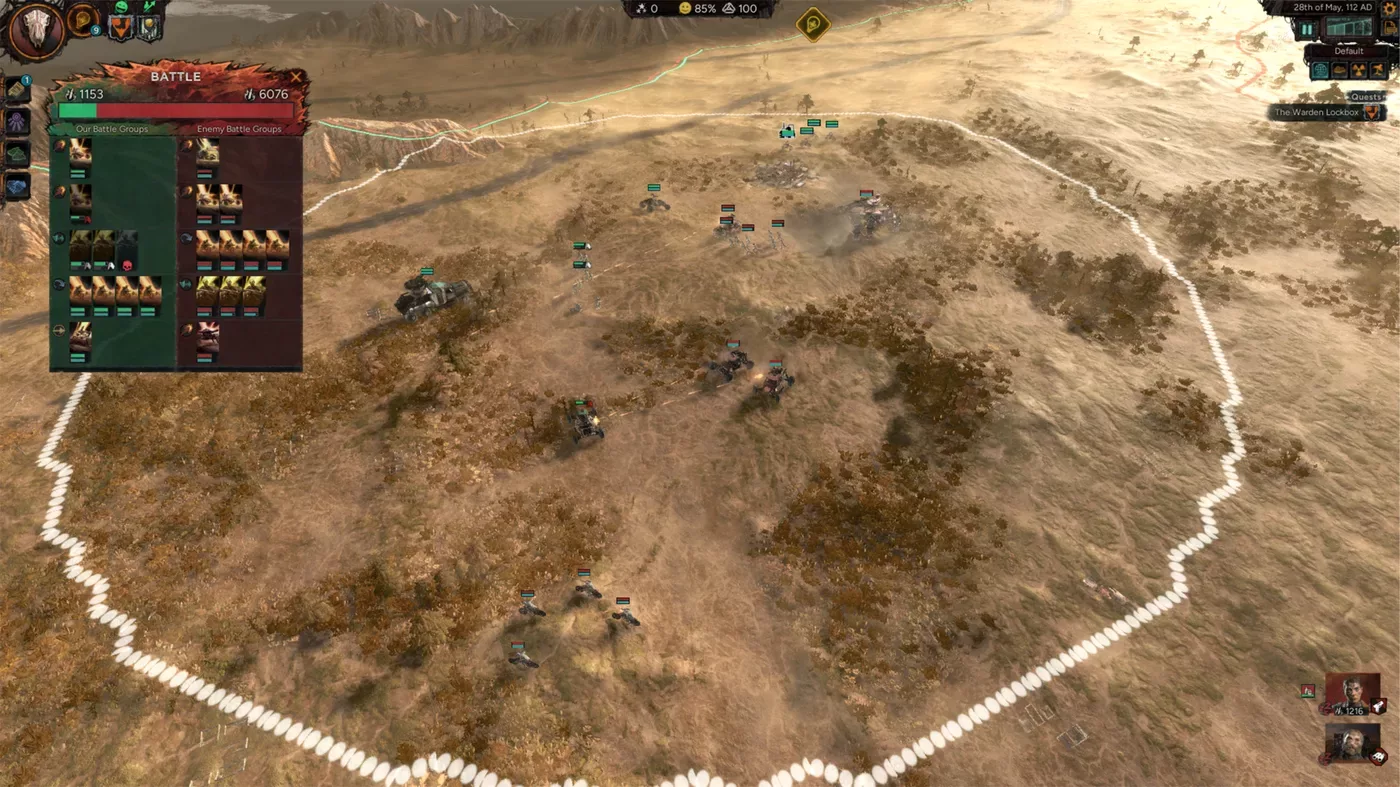
Lind explained that for players not used to grand strategy mechanics, it can be hard to understand the freedom of choice and find their own goals. “With Afterworld, it's gonna make you adapt and stay in the moment. I think at some point you'll realize you've actually set goals for yourself and you're able to do stuff. So I'm hoping we'll be able to attract people who are invested in the story and won't have to think too much about number crunching,” he said.
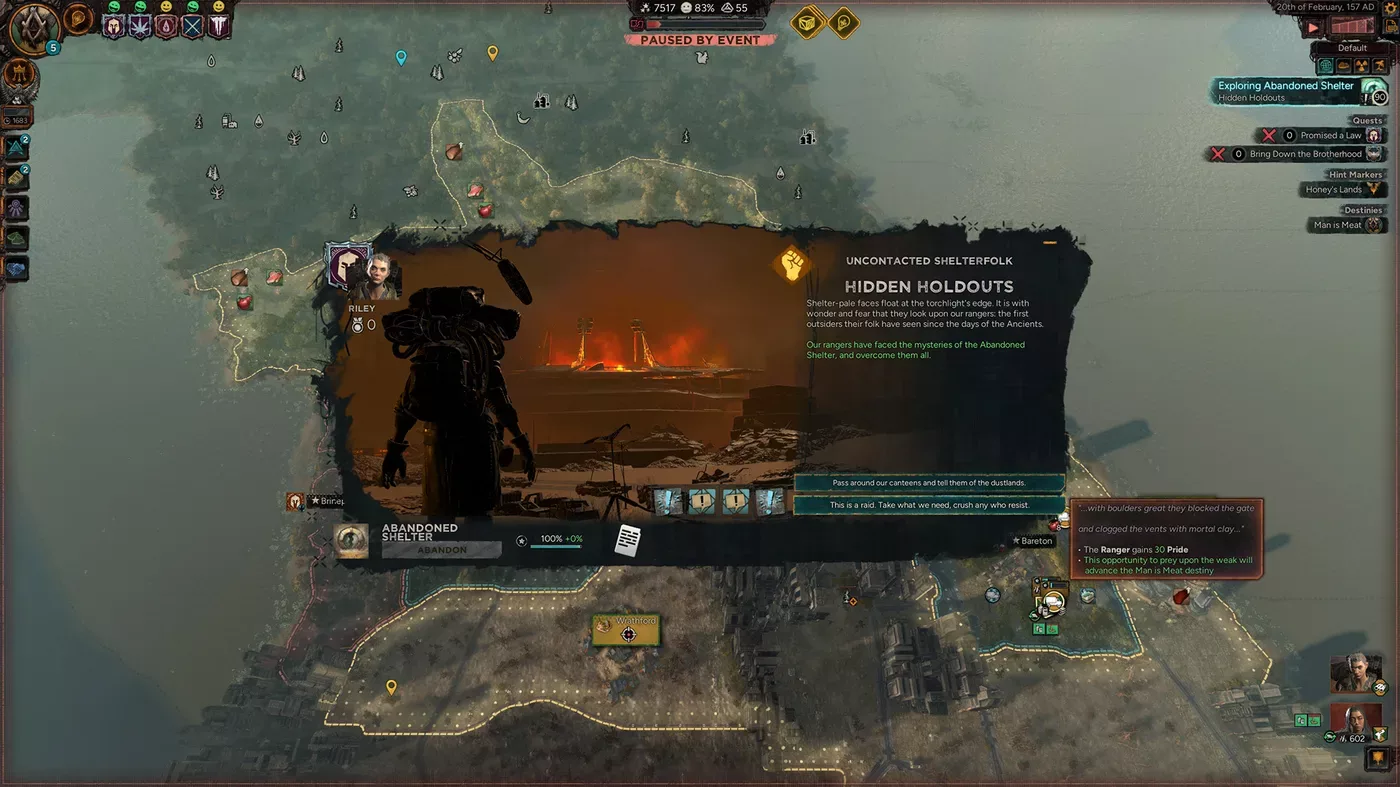
In early gameplay, playing as the Shelterborn tribe felt akin to a strategic road trip. The Shelterborn are a community of survivors who lived in vaults, isolated from the changed surface world. By stepping out of their decaying shelter, which explodes after a few phases pass, this faction must figure out how to navigate an unfamiliar world. This begins with building safe havens and securing resources, eventually expanding to communicating with other roaming tribes and nearby warlords who may demand loyalty.
A standout aspect of the game is its worldbuilding and the sense of discovery as players slowly chart the world. This leads into one of Afterworld's most intriguing concepts: the tribe's core ideas. Presented in an expansive menu that draws on similar abstract character-growth paths from Disco Elysium, the player tribe will expand its knowledge and skills based on which survivors and events it comes into contact with. A new idea introduced at the right time can change the makeup of an entire tribe.
Based on which ideas players pursue and develop—such as foraging, old-world technology, or even cannibalism—they will build their tribe's core ethos, which the player's chosen council will pass on to others. In keeping with Lind’s view that Afterworld is a role-playing game, the core tribes serve as jumping-off points for players to evolve, changing based on the discoveries they make while playing.
The game is not just about building an empire and seizing territory through battles or wits, but also about how the tribe is building its future and way of life. Whether that involves a sheltered community building a communist civilization that dismantles slavery and injustice, or a community that values old-world technology and perhaps develops a taste for human flesh, there are many different directions a player's journey can take.
For Lind, Afterworld is a concept that has been in the making for a long time. He feels he is in a position to make it now thanks to the success of his previous game-director work on Hearts of Iron IV and Crusader Kings III. “I've had this concept for Afterworld in the backlog for some time, even before I started work on Hearts of Iron IV,” Lind said. “I had sketches of this game, but it felt too experimental for us to dare gamble on. I had to deliver on some games before someone lets me do a totally different grand strategy game like this, right?”
Lind believes the game has massive potential to attract players who might not be into other titles in the genre. He drew a parallel to Stellaris, noting that it was a big step for the studio because it attracted people who had never played their games before, serving as a way into the broader portfolio. “I'm hoping this is similar, but tapping into a different audience as well. You don't work on something like this without being passionate about it for a long time. It's a huge commitment and a big responsibility to take on, right?” he concluded.
Флешка
