

1666: Amsterdam Review: Ambitious but Buggy
Christian Donlan reviews 1666: Amsterdam, finding a game that is buggy and bewildering but driven by real ambition and unique design.

1666: Amsterdam is a witchcraft-driven action-adventure that attempts to invert the Assassin's Creed formula by focusing on interior exploration and spatial puzzles rather than parkour. Developed by Panache Digital Games, the game is currently in early access on PC, offering a buggy but ambitious experience that blends Dutch Golden Age aesthetics with immersive sim mechanics.
There is a specific kind of confusion that arises when a game tries to do too much with too little. In one early sequence of 1666: Amsterdam, the player character is wandering through a 1990s boutique hotel in Amsterdam, nearly naked, trying to reach an outdoor space seen in a vision. The path is blocked by strange, low-resolution clusters of people standing perfectly still in doorways. Their faces are bland, their expressions blank, and some appear to be exact duplicates of others. It is a moment of accidental surrealism that highlights the game's core tension: it is an ambitious project stretched thin by the realities of a small team and a limited budget.
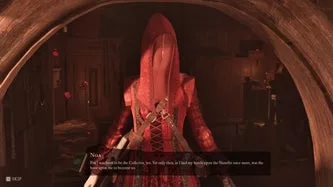
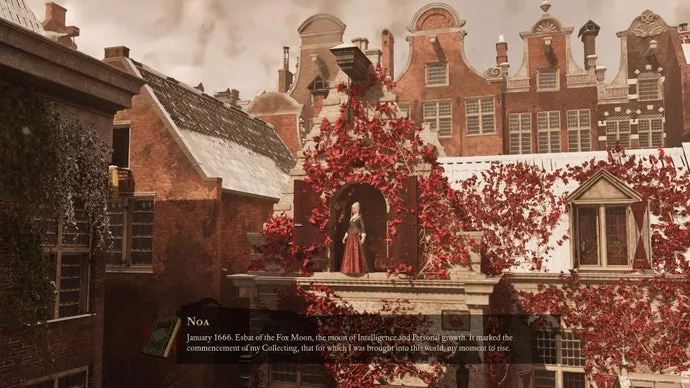
This is not a game that is bad in a traditional sense. It is odd, often through necessity. The developer, Panache Digital Games, is led by Patrice Désilets, who is best known for his work on Assassin's Creed. 1666: Amsterdam initially looks like a spiritual successor to that franchise, but the comparison is misleading. While you do play someone in the present learning about someone in the past, and you do dance between time periods, the core mechanics are fundamentally different. The game features three distinct eras: the present day, the 1990s, and the year 1666. The 1666 section is the main event, where you play as Noa, a witch tasked with tracking down targets in the city.

Noa is not a parkour expert. She cannot mantle, wall-run, or drop from towers to strike enemies. Instead, she must keep her witch self concealed and move about Amsterdam meekly, avoiding scrutiny. The gameplay loop involves wandering the streets, listening to crowd chatter, and slowly working out the identity of the next target. In the first proper mission, the target is a prosecutor known for being particularly tough on witches. Once identified, Noa must gather evidence before the prosecutor can be unmasked and dispatched, leading to a boss fight.
The combat in 1666: Amsterdam is a weak point. While the animations look wonderful, the balance is off. Noa is too delicate, dying in a few hits, while her dash move is too useful for creating space. This leads to a conservative playstyle where players avoid complex options like special attacks or environmental hazards, opting instead to hit enemies with a wooden stick and dash away. It is functional but not fun. The real strength of the game lies in the spaces between the combat encounters.
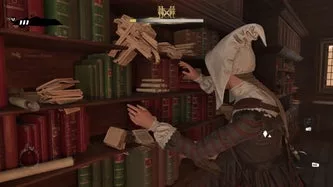
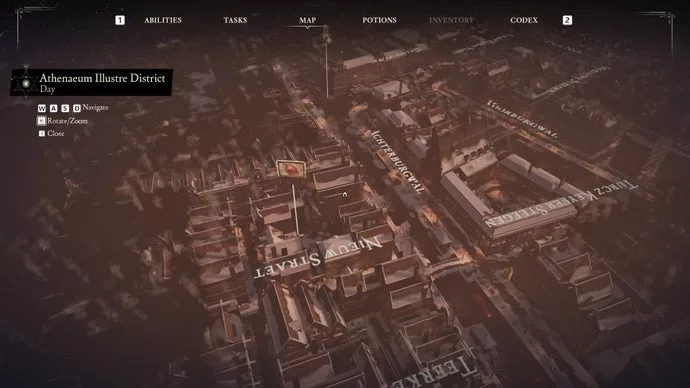
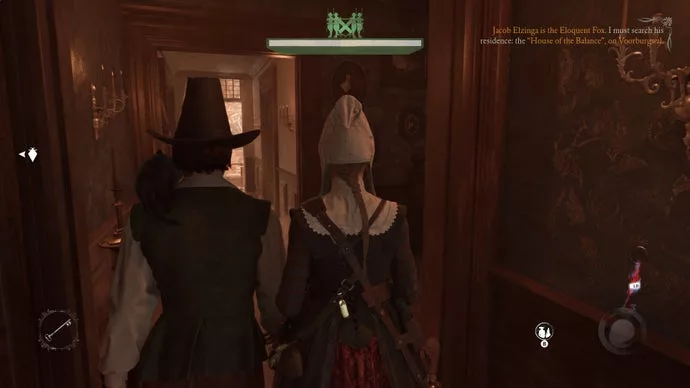
Unlike the vast open cities of Assassin's Creed, 1666: Amsterdam gives you a single neighborhood at a time, but it models the insides of most buildings as well as the outsides. It is practically an immersive sim, a genre it seems to have arrived at unintentionally. You can step through most doors and see what lies beyond. The lighting is wonderful, invoking the spooky art of the Dutch Golden Age. The game is quick to direct you toward the correct target, but proving it requires infiltration.
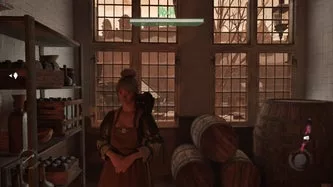
This is where the game shines. To gather evidence, you must infiltrate the target's residence. The houses are large, spread over several floors, and heavily patrolled by guards. Going in as Noa is not an option. Instead, you use your witch's cat. The cat is where the game's parkour-like elements come in. It can climb gutters, jump between ledges, and navigate the city filled with rats and vermin. The cat can go almost anywhere, allowing you to case the joint, thread through guards' feet, and locate key rooms.
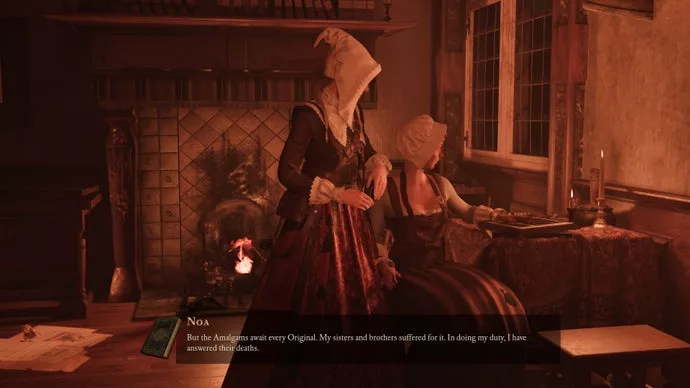
However, vital rooms are often locked off. This is where the game becomes a spatial puzzle. You can leave the house via an upstairs window, move around the outside ledges, and access locked rooms from the outside. The cat can then unlock doors from the inside. Even more complex, you can possess specific guards. Any guard visibly scared by the presence of a cat can be possessed. Once possessed, you can use them to walk about the building and access new parts. Certain possessed guards can club other guards out of the way. One of them can even invite Noa inside, allowing her to explore spaces and root through drawers for the evidence she needs.
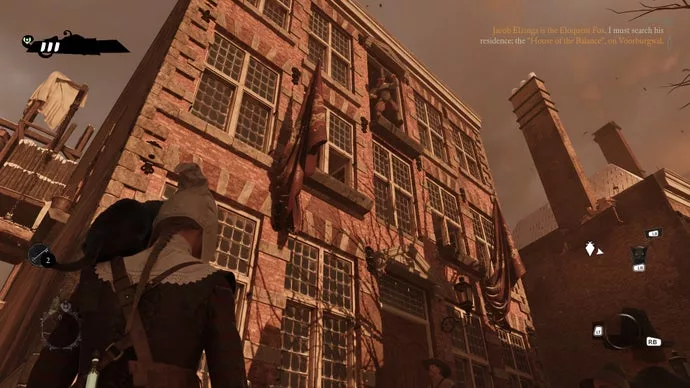
This is complex, and a bit silly. Many big moments in the game are signalled by a stately Dutch person having a massive scrap with a cat. But the underlying design is harmonious. The game is about poking through other people's houses, which aligns with the art of the Dutch Golden Age. Artists like Vermeer and Rembrandt turned art inwards, painting what they found in their homes. These are great artists of material culture, speaking to a time of merchants and traders where your home and its contents were clues to who you truly were. 1666: Amsterdam captures this essence, allowing you to step onto the streets of a past you have only experienced through oil paintings.
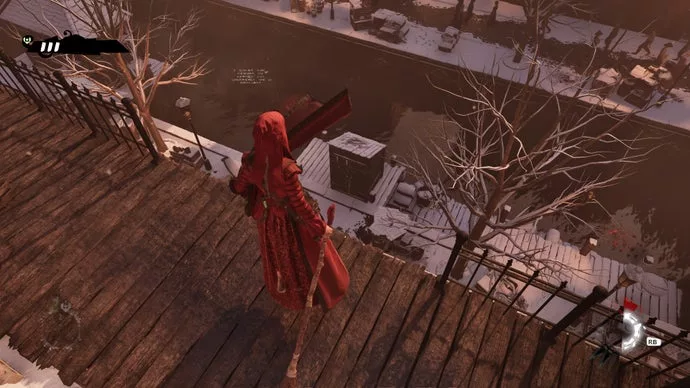
The game is currently in early access, with about 15 hours of content in the current build. It is buggy, with crashes, duplicated characters, and inconsistent collision detection. The AI is miserable, and the rough edges are noticeable. Many voices online say the game is too rough to be in early access, and that is true. But a small team is making this game, and the design is complex and audacious. Sometimes, you need to get money coming in just so that you can keep on trucking. That is the pact you make with 1666: Amsterdam. To enjoy it, you have to survive a bunch of things that are not really that enjoyable. But if you do, you find a game that is really good in principle, even if it is over-stretched in execution.
Panache Digital Games has a history of making audacious, overly ambitious games that don't entirely work but leave a lasting impression. Their previous title, Ancestors, was memorably odd and frustrating, but thought-provoking. 1666: Amsterdam follows in that tradition. It is a game about witchcraft and devilry, but it is also a game about observation, infiltration, and the quiet elegance of a Dutch household. It is not perfect, but it is worth playing for the moments where the ambition and the execution align.
The game is available now on PC via Steam and Epic. It is a risky bet, but a fascinating one. For fans of immersive sims, historical fiction, and games that prioritize interior exploration over open-world scale, 1666: Amsterdam offers a unique and compelling experience, provided you can tolerate its rough edges.
Зануда
