XMG Neo 16 (M26) review: One of the best gaming laptops finally gets G-Sync
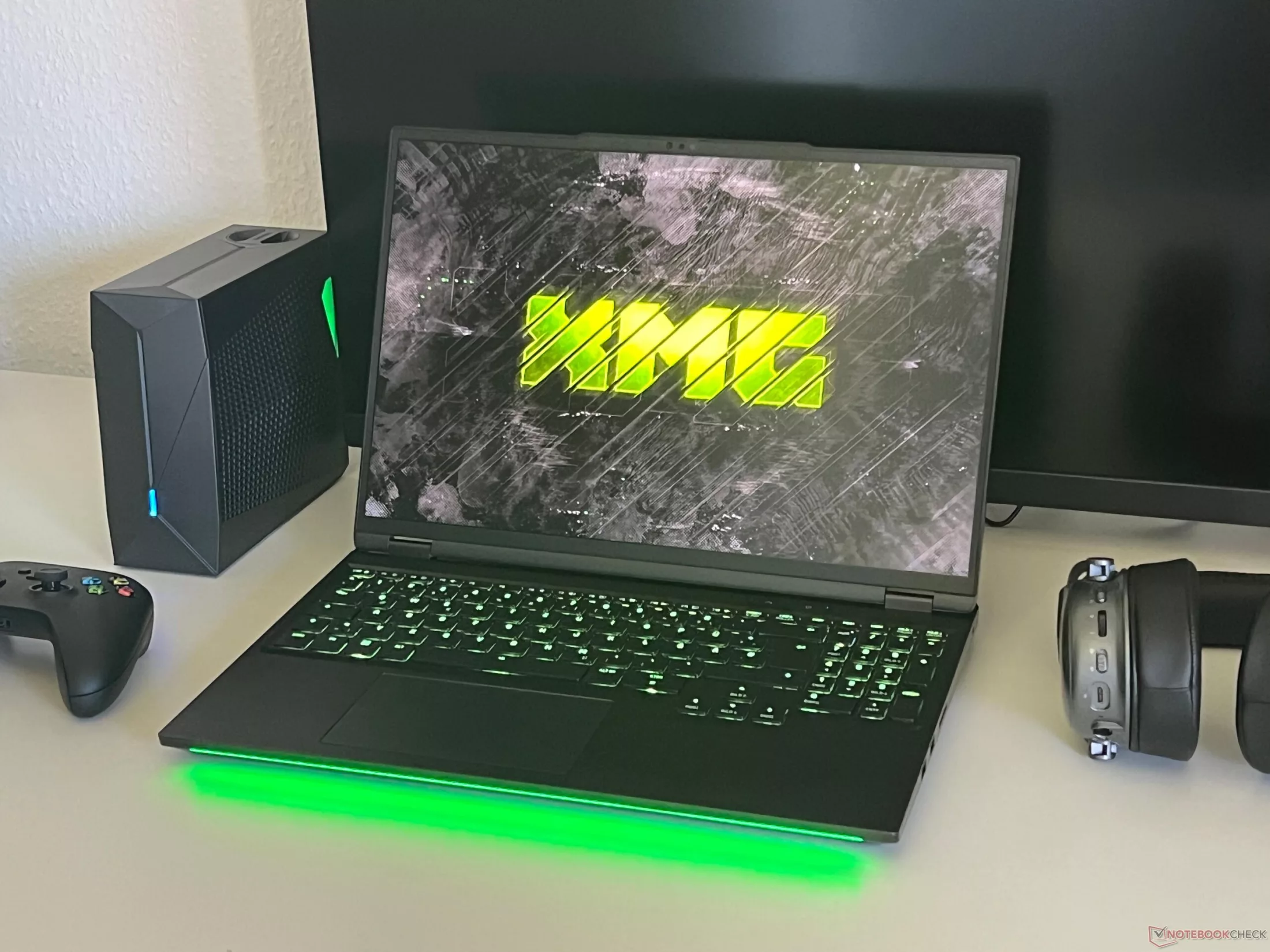
The XMG Neo 16 continues to establish itself as one of the most powerful gaming laptops on the market. For the 2026 model year, the standout improvement lies in its display technology: the excellent 300 Hz mini-LED panel finally receives G-Sync support, addressing a key criticism from previous iterations. Additionally, users can now opt for a glossy OLED display if they prioritize depth and contrast over the brightness of mini-LED.
The XMG Neo 16 (M26) remains an exceptional choice for both high-end gaming and demanding content creation tasks. Under the hood, it delivers massive performance, especially when paired with the optional Oasis liquid cooling system, which can further push the CPU's limits. The chassis remains largely unchanged from its predecessor—a sturdy, high-quality metal build that is easy to service and maintains compatibility with XMG’s external liquid cooling solutions. While the design is understated enough for professional environments, the internal hardware is pure enthusiast-grade.
Display: 300 Hz mini-LED with G-Sync support
The most significant update for this generation is the refinement of the display options. The primary 16-inch mini-LED panel, which features a 300 Hz refresh rate and a 2560 x 1600 resolution, now includes G-Sync support. This is a crucial addition for gamers looking to eliminate screen tearing without sacrificing the high brightness levels that mini-LED is known for. The local dimming implementation is particularly noteworthy, offering easy toggling—a feature that is highly beneficial for color-sensitive tasks like photo editing where uniform brightness is required.
For those who find mini-LED's matte finish insufficient, XMG now offers a glossy OLED option. This provides a different visual experience, focusing on deep blacks and extreme contrast, whereas the mini-LED remains the go-to for exceptionally bright, high-HDR content. Both panels are part of a versatile lineup designed to cater to different user priorities, whether it's competitive gaming or professional media production.
Performance and Thermal Management
Performance-wise, the Neo 16 is a beast, capable of running high-end configurations including the NVIDIA GeForce RTX 5090 Laptop GPU (175 W TGP) and Intel Core Ultra 9 290HX Plus. The cooling system is robust, offering various power profiles. Users can choose between a relatively quiet mode—staying under 40 dB(A)—and a maximum performance mode. While the latter results in loud fan noise, the gaming performance remains impressive even in the quieter profiles due to the high 150 W TGP baseline. Maintenance is straightforward, and the system supports up to 128 GB of DDR5 RAM, making it a long-term investment for power users.
Display: High Brightness and G-Sync Arrival
The XMG Neo 16 lineup has expanded its display options, now offering OLED and mini-LED panels alongside the standard IPS version. Our review unit features the matte 300 Hz mini-LED panel, which finally includes G-Sync support—a significant addition for this model. The image quality remains excellent, with CalMAN testing showing very high brightness levels: 765 cd/m² in SDR and up to 1,473 cd/m² in HDR.
Color accuracy is strong for the sRGB profile (100% coverage), though the P3 profile has room for improvement. However, our own calibration significantly enhanced color accuracy, and a free download of the resulting profile is included in the box. Regarding eye comfort, the mini-LED backlight flickers at a very high frequency of over 20 kHz (specifically 20,253 Hz in the worst case), meaning most users sensitive to PWM (Pulse-Width Modulation) should not notice any flickering.
While the IPS panel is very fast and suitable for fast-paced shooters, the mini-LED's high-frequency flicker makes it slightly more difficult to measure response times with absolute precision. We will provide detailed measurements for the new OLED panel in a future update.
Performance: Incremental CPU Update
Under the hood, the current Neo 16 is powered by the Intel Core Ultra 9 290HX Plus. This represents a very minor update over the previous 275HX, and CPU performance remains very strong, largely staying on par with its predecessor. In our Cinebench 2024 multi-core testing, the chip achieved 2,234 points, maintaining high-tier performance for a mobile workstation/gaming hybrid.
Power Profiles and Thermal Management
We tested the device in 'Overboost Extreme' mode for maximum performance, which delivers 190W (CPU) / 170W (GPU) and achieves 24,894 points in Time Spy Graphics. While this mode provides the highest frame rates—reaching 117.4 fps in Cyberpunk 2077 at QHD Ultra—it also results in significant fan noise (55.9 dB(A)). For users seeking a quieter experience, the 'Balanced' or 'Enthusiast' modes offer a much more reasonable noise profile (39.3 dB(A) and 47.6 dB(A) respectively) with only a marginal trade-off in peak performance.
System and Storage Performance
The system performance is excellent, with no stability issues encountered during testing. The Neo 16 features a fast PCIe 5.0 SSD slot alongside a second slot supporting PCIe 4.0. In our review unit, the 2 TB Samsung 9100 Pro demonstrated consistently high transfer rates, delivering impressive sequential read and write speeds.
- Samsung 9100 Pro 2 TB (Review Unit): 13,962 MB/s Read / 13,163 MB/s Write (CDM 5/6)
- Sustained DiskSpd Read: ~14,178 MB/s
- PCIe 5.0 support on the primary slot
GPU and Gaming Performance
The GeForce RTX 5090 with 24 GB of VRAM remains the flagship GPU option, and it is the core of our review unit. With a maximum TGP of 175 W, the overall GPU performance remains largely unchanged from the previous generation. High-end gaming laptops in this comparison show very similar results, with performance variations likely stemming from different driver versions used during testing rather than hardware discrepancies.
Benchmarks and Real-World Gaming
In 3DMark testing, the Neo 16 M26 Mini-LED achieved a performance rating of 94.6 points, closely following the top-performing units in the class. In real-world gaming scenarios like Cyberpunk 2077 (2560x1440 Ultra, FSR off), the unit delivered 117.4 fps, outperforming the average for RTX 5090 laptops (109.5 fps) and most other high-end configurations tested.
- 3DMark Time Spy Score: 23,362
- Cyberpunk 2077 (1440p Ultra): 117.4 fps
- Blender (v3.3 Classroom OPTIX): 10 seconds (comparable to MSI Raider 16 Max HX B2WJ)
Thermal Performance and Power Delivery
Under heavy load, the chassis temperatures remain within acceptable limits, with certain areas reaching approximately 45 °C. During stress testing, the NVIDIA GeForce RTX 5090 Laptop GPU maintained a steady 175 W output, including Dynamic Boost, while the CPU settled at 65 W. While the bottom of the device reaches a maximum of 44.6 °C (compared to a class average of 43.2 °C), the palmrest and touchpad remain comfortable at a maximum skin temperature of 33.2 °C. However, the upper surface runs slightly warmer than the class average, reaching 46.1 °C, whereas the average for similar gaming laptops is 40.4 °C.
Acoustics and Noise Levels
The noise profile of the XMG Neo 16 M26 depends heavily on the selected power profile. In idle or when the GPU is inactive, the laptop remains very quiet, with noise levels around 25–26 dB(A). Under load, however, the fan noise increases significantly, ranging from a comfortable 40 dB(A) to a loud 55.9 dB(A) in certain modes. For the higher noise levels, wearing headphones is strongly recommended.
Audio Quality and Speaker Analysis
The built-in speakers deliver an average but good loudness of 80.2 dB. The audio profile is characterized by a slight reduction in bass, which is on average 12.5% lower than the median. However, the mids and highs are well-balanced and linear, with the highs being only 3.2% away from the median. Overall, the sound is linear, though the device's audio performance ranks in the lower tier compared to its class, with 71% of tested devices performing worse and only 22% performing better.
- Max GPU Power: 175 W (including Dynamic Boost)
- Max CPU Power: 65 W (under stress test)
- Max Surface Temp (Upper): 46.1 °C
- Max Surface Temp (Bottom): 44.6 °C
- Speaker Loudness: 80.2 dB (Average)
- Idle Noise: ~25.7 dB(A)
- Load Noise: Up to 55.9 dB(A)
Audio Performance: Balanced but Lacking Bass
The audio setup on the XMG Neo 16 (M26) delivers a relatively loud experience, reaching 80.8 dB. While the mids and highs are well-balanced and linear—showing minimal deviation from the median—the low end is a notable weak point. The speakers produce nearly no bass, with levels averaging 15.7% lower than the median, which is a common trade-off in slim gaming chassis.
When compared to its direct competitors, the XMG Neo 16 (M26) holds its own in the mid-to-high frequency range, but it falls behind the top performers in terms of overall sound quality. In its specific class, 28% of tested devices performed better, while 65% were rated worse. In a broader comparison across all tested devices, it sits in the top 19% for audio quality.
Battery Life and Power Efficiency
One of the most impressive aspects of the XMG Neo 16 (M26) is its power efficiency. During our Wi-Fi websurfing test at 150 cd/m², the laptop lasted an incredible 10 hours and 2 minutes, significantly outperforming the gaming class average of 7.25 hours. Even at full SDR brightness, it maintains a respectable 4 hours and 50 minutes of runtime.
Under heavy gaming loads, such as running Cyberpunk 2077 at Ultra settings, the system draws approximately 300 W. The included 420 W power adapter provides ample headroom for these power spikes. While the device is a powerhouse, its ability to manage power during light tasks sets it apart from many other high-end gaming laptops that struggle to cross the 5-hour mark in similar scenarios.
Comparative Audio Analysis
- Aorus Master 16 AM6J: Slightly louder (84 dB) but shows reduced bass (10.1% below median).
- Alienware 16 Area-51: Reaches 84.9 dB with very balanced mids and highs, but suffers from significant bass reduction (18.7% below median).
- Schenker XMG Neo 16 A25 5090: Offers 83.8 dB with slightly higher mids and balanced highs, but shows reduced bass (7.3% below median).
The G-SYNC Addition
For a laptop that has consistently positioned itself at the top of the high-end gaming segment, the XMG Neo 16 M26 arrives with a significant technical update: the inclusion of NVIDIA G-SYNC. While previous iterations of the Neo 16 series were lauded for their raw performance and thermal management, the absence of G-SYNC was a notable omission for enthusiasts seeking the smoothest possible visual experience. This addition ensures that the high-refresh-rate panel can now work in tandem with NVIDIA's variable refresh rate (VRR) technology to eliminate screen tearing without the latency penalties associated with traditional V-Sync.
The implementation of G-SYNC in the M26 model is a crucial step for users who demand seamless frame delivery. By synchronizing the display's refresh rate with the GPU's output, the laptop can mitigate the stuttering and tearing that often occurs during rapid fluctuations in frame rates—a common occurrence in demanding AAA titles. For a device that already delivers massive TFLOPS and high-wattage GPU performance, this software-hardware synergy finally matches the premium hardware specifications provided by XMG.
Performance and Thermal Context
The M26's ability to maintain high performance is closely tied to its thermal design, which allows the internal components to operate at their maximum rated power limits. This high-performance ceiling is what makes the G-SYNC support so relevant; when the GPU is pushing the limits of the hardware, the variable refresh rate becomes essential for maintaining visual stability. The synergy between the high-end silicon and the improved display synchronization makes the Neo 16 M26 a more complete package for competitive and cinematic gaming alike.