Xiaomi Poco F9 Pro review: A high-performance battery giant with a scaled-down SoC
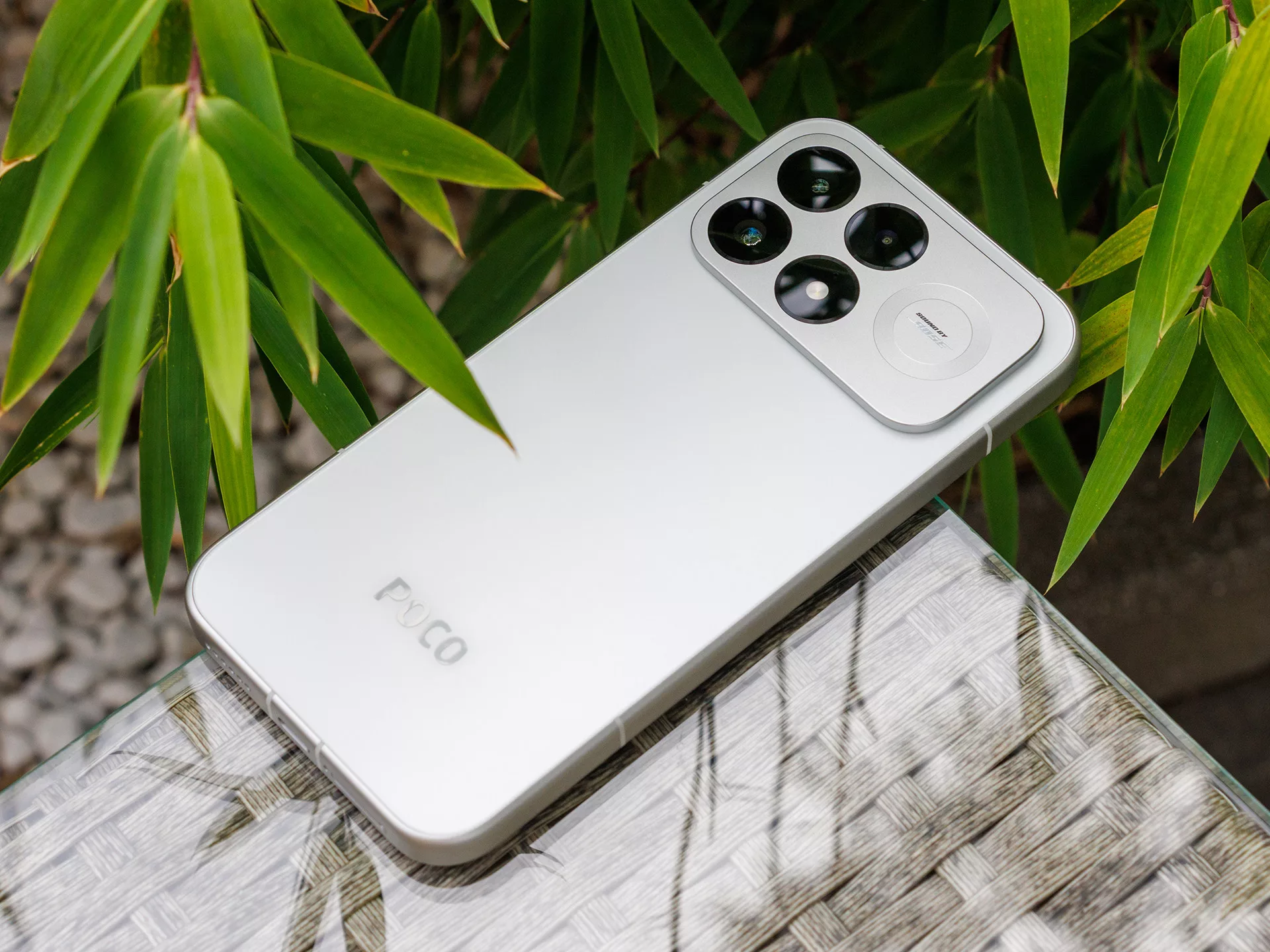
Xiaomi's Poco F9 Pro arrives as a more affordable alternative to the flagship Poco F9 Ultra, trading some top-tier specs for endurance and value. While it inherits a massive 6,330 mAh battery and a high-quality AMOLED display, the device makes significant concessions in graphics performance, camera consistency, and connectivity to hit a lower price point. It is a device designed for those who prioritize long-lasting daily performance over professional-grade photography or cutting-edge data transfer speeds.
The Poco F9 Pro aims to bridge the gap between mid-range efficiency and flagship power. Instead of the standard Snapdragon 8 Elite Gen 5 found in the Ultra model, Xiaomi has opted for a scaled-down V-Series variant. This decision, combined with a focus on battery capacity, positions the device as a 'battery giant' that promises significantly improved power efficiency compared to its predecessor, the Poco F8 Pro.
Design and Build: Premium feel with some structural trade-offs
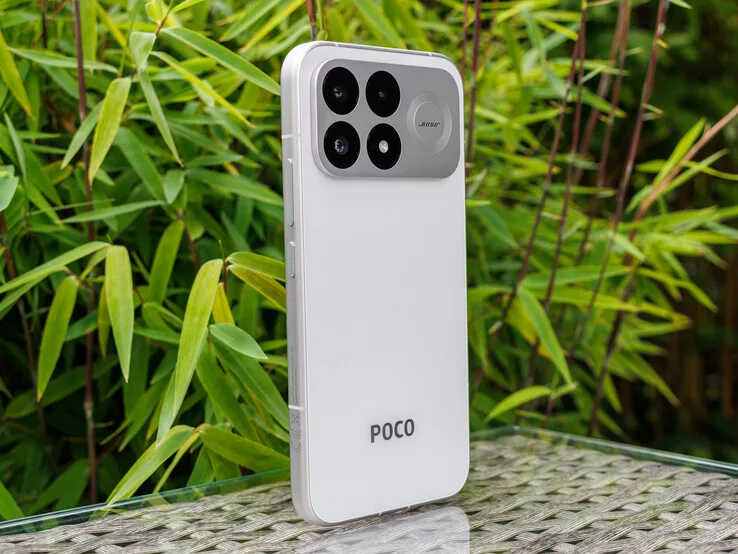
The device is available in White, Black, and Aurora Green. While Xiaomi claims a thickness of 8.79 mm, actual measurements show 8.9 mm, which increases to 11.6 mm when accounting for the camera bump. The back panel is constructed from fiberglass-reinforced plastic; despite the material shift from the previous generation, the matte finish feels premium and does an excellent job of resisting fingerprints. The build quality is generally high with tight, uniform gaps, though the chassis exhibits noticeable creaking when subjected to torsional stress.
On the positive side, the device carries an IP68 rating for water and dust resistance, ensuring a level of durability expected in this segment. However, the focus on cost-cutting is evident in the connectivity: the device is limited to USB 2.0, which significantly impacts data transfer speeds and precludes video output support via cable.
Software and Sustainability
The Poco F9 Pro launches with Android 16 and HyperOS 3.0. Xiaomi has committed to a software lifecycle consisting of four years of version updates and an additional two years of security patches. While the system's advertising is subtle, it is present, and the device comes with several pre-installed third-party applications, though these can be uninstalled by the user.
Regarding environmental impact, the packaging is primarily cardboard, featuring a film that resembles compostable organic waste bags, though its actual biodegradability is unconfirmed. The entire box is wrapped in plastic shrink-wrap. There is no specific data provided regarding the use of recycled materials or the device's carbon footprint. While Xiaomi intends for the smartphone to be part of a self-repair program, it is not currently listed in that program.
Connectivity and GNSS Performance
Despite supporting the Wi-Fi 7 standard, the Poco F9 Pro lacks support for the high-speed 6 GHz band, which limits its potential in certain modern wireless environments. On the other hand, mobile network reception is solid, performing well in dense urban areas. In iperf3 testing, the device achieved transfer rates of approximately 2011 MBit/s (transmit) and 2145 MBit/s (receive) on the 5 GHz band, which is competitive within its class, though it falls behind devices like the Xiaomi 17T Pro that utilize the 6 GHz band.
The GNSS performance is reliable. In testing, the device located its position quickly and accurately, even indoors. During a 9.3 km bicycle ride, it tracked the route with high precision, showing only a 20-meter discrepancy compared to a Garmin Venu 2. However, minor deviations were noted during complex maneuvers, such as sharp turns or navigating narrow paths.
Camera Performance: Detail vs. Accuracy
The front-facing camera produces detailed selfies but relies on noticeable post-processing to sharpen skin textures and facial contours, which can result in an unnatural appearance. Skin tones tend to lean warm, though exposure is generally well-managed.
The main camera performs well in daylight, offering vibrant colors, good dynamic range, and fine texture resolution, albeit with some visible sharpening on high-contrast edges. However, color accuracy is a significant weakness; ColorChecker tests revealed an average DeltaE deviation of 16.86, with some colors—specifically green, blue, and gray—reaching deviations as high as 28.99. In low-light conditions, image quality drops, with a noticeable loss of detail and softer textures in dark areas.
The ultra-wide-angle lens provides usable dynamic range but lacks the detail of the main sensor, particularly regarding vegetation and edges. Additionally, significant detail loss occurs when using 5x digital magnification. For video, the main camera supports up to Ultra HD at 60 fps, while the front camera is limited to 30 fps at UHD resolution (60 fps requires dropping to Full HD).
Hardware, Display, and Warranty
The device features an ultrasonic fingerprint sensor under the display that is both fast and highly accurate. The capacitive touchscreen is responsive and includes 'Wet Touch 2.0' for improved usability with damp fingers. While the haptic feedback from the linear motor is crisp, it is described as somewhat weak, and customization options for vibration are limited.
In terms of physical connectivity, the Poco F9 Pro is limited by a slow USB 2.0 port that does not support video output. Additionally, the device lacks a built-in barometer. The package includes a USB Type-A to Type-C cable, a SIM tool, and a matte, translucent protective case.
In the German market, the manufacturer's warranty is limited to 12 months. Users can opt for 'Xiaomi Care' insurance for additional coverage: approximately $75 for two years of accidental damage protection or around $110 for theft protection.
Display: High Brightness and Fast Response Times
The Poco F9 Pro’s AMOLED display delivers strong brightness levels. When displaying a full-screen white image, it reaches 1,200 cd/m² at the center, and with the ambient light sensor disabled, it can hit up to 851 cd/m². For smaller white areas (APL18), we measured a peak of 2,515 cd/m². While Xiaomi specifies a peak brightness of 10,000 cd/m² for HDR content, our measurement equipment capped out at 8,500 cd/m² before triggering an error.
Color reproduction is precise when using the Original Pro color scheme and Warm color temperature; otherwise, the white balance tends toward the cooler side. We recorded average DeltaE deviations of 1.4 for the ColorChecker and 2.4 for grayscale levels. Regarding viewing angles, the stability is good even at wide angles, though brightness decreases slightly and a subtle greenish tint becomes apparent.
For gamers, the screen's response times are exceptionally fast. We measured 0.71 ms (rise/fall combined) for 50% to 80% grey and 0.87 ms for black to white. These rates are significantly better than the average of all tested devices, making the device well-suited for fast-paced 3D titles. However, users sensitive to flickering should note that the backlight uses PWM dimming with a detected frequency of 120 Hz (amplitude: 15.27%), which may cause eyestrain or headaches after extended use.
Performance: A Scaled-Down V Series Chipset
The Poco F9 Pro is powered by the Snapdragon 8 Elite Gen 5 V Series, which is a scaled-down version of the standard Snapdragon 8 Elite Gen 5. While it retains the same CPU and AI performance, it sits slightly below the flagship's capabilities. In Geekbench 7.0, the device achieved 2,695 points in single-core (in Ultimate Mode) and 8,676 points in multi-core, trailing the standard Snapdragon 8 Elite Gen 5 by approximately 14% in single-core and 5% in multi-core performance.
In everyday usage, this translates to high performance and smooth multitasking, providing a premium experience despite being a 'slimmed-down' version of the top-tier silicon.
The 'V Series' Distinction in Benchmarks
The Poco F9 Pro is powered by the Qualcomm Snapdragon 8 Elite Gen 5 V Series, a variant that shares the Adreno 840 name with the flagship Ultra model but features a different internal configuration. While the Ultra version utilizes a full Adreno 840, the Pro's V Series variant consists of only two slices instead of three. This architectural reduction is clearly reflected in the performance data, where the Pro consistently trails the Ultra by a significant margin in graphics-heavy tasks.
CPU and System Performance
In Geekbench 6.7 testing, the Poco F9 Pro demonstrates strong single-core and multi-core capabilities, though it sits below the Ultra's peak. The device achieved 3,395 points in single-core and 10,219 points in multi-core, trailing the Ultra's 3,602 and 10,922 points respectively. Despite this, it remains significantly ahead of the class average and competitors like the Xiaomi 17T Pro (Dimensity 9500) and the Google Pixel 10a (Tensor G4).
System-level performance, as measured by BaseMark OS II, shows a more pronounced gap. The Poco F9 Pro's 'System' score of 15,148 points is roughly 35% higher than the class average, but it falls short of the Ultra's 20,509. Interestingly, in the 'Memory' sub-test, the Pro's score of 16,117 points is notably higher than the class average, suggesting efficient memory subsystem integration despite the scaled-down SoC.
Graphics and AI Capabilities
The impact of the two-slice Adreno 840 V Series is most evident in GPU-intensive benchmarks. In BaseMark OS II Graphics, the Pro scored 35,842 points, which is approximately 30% lower than the Ultra's 51,696. This trend continues in 3DMark Wild Life Extreme Unlimited, where the Pro recorded 5,015 points, compared to the Ultra's 7,369 points—a performance delta of roughly 31%.
AI inference performance shows a mixed landscape. In UL Procyon AI Inference (NNAPI), the Pro's score of 19,142 points is nearly identical to the Ultra's 19,172, suggesting that for certain AI workloads, the architectural difference may be less impactful. However, in Geekbench AI's Quantized NPU 1.7 test, the Pro's 754 points is significantly lower than the Ultra's 1,149, highlighting the limitations of the V Series in specific NPU-driven tasks.
3DMark: Testing the Limits of the Adreno 840 V Series
In 3DMark's heavy-duty stress tests, the Xiaomi Poco F9 Pro, powered by the Adreno 840 V Series (based on the Snapdragon 8 Elite Gen 5 architecture), shows strong performance but consistently trails behind the flagship-tier Xiaomi Poco F9 Ultra. In the Wild Life Extreme test, the Poco F9 Pro achieved 5,322 points, significantly lower than the 7,194 points recorded by the Ultra model. This gap is even more pronounced in the Solar Bay benchmarks, where the Poco F9 Pro's score of 9,093 in the standard test falls well behind the 12,752 points of the Ultra version.
The performance delta becomes particularly evident in the 'Extreme' and 'Unlimited' scenarios. For instance, in the Solar Bay Extreme Unlimited test, the Poco F9 Pro scored 893 points, while the Poco F9 Ultra reached 1,330 points. Interestingly, the Poco F9 Pro manages to stay ahead of mid-range competitors like the Google Pixel 10a (Tensor G4) and the Nothing Phone (4a) Pro, which struggle significantly in these high-fidelity workloads.
GFXBench: Real-World Rendering and Offscreen Performance
GFXBench results highlight the Poco F9 Pro's efficiency in various rendering tasks. In the Manhattan ES 3.1 Offscreen test, the device delivered 273 fps, compared to 331 fps on the Poco F9 Ultra. When pushed to 4K resolution in the Aztec Ruins High Tier Offscreen test, the Poco F9 Pro maintained 41 fps, which is notably lower than the 55 fps achieved by the Ultra model, but still significantly outperforms the 20 fps seen on the Google Pixel 10a.
The device also shows its capabilities in the Aztec Ruins High Tier Onscreen test, where it recorded 84 fps, trailing the 115 fps of the Ultra version but maintaining a clear lead over the 44 fps of the Pixel 10a and the 36 fps of the Nothing Phone (4a) Pro. This suggests that while the Poco F9 Pro is not a true 'Ultra' replacement, it remains a highly capable device for demanding mobile gaming compared to standard mid-range offerings.
Benchmark Performance: Close to the Ultra
In terms of raw processing power, the Xiaomi Poco F9 Pro sits remarkably close to its more expensive sibling, the Poco F9 Ultra. In Geekbench 6 tests, the Pro model achieved 151,209 in Single-Core and 151,209 in Multi-Core, nearly matching the Ultra's 156,484. This performance is driven by the Qualcomm Snapdragon 8 Elite Gen 5 V Series, which serves as the baseline for comparison in several tests.
Web performance and synthetic benchmarks show the device is highly capable. In Speedometer 2.0, it reached 222 runs/min, matching the average for the Snapdragon 8 Elite Gen 5 V Series. It also demonstrated strong results in Octane V2 with a score of 31,858, significantly outperforming the Xiaomi 17T Pro (27,638) and the class average. However, in WebXPRT 5, the Pro model's score of 28 points is notably lower than the Poco F9 Ultra's 29, though both are significantly ahead of the Xiaomi 17T Pro's 24.
Storage and Memory Speed
The device's storage performance, tested via AndroBench 3-5, shows high-speed sequential operations. The Poco F9 Pro achieved sequential read speeds of 4,019.93 MB/s and sequential write speeds of 3,538.83 MB/s. These figures are slightly behind the Poco F9 Ultra (3,907.08 MB/s read / 3,938.71 MB/s write) but remain well above the class average for smartphones, which typically sees much lower sequential read/write performance.
Thermal Management: A Significant Drawback
The most notable downside of the Xiaomi Poco F9 Pro is its thermal profile. Under sustained load, the device becomes quite hot, with surface temperatures on the upper side reaching a maximum of 50.3 °C. This is significantly higher than the smartphone class average of 35.4 °C. Even the bottom of the device reaches 45.9 °C, exceeding the class average of 34.1 °C.
These high temperatures lead to visible performance throttling during stress tests. In 3DMark Wild Life Extreme Stress Test, the device showed a stability drop of 25.8%, meaning it retains about 74.2% of its peak performance under sustained pressure. This is notably worse than the Google Pixel 10a, which showed a 12.7% drop, though the Pixel's overall performance is lower. In contrast, the Poco F9 Ultra demonstrated much better stability in the same test, with only a 35.2% drop, though it also experiences significant thermal challenges.
3DMark Stability Summary
Audio: Decent, but lacks balance
The phrase "Sound by Bose" doesn't always guarantee a premium experience, as the Poco F9 Pro demonstrates when compared to the Poco F9 Ultra. The Pro model features one fewer speaker and presents a less balanced sound profile that leans heavily toward the high frequencies. While it can be described as decent performance for a smartphone, it lacks the refinement of its predecessor.
In terms of frequency response, the speakers are relatively loud, reaching 91 dB. However, the bass is nearly non-existent, measuring on average 19.6% lower than the median. The mids are also reduced, averaging 6.3% below the median, though they maintain average linearity. The high frequencies are the standout, being 5.6% higher than the median and showing good linearity. Overall, the sound linearity is average, with a 17.2% difference to the median.
When compared to other devices in its class, the Poco F9 Pro ranks in the bottom tier, with 80% of tested devices performing better and only 11% performing better than it. Compared to all tested devices, it sits in the middle, with 32% performing better and 59% performing worse.
Battery and Power Consumption
Equipped with a 6,330 mAh battery, the Poco F9 Pro shows relatively high power consumption, comparable to the Poco F9 Ultra. Interestingly, energy requirements in GFXBench are nearly identical between the two models. Under load, the device consumes an average of 9.83 W, while its maximum load consumption reaches 14.75 W. In idle states, it averages 2.36 W, which is slightly higher than the class average of 1.685 W.
In real-world battery runtime tests involving Wi-Fi web browsing (Chrome 153), the Poco F9 Pro lasted 24 hours and 11 minutes. While this is a solid result, it is four hours less than the Poco F9 Ultra, primarily due to the difference in battery capacity.
Verdict: A powerful, yet imperfect contender
The Poco F9 Pro offers a compelling package for users prioritizing performance and endurance, featuring a bright AMOLED display and strong battery life. However, it is not without flaws. The device faces criticism regarding its camera capabilities, heat production, and a somewhat limited feature set compared to the Ultra model.
The Xiaomi Poco F9 Pro arrives as a device attempting to bridge the gap between the mid-range powerhouse and the ultra-premium flagship. While it inherits much of the DNA from the high-end Poco F9 series, the 'Pro' designation here serves as a marker of significant upgrades in processing power and display quality, though it stops just short of being a complete 'Ultra' model in every technical dimension.
Performance and Hardware Capabilities
Under the hood, the Poco F9 Pro is designed to handle demanding modern workloads. It focuses heavily on raw performance, aiming to provide a smooth experience for gaming and intensive multitasking. However, the distinction between this model and its more expensive siblings often lies in the fine details of thermal management and sustained peak performance rather than just the presence of a high-end chipset.
Display and Visual Experience
One of the standout features of the F9 Pro is its display technology. It aims to deliver high brightness levels and high refresh rates to compete with flagship devices. While the visual fidelity is impressive, the real-world application of these specs—such as how they impact battery life or visibility in direct sunlight—remains a critical point of evaluation for users looking for a premium mobile experience.
The device's positioning suggests that while it offers a high-end experience, it is not without trade-offs. Users looking for the absolute pinnacle of Xiaomi's mobile technology might find the 'Ultra' variants more aligned with their needs, whereas the F9 Pro targets those who want near-flagship performance without the full premium price tag.