

Beyond Burn-in: 'Edge Rot' Identified in Some WOLED TV Panels
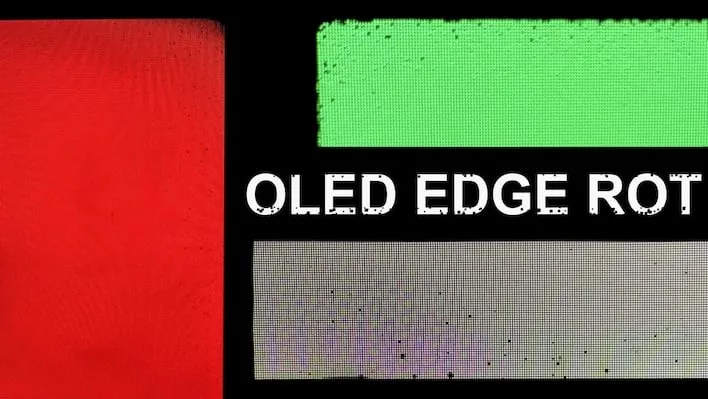
While burn-in has long been the primary concern for OLED enthusiasts, new reliability data suggests a different kind of degradation is emerging. Accelerated longevity testing conducted by Rtings has identified a phenomenon dubbed "edge rot" in certain WOLED TV panels, manifesting as pixel failure along the display boundaries after significant run time.
Rtings, known for pushing displays to their limits through rigorous longevity testing, has released findings that highlight a specific vulnerability in older-generation WOLED (White OLED) panels. According to the report, these panels can exhibit signs of "edge rot" after approximately 18,000 hours of operation. To put that into perspective, for a typical household using a TV daily, this equates to roughly ten years of use.
What is Edge Rot?
As the name implies, this degradation appears at the edges of the screen. It manifests as either a single dead pixel or a cluster of dead pixels, a visual pattern that the testing describes as being reminiscent of mold on a wall. Unlike standard burn-in, which is typically caused by static elements causing uneven luminance, edge rot appears to be a structural or chemical failure localized to the panel's perimeter.
QD-OLED and Monitor Performance
Interestingly, the testing showed a different outcome for QD-OLED (Quantum Dot OLED) panels. None of the QD-OLED units tested exhibited signs of edge rot. However, Rtings cautioned that this conclusion is preliminary, as they have only tested a total of three QD-OLED units so far. Given that QD-OLED is a relatively newer technology, its long-term reliability track record remains more limited compared to established WOLED manufacturing processes.
The implications for the growing OLED monitor market are also being watched closely. While the specific monitors tested by Rtings did not show signs of edge rot, the sample size is currently too small to draw definitive conclusions for the entire category of OLED gaming monitors.
Potential Causes and Prevention
One of the most concerning aspects of edge rot is that, unlike burn-in, there are currently no known ways for users to prevent it through software settings or usage habits. Industry experts cited in the report suggest several potential culprits for this phenomenon, including:
Because the cause may be linked to manufacturing inconsistencies or encapsulation integrity, the issue currently presents as a "panel lottery" for consumers. However, it is important to note that because Rtings uses accelerated testing methods, the average user is unlikely to encounter this issue for many years, if it occurs at all.
Гика
