Will Games Become the First 'National Strategic Asset'? Rep. Kim Sung-hoe Proposes Special Bills
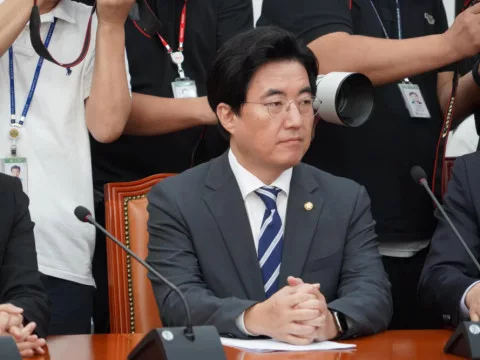
The South Korean gaming industry could soon be elevated to the status of a 'national strategic asset.' Representative Kim Sung-hoe of the Democratic Party of Korea has proposed two major pieces of legislation aimed at transforming how the state supports and protects the sector. The proposed bills seek to move beyond general industry promotion, establishing a framework where games are treated as a primary driver of national economic growth and cultural influence.
The legislative package consists of two distinct acts: the "Special Act on the Designation and Fostering of National Strategic Content Assets" and the "Special Act on the National Strategic Fostering of the Game Content Industry." While the former creates a legal mechanism to select specific content sectors for focused state support, the latter is designed specifically to build a dedicated support system for the gaming industry. According to Representative Kim, the move is a response to a significant gap in current policy: despite games accounting for 60% of South Korea's content exports, the country lacks a comprehensive national system to maintain its global edge.
Designation and Strategic Oversight
Under the proposed Special Act on National Strategic Content Assets, the Minister of Culture, Sports and Tourism (MCST) would have the authority to designate games as a national strategic asset following consultations with relevant ministries. The text explicitly names "games and related sectors" as a potential target for this designation. To qualify, a sector must demonstrate significant impact on the national economy, potential for expanding cultural influence, and strong domestic and international growth prospects. These designations would be reassessed every three years to determine if they should be maintained, modified, or revoked.
To manage this new landscape, the second bill proposes the creation of the "National Game Content Strategy Committee." This intergovernmental body would operate under the Prime Minister, who would serve as chairperson. The committee, which could include up to 25 members—including relevant ministers and private-sector experts—would meet at least twice a year to deliberate on five-year fostering plans. Their mandate would cover a wide range of critical areas, including tax and financial support, investment, regulatory reform, and the industry's transition toward artificial intelligence (AI).
AI Integration and Regulatory Clarity
A significant portion of the proposed legislation focuses on the intersection of gaming and AI. The bills would codify the government's obligation to support the AI transition, including the development of generative AI for game planning, the creation of specialized training data, and the implementation of AI-based quality control and automated testing. The government would also be expected to assist with the costs of high-performance computing resources and cloud utilization.
To address the legal uncertainties surrounding new technologies, the bills introduce a channel for regulatory clarity. If the MCST requests clarification regarding the "Framework Act on the Development of Artificial Intelligence and Establishment of Trust" (AI Framework Act), the Minister of Science and ICT would be required to provide a review within 90 days. This would specifically address how games utilizing AI should handle the disclosure of creative expressions—such as backgrounds, characters, and music—and whether certain systems qualify as "high-impact AI."
Economic Incentives and Protection Measures
The proposed laws also outline substantial financial and tax-related measures. The MCST would be empowered to recommend that the Minister of Economy and Finance introduce or expand tax credits for game production costs, as well as tax support for overseas localization and marketing. Financial support would be facilitated through existing entities like the Credit Guarantee Fund (KODIT) and the Korea Technology Finance Corporation (KIBO), with a specific emphasis on prioritizing small and medium-sized and indie game developers.
To protect domestic interests, the bills include strict provisions against illegal overseas private servers. The MCST would be mandated to collect evidence of piracy or unauthorized server operation, notify affected businesses, and request cooperation from overseas service providers to block access. Furthermore, the legislation introduces "clawback" provisions: if a foreign entity or individual acquires substantial managerial control of a game company that has received government subsidies, those subsidies may be reclaimed by the state within a period of up to five years.