

Wireless Revolution or Marketing Hype: WiCi One with RTX 5060 Ti
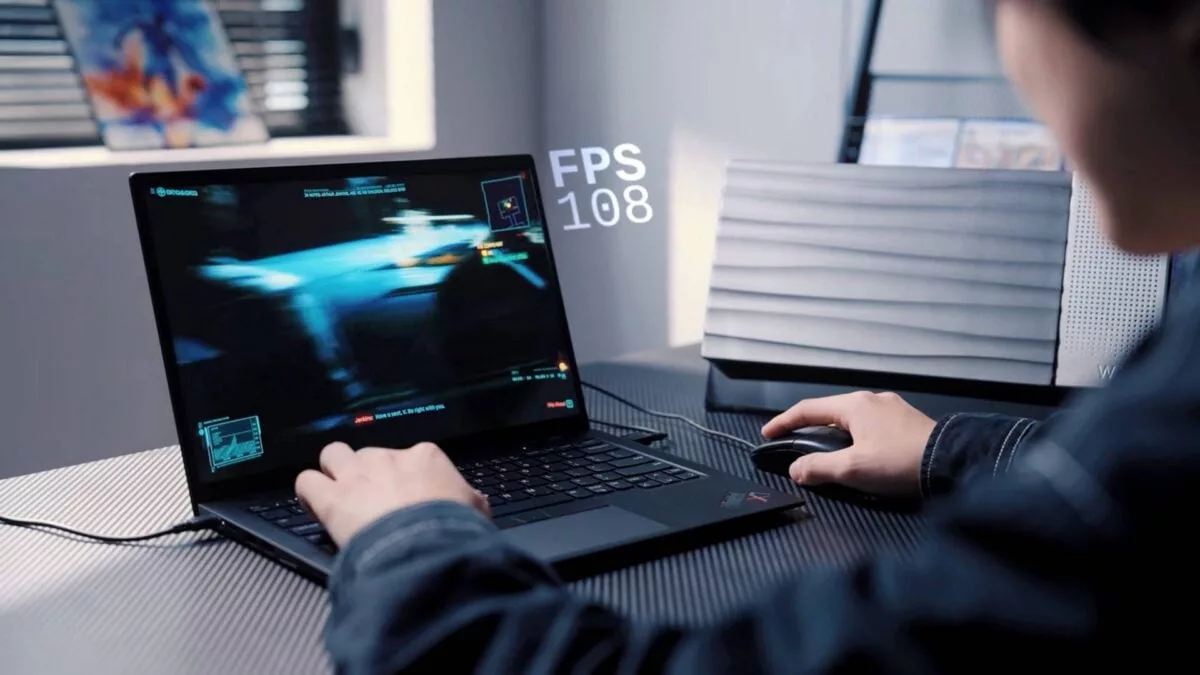
The tech firm WiCi has unveiled the WiCi One, the world's first commercial wireless external GPU (eGPU) powered by Wi-Fi 7. The device aims to boost the graphics performance of laptops, tablets, and even phones without the need for physical cables, targeting tasks such as 3D rendering, video editing, and AI model acceleration.
Hardware Specs and Connectivity Concept
The WiCi One functions essentially as a mini-computer that connects wirelessly to a host machine. It utilizes a 4×4 320MHz link via Wi-Fi 7 to communicate. According to the company, a proprietary technology and a dedicated driver allow the device to appear to the host system as a standard graphics card, making the wireless connection transparent to the user.
Two hardware configurations are expected:
- A standard variant featuring an Nvidia GeForce RTX 5060 Ti (16GB) and an Intel Core 3 100U CPU, paired with 1TB of PCIe 4.0 NVMe storage.
- A flagship model equipped with an Nvidia GeForce RTX 5090 (32GB) and an Intel Core Ultra 7 255H CPU, alongside 4TB of PCIe 5.0 NVMe storage.
Bandwidth vs. Reality
While the concept is compelling, the primary bottleneck remains bandwidth. The theoretical maximum for Wi-Fi 7 (4×4 MIMO 320MHz) is 23 Gbps. In comparison, Thunderbolt 5 is rated for up to 80 Gbps (or 120 Gbps asymmetric), and OCuLink can reach 63 Gbps via a PCIe 4.0 x4 link. Even under ideal conditions, the wireless link offers significantly less throughput than its wired counterparts.
Beyond raw bandwidth, latency is a major concern. Although the Wi-Fi 7 standard aims for latencies below 10ms, any packet loss or interference on the 6GHz band could result in noticeable stutters during gameplay. This makes the device's viability for high-performance gaming a question that requires extensive hands-on testing.
Performance Claims and Target Audience
WiCi claims that the eGPU can deliver 80 FPS in Cyberpunk 2077 at 4K Ultra settings using DLSS 4. The RTX 5090-powered model is expected to push those numbers higher, reaching 110 FPS in Cyberpunk 2077 and 90 FPS in Black Myth: Wukong under similar conditions. It is important to note that these performance figures rely on the use of DLSS.
The device seems to be positioned more toward developers, researchers, and AI builders rather than hardcore gamers. For AI workloads, where bandwidth spikes are less critical than in real-time gaming, the wireless connection might be a viable solution. The WiCi One will be available for pre-order at $1,999, with a retail price of $2,599. Shipments are slated to begin in Q4.
Зануда
